Training the Visual Skills That Glasses Can't Fix.
Vision therapy is an individualized, doctor-supervised program that retrains how the eyes and brain work together — building the skills behind comfortable reading, steady attention, and clear, single vision.
Watch: short videos
Office therapy vs home push-ups
The gains last
Our results, year after year
Focusing can be trained
Why some say it doesn’t work
Why clinicians see more
What a program looks like
Home practice: quality over time
What Is Vision Therapy, and Does It Work?
Seeing Clearly Is Only Part of How Vision Works
You can have perfect 20/20 eyesight and still have a vision problem. Clarity is just one visual skill. Reading, learning, sports, and screen work also depend on the eyes teaming, tracking, and focusing together — and on the brain processing it all efficiently. When those skills lag, the symptoms show up far from the eye chart: skipped lines, headaches, short attention, an eye that drifts.
Over 80% of brain function is bound up in the visual system. A well-functioning visual system is really the eyes, the brain, and the body working effortlessly in coordination with one another — and we begin building that system the moment we start interacting with our environment.
For some people that happens in an orderly, step-by-step process, with each skill building on the one before it. For others the system is built on disorder, leaving certain skills inefficient or ineffective. The result is someone who struggles with ordinary daily tasks, or takes far longer than necessary to finish them.
Improving a visual system takes more than learning a new trick for a week. New ways of taking in and processing visual information have to be embedded, not just learned, so they hold under real-world demands. That is what a vision therapy program does: it retrains the brain, through structured, progressive practice — the way physical therapy rebuilds strength and coordination. It is supervised by a developmental optometrist and tailored to each patient's evaluation.
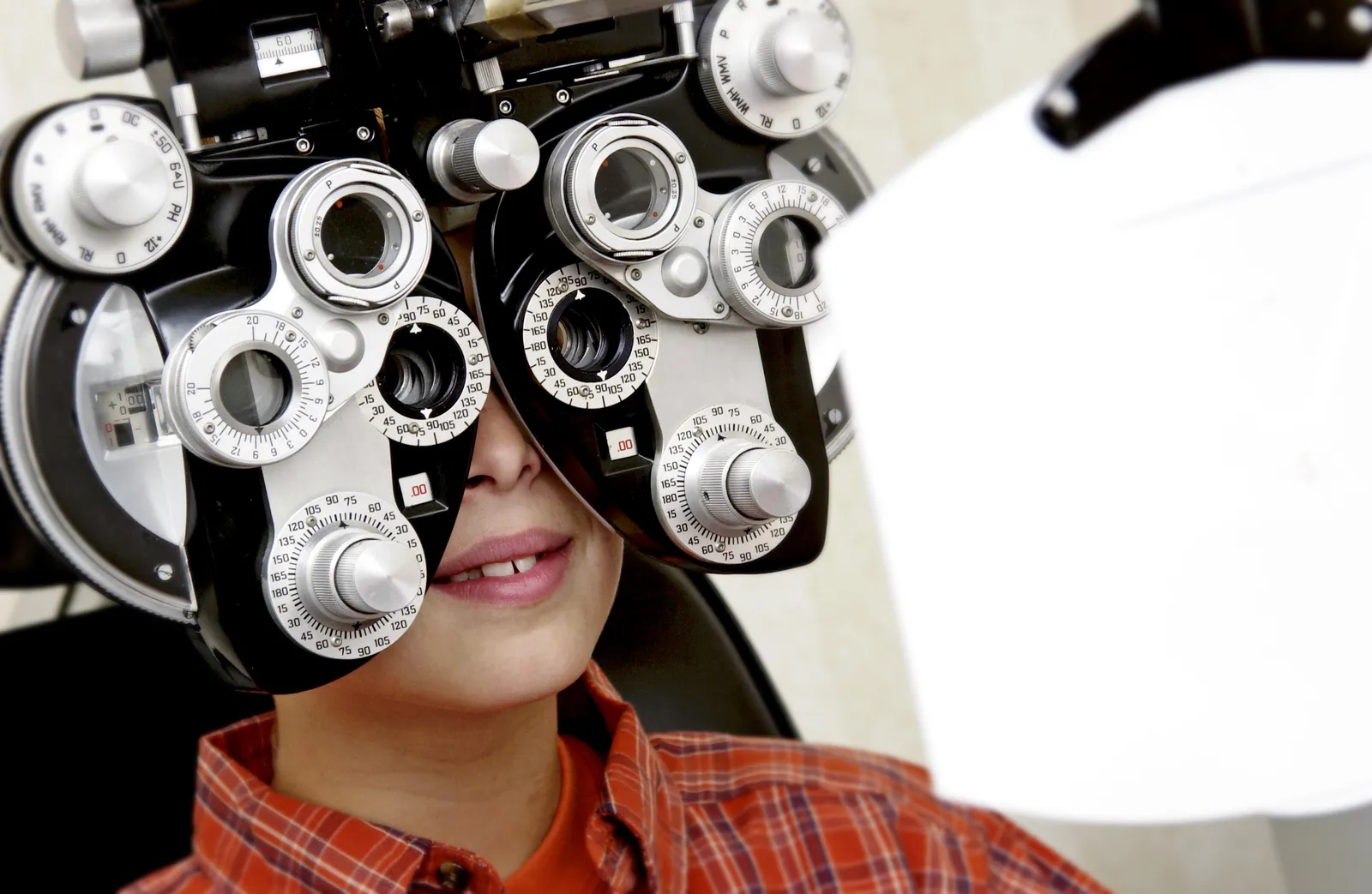
What Is Vision Therapy?
A short introduction from our office — what vision therapy is, what it treats, and what a program asks of a family.
The Visual Skills We Train
Eye Teaming (Binocularity)
Getting both eyes to point at the same place at the same time, so the brain receives one clear, stable image instead of two competing ones.
Eye Tracking
Smoothly moving the eyes across a line of text or following a moving target — the skill behind reading without losing your place.
Focusing (Accommodation)
Shifting focus quickly and comfortably between near and far, and holding it during sustained reading or screen work.
Visual Processing
How the brain interprets, remembers, and acts on what the eyes see — visual memory, spatial awareness, and visual-motor integration.
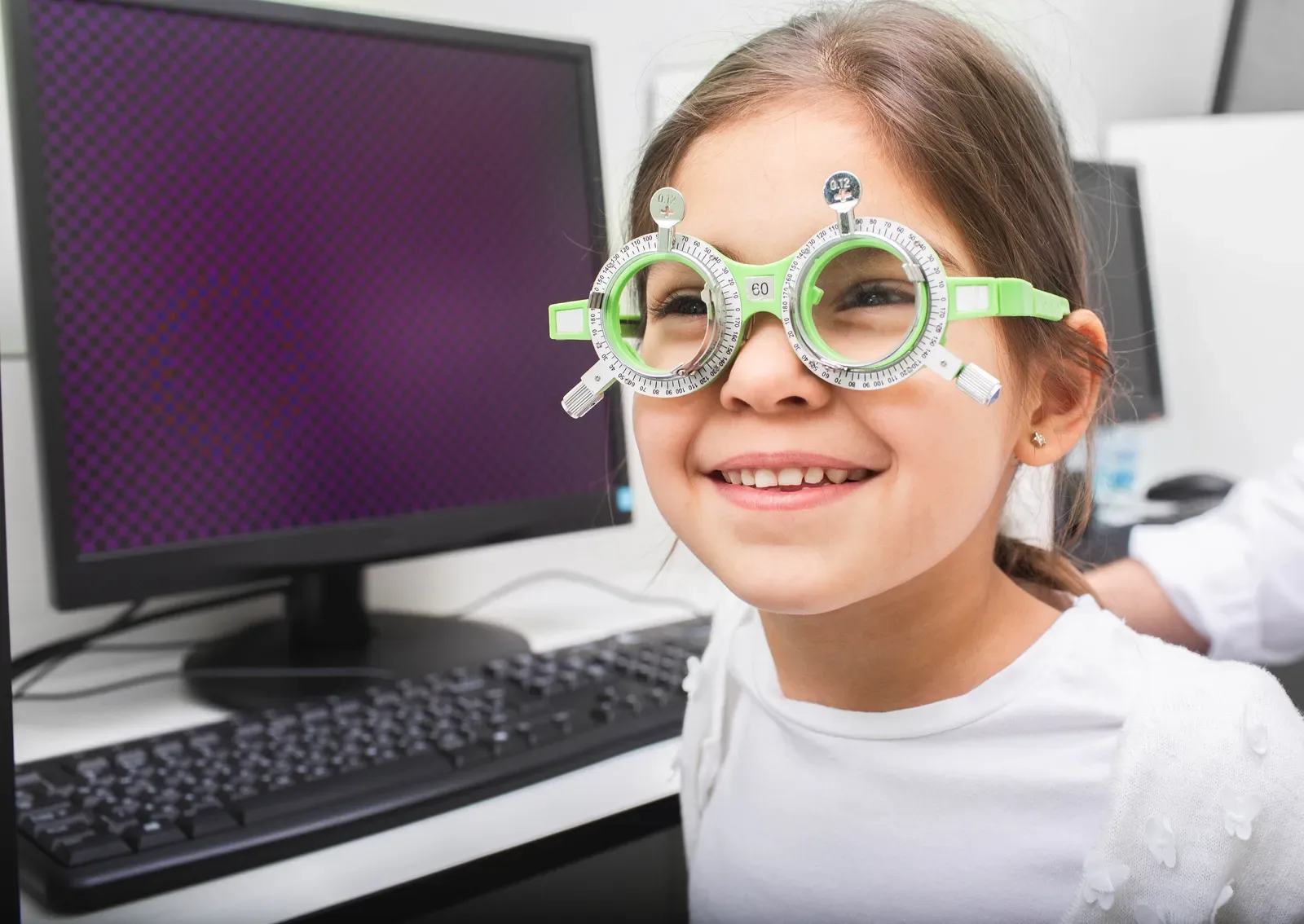
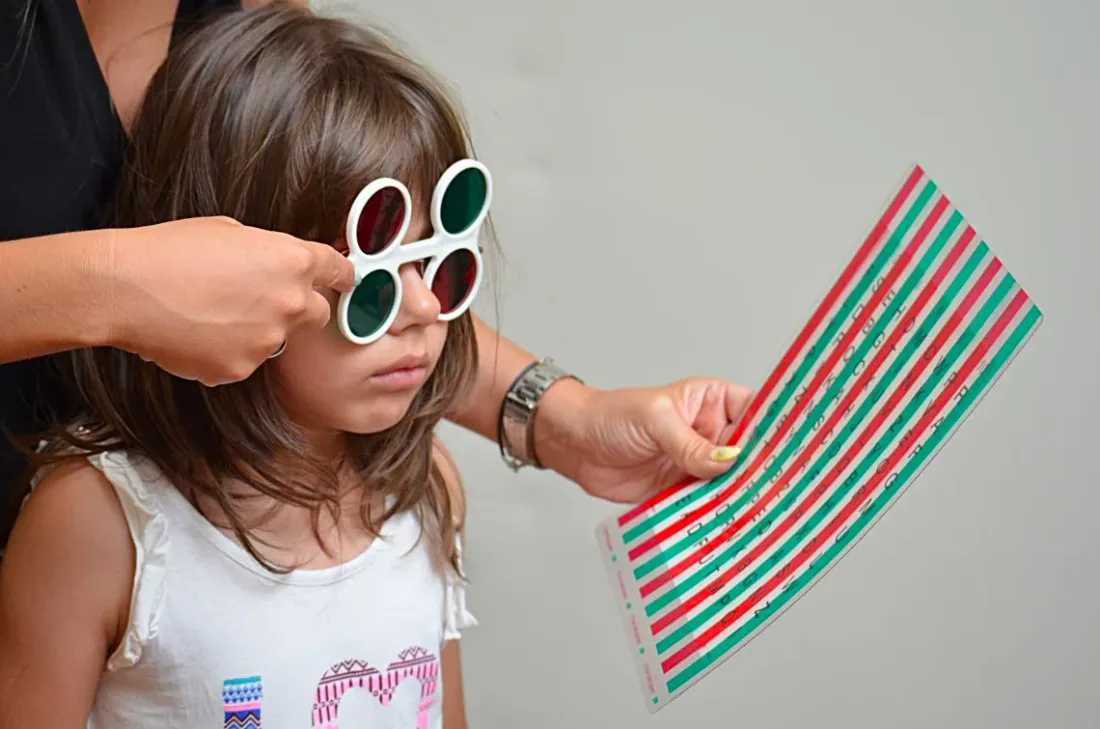
Bringing Organization to a Complex System
Our goals for bringing organization to an incredibly complex system are simple:
- Help you develop or improve fundamental visual skills and abilities
- Improve visual comfort, ease, and efficiency
- Change the way you process and interpret visual information
Our programs are built on scientific research and years of continuing education and clinical experience. We know vision therapy asks for a serious commitment from you and your family, and we don't take that commitment lightly. We are here to guide you every step of the way — from the first phone call through the day you graduate. We want to change your life for good.
What a Vision Therapy Program Looks Like
Comprehensive Evaluation
We measure how the eyes team, track, focus, and process — well beyond a standard eye chart — and explain exactly what we find.
Individualized Plan
The doctor designs a therapy plan targeted to the specific skills that need building, with clear goals and a timeline. Binocular vision and visual processing programs usually run about 18–24 weeks; amblyopia, strabismus and brain injury programs often take longer.
In-Office Therapy
One-on-one sessions with a trained therapist, using specialized lenses, prisms, and activities. Sessions are 30 or 45 minutes — the shorter ones for younger children and more symptomatic patients — and most patients come in one to three times a week.
Home Reinforcement
Repetition between visits is what makes a new skill stick. Patients attending one session a week practice at home 3–4 days a week for 15–20 minutes. When consistent home practice is not possible, we recommend 2–3 in-office sessions a week instead.
Progress & Graduation
We re-measure along the way so progress is objective, not a guess — and you can see the gains before completing the program.
Where Vision Therapy Is Used
Research has demonstrated that vision therapy can be an effective treatment option for:
Ocular Motility Dysfunctions
Eye movement disorders — the eyes do not track smoothly or land accurately where they are aimed.
Non-Strabismic Binocular Disorders
Inefficient eye teaming, including convergence insufficiency — the eyes work together, but not comfortably.
Strabismus
Misalignment of the eyes, where one eye turns in, out, up, or down instead of aiming with its partner.
Amblyopia
Poorly developed vision in an eye that stays blurry even with the best glasses or contact lens correction.
Accommodative Disorders
Focusing problems — trouble shifting focus between near and far, or holding it steady through a page of reading.
Visual Information Processing
How the brain interprets what it sees, including visual-motor integration and integration with the other senses.
Visual Sequelae of Acquired Brain Injury
The vision problems that can follow a concussion, a traumatic brain injury, or a stroke.
Whether therapy is the right option for you or your child is a question the evaluation answers — not a website. If something on this list sounds familiar, start with the symptom checklist, or read through the problems we see most often.
Real Outcomes From Vision Therapy
“As a teacher, I've always heard great things about Dr. Murray's office from former students and their parents. It just made sense for me to bring my own son to her. Dr. Murray was extremely informative during her evaluation, and my son really enjoys his therapist. She's super professional and writes up comprehensive notes so we can support him at home. Really pleased with the journey so far.”
“My son has been working with the team and our experience has been very positive. He truly enjoys his visits and looks forward to each session. I'm already noticing improvement. We're excited for him to complete the program.”
“Amazing studio and the staff here is very kind, helpful, and professional. We come here three times a week and everything is super nice.”
“Great communication! Clear plan to follow. Kind and encouraging. Grateful we found this practice.”
Vision Therapy FAQ
How long does a vision therapy program last?
Our binocular vision and visual processing programs usually run about 18 to 24 weeks; amblyopia, strabismus and brain injury programs often take longer. The exact length depends on the severity of the diagnosis and on your goals, so the doctor gives you a specific timeline after the evaluation rather than a vague estimate. More on program length →
How often are in-office sessions, and how long are they?
We offer both 30-minute and 45-minute sessions, using the shorter ones for younger children and more symptomatic patients. Most patients come to the office one to three times per week.
What else is expected of me between sessions?
Success depends on repeating and practicing the skills learned during in-office sessions. For patients attending one session a week, we ask for home practice 3–4 days a week for 15–20 minutes so the program finishes in the estimated time. If consistent home practice is not possible, we recommend 2–3 in-office sessions a week instead.
What ages do you treat?
Children and adults. Visual skills can be developed at almost any age, which is why we work with everyone from young children to adults recovering from a concussion.
Is vision therapy the same as eye exercises online?
No. Vision therapy is doctor-supervised, individualized, and measured. Generic online "eye exercises" are not tailored to your diagnosis and are not monitored for progress or safety. Does vision therapy work? →
Will my child need glasses too?
Sometimes. Lenses or prism may be part of the plan alongside therapy. The evaluation determines what each patient needs.
More answers on the practice FAQ, or see cost & payment.
Most People Reach This Page for One of Three Reasons
- You are tired of the way things are with your vision right now, and you are ready to find a solution.
- You are worried about your own — or your child's — ability to navigate life successfully.
- Other therapies and advice you have already tried have not eliminated the problem.
If you are still unsure whether vision therapy is the right choice for you or your child, contact us at your earliest convenience. Our staff will gladly walk you through the process of working out whether an undiagnosed visual problem is a source of the trouble — and an evaluation is what answers the question either way.
Looking for vision therapy near you? Vision & Learning Center is a vision therapy center with offices across Broward and Palm Beach counties, led by a developmental optometrist. You may also see the specialty called behavioral optometry; a behavioral optometrist and a developmental optometrist do the same work. We provide pediatric vision therapy and vision therapy for adults.
Vision therapy is the middle of three levels of care we provide. Below it, concussion rehabilitation works to restore basic function after a brain injury. Above it, sports vision refines skills that are already comfortable into skills that win. How the three levels differ explains where a particular person starts and how far a program goes.
More on What Vision Therapy Actually Involves
What a programme is, what it asks of you, and the activities and equipment behind each session.
- Start hereWhat is Vision TherapyVision therapy is an individualized plan for lazy eye, crossed eyes, focusing problems and learning-related…
- Vision Therapy Goals and Procedures at Our CenterWhat a Developmental Vision Evaluation measures, how we turn results into goals by diagnosis, the procedure…
- What to Expect From a Vision Therapy ProgramA step-by-step look at a vision therapy program: the evaluation, weekly sessions, home practice, progress…
- Why Consistency Matters in Vision TherapyHome practice was built into the vision therapy programs that trials tested. Here is what the adherence data…
- The Brock String: What It Is and How It WorksA string and three beads is one of the oldest tools in vision therapy. How the Brock string trains eye…
- Vision Therapy Activity: Marsden BallHow we use the Marsden ball in vision therapy: hanging it at belly-button height, the skills it trains, the…
- Vision Therapy Activity: Hart ChartHow the Hart chart trains tracking, saccades and focusing in vision therapy: row reading, column jumping and…
- Vision Therapy Activity: Pointer StrawHow the pointer straw activity trains localization, spatial awareness and depth judgment, why we change…
- Vision Therapy Activity: Rotating PegboardHow we use the rotating pegboard in vision therapy: the golf-tee procedure, patched and unpatched work, the…
- Vision Therapy Activity: Four Corner FixationHow four corner fixation runs: the home-base set-up, the eye-movement skills the task works on, the listening…
- Vision Therapy Activity: Spot ItHow we use the card game Spot It in vision therapy: the eye movements it reveals, the visual skills it loads,…
- Eye Patches in Vision Therapy: How Patching WorksWhy the patch goes on the stronger eye, when the gains actually arrive, what to do during patch time, and how…
It Starts With an Evaluation
Before any therapy, we measure exactly what's working and what isn't — then build a plan around it.