Ocular Motor Dysfunction
Smooth, accurate eye movements are what let us read a line of text without losing our place. When those movements are inefficient, reading becomes slow and effortful — even when eyesight is 20/20.
When Eye Jumps Miss
What Ocular Motor Dysfunction Is
Ocular motor dysfunction refers to a group of disorders that affect the coordination and control of eye movements. Each eye is moved by six extraocular muscles, and those muscles — coordinated by the brainstem and the cranial nerves — allow the eyes to move in every direction. When there is dysfunction in that system, the result is an inability to move the eyes accurately and efficiently.
In practical terms, ocular motor skills are the eye movements used to hold fixation on a target, follow something that is moving, and jump accurately from word to word. When they are inefficient, reading becomes slow and effortful: the eyes overshoot, lose their place, and go back over text that was already read. Because the eye chart only measures how clearly a person sees a letter at distance, eyesight can be perfectly sharp while these movements are not.
Tracking problems tend to respond well to vision therapy, which builds the precise, automatic eye movements reading depends on.
Types of Ocular Motor Dysfunction
Eye movements come in three varieties, and each can break down on its own or alongside the others.
Saccadic Dysfunction
Saccades are the rapid, jumping eye movements that change the point of fixation — the movement reading depends on. When they are inaccurate, the eyes struggle to move precisely from word to word, and words or whole lines get skipped.
Pursuit Dysfunction
Pursuits are the smooth, tracking eye movements used to follow a moving object. When they are inefficient, the eyes cannot follow smoothly and instead overshoot or undershoot what they are trying to stay with.
Gaze Stability (Fixation) Dysfunction
Fixation is holding the eyes steady on one target — crucial for reading a word or recognizing a face. When gaze stability is poor, it is hard to hold focus on an object long enough to take it in.
Eye Movement Skills
Signs & Symptoms
- Skips words or whole lines, or re-reads the same line
- Uses a finger or a ruler to keep place while reading
- Slow, effortful reading speed and reduced comprehension
- Moves the head instead of the eyes when reading
- Trouble copying from the board, or scanning a page to find information
- Difficulty following a moving object smoothly — overshooting or undershooting it
- Difficulty holding fixation steadily on a word, a target, or a face
These signs overlap with other functional vision problems, which is why an evaluation looks at the whole visual system rather than tracking alone — see convergence insufficiency, focusing (accommodative) problems, dyslexia and vision and vision, ADD & ADHD.
What Tracking Looks Like on a Report
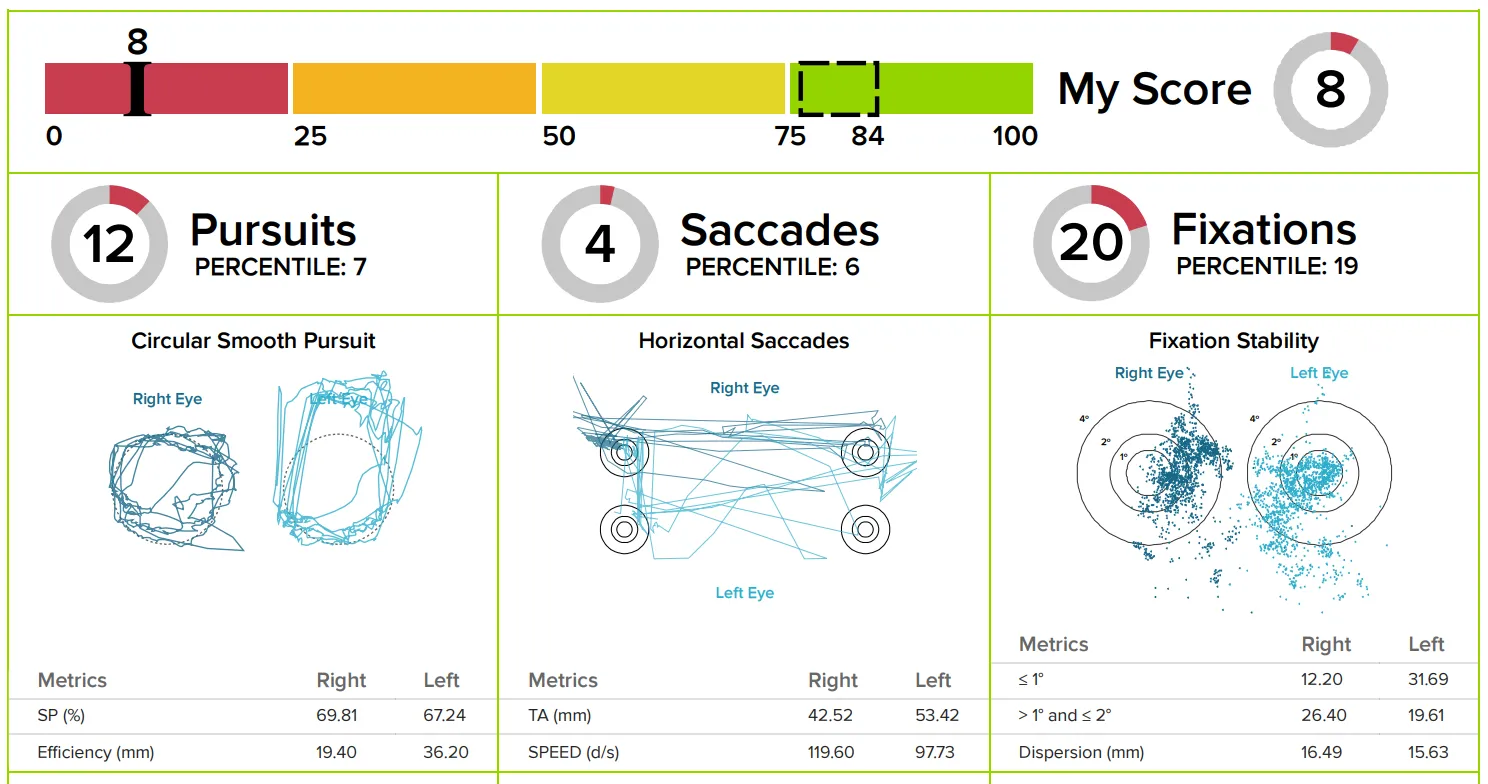
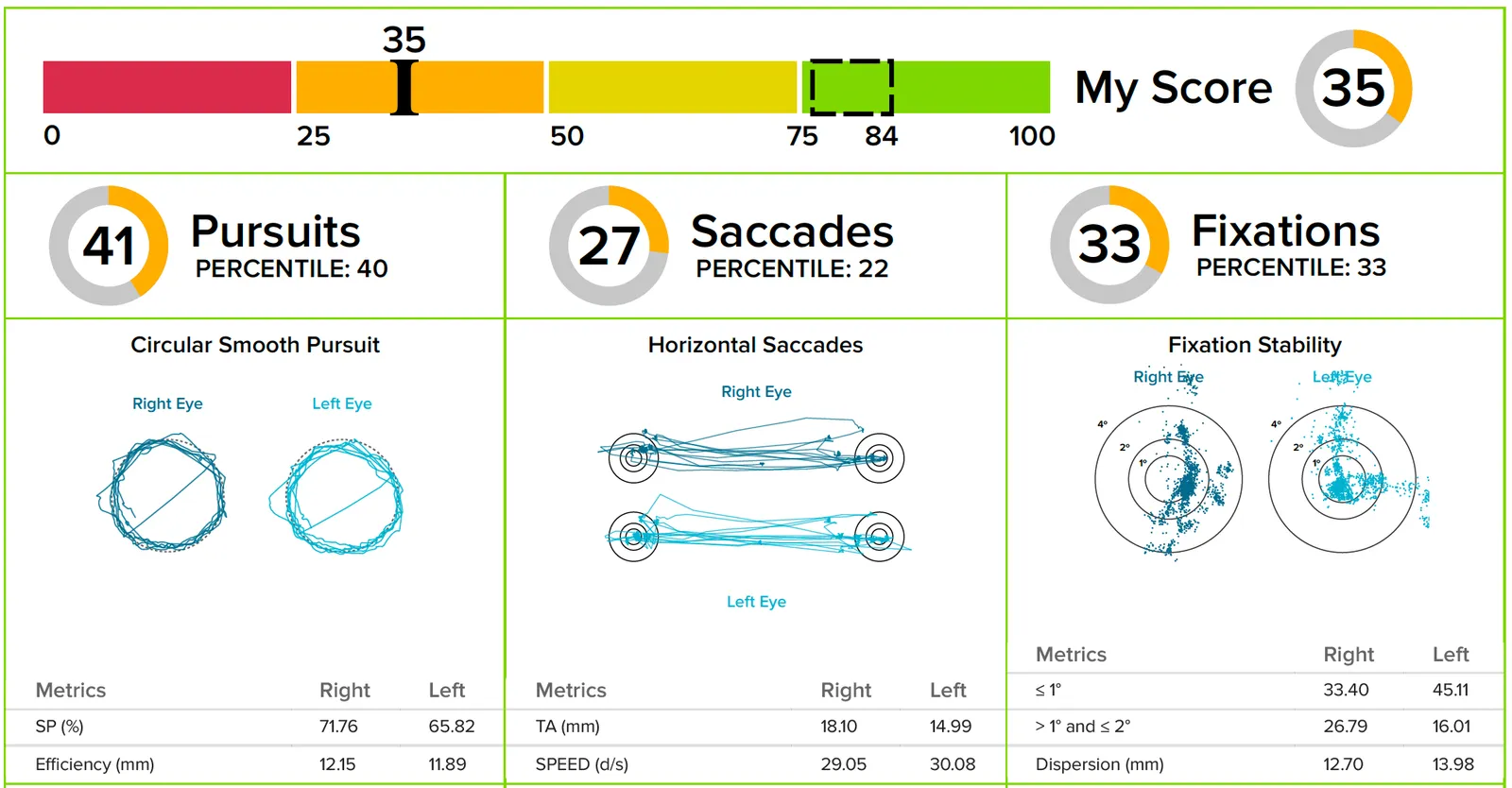
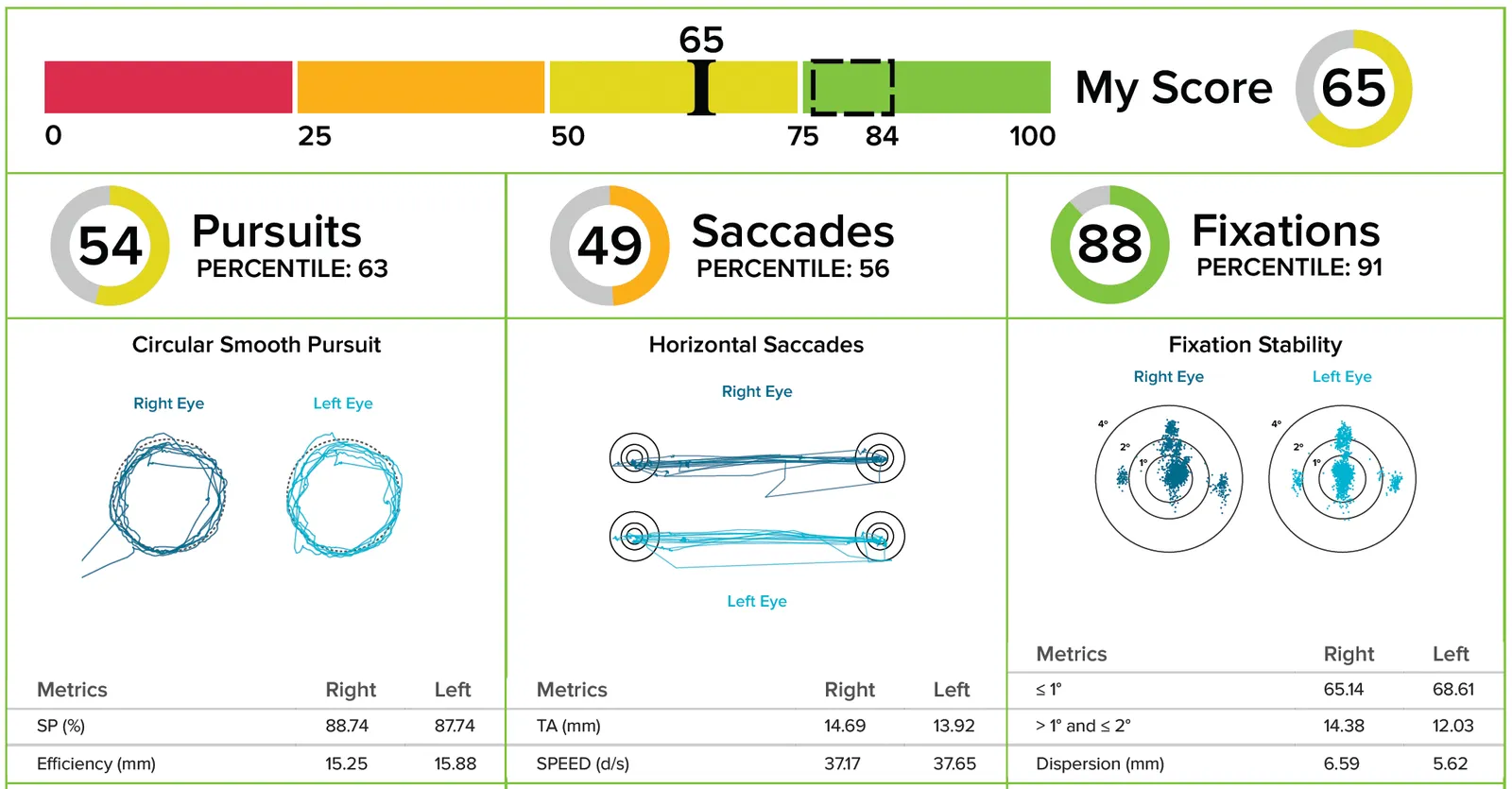
Eye movements can be recorded and scored. These are sample RightEye reports at three levels of severity — the same three tasks in each: circular smooth pursuit, horizontal saccades and fixation stability.
Severe
Moderate
Mild
The RightEye Reading Tracker
A commonly cited figure holds that one in four children has an undetected vision problem that interferes with reading and learning — one that is often misread as disinterest, dyslexia or ADHD. Seeing the letters on a traditional static eye exam is only one of the vision skills a student needs.
Vision & Learning Center uses the RightEye system to show parents how their child is tracking while they read, and to help them understand how those challenges affect the child's ability to comprehend what they are reading.
Calibration
At the start, the person follows a moving dot with their eyes. This lets the system learn how their eyes move.
Reading
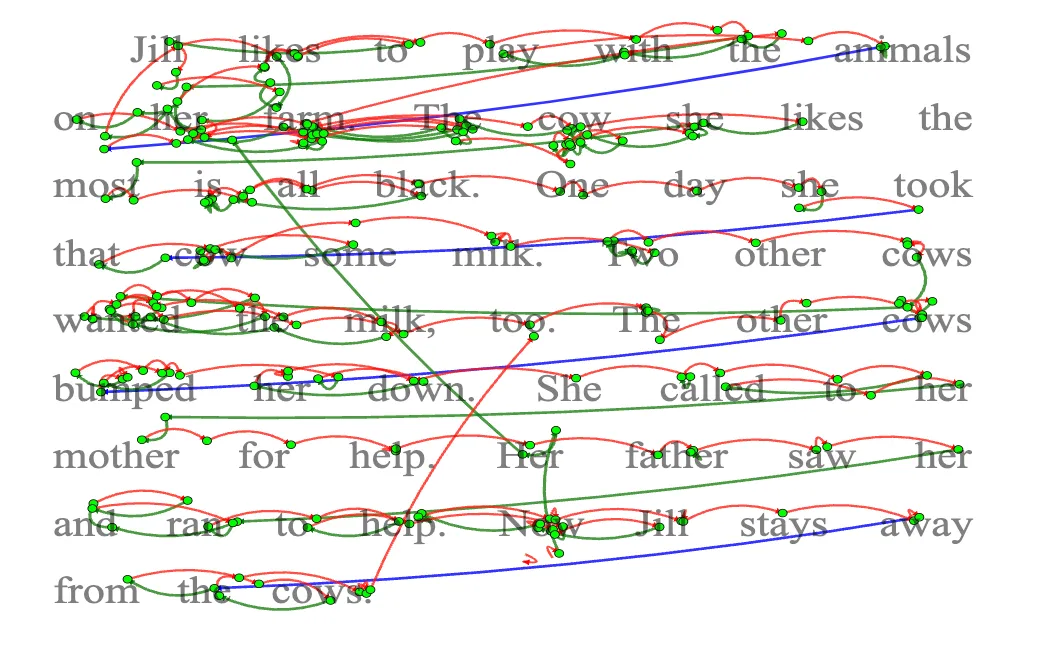
The person reads a passage of text on the screen while the system watches how their eyes move across it — the same eye movements that drive learning-related vision.
Data Collection
The system records where the person looks and how fast their eyes move between words.
Results
After the reading task, the system produces a report showing where the person looked the most and how quickly they read.
What the report lets us do:
- Record and illustrate possible deficiencies in reading and binocular vision
- Understand a student’s eye movements while they are actually reading
- Quantify reading comprehension and compare reading metrics against similar grade-level peers
Related Reading
Eye Movements in Ocular Motor Dysfunction
A closer look at the condition — symptoms, causes, how it is diagnosed, and what therapy targets.
Why Does My Child Lose Their Place While Reading?
Skipping lines, re-reading sentences, sliding a finger down the page — where tracking fits in.
Can a Child Have 20/20 Vision and Still Struggle With Reading?
Yes — clarity on the eye chart says nothing about how the eyes move, team, and focus on a page.
How We Use the ReadAlyzer to Assess Reading Skills
The other eye-movement recording tool we use, and what its reading report shows.
Reading & Vision in the Classroom
The bigger picture: how comprehension, tracking, reversals and handwriting are all connected.
What a Developmental Vision Evaluation Involves
The full battery — tracking, teaming, focusing, visual perception — and what each part measures.
Find Out How Your Child's Eyes Actually Move
An evaluation measures tracking, teaming and focusing directly, so you get a clear answer instead of another guess. Schedule at our Boynton Beach and Boca Raton offices.