After a Brain Injury, Vision Is Often the Missing Piece.
Many symptoms that linger after a concussion, stroke or other brain injury — dizziness, light sensitivity, reading trouble, fatigue — are visual at their root. Neuro-optometric rehabilitation helps the visual system reorganize and recover.
A Brain Injury Changes How the Brain Uses the Eyes
A large share of the brain is devoted to vision, so a concussion, stroke or other brain injury frequently disrupts the visual system — even when eyesight itself measures fine. The result is a cluster of symptoms that imaging often cannot explain and that can linger after the rest of recovery: trouble reading, sensitivity to light and motion, balance problems, and fatigue that worsens with visual demand.
Neuro-optometric rehabilitation uses lenses, prism and individualized therapy to help the visual system reorganize and stabilize — frequently alongside physical therapy, occupational therapy and the rest of your care.
Acquired Brain Injury
An acquired brain injury (ABI) is caused by a trauma to the brain. The root cause may be a stroke, neurological dysfunction, or a hit on the head. A common cause in children and young adults is sports — a fall, a hit, or a concussion from impact. An acquired brain injury does not discriminate and knows no age.
A person may then experience a decline or maladaptation in their state of consciousness, which in turn can cause a deterioration in sensory processing, cognitive ability and physical function. Regardless of the severity of the trauma, dramatic changes may occur to the individual's visual system.
The connection between vision and the brain is remarkably significant. Vision is the backbone of sensory information processing: when there is a disruption in the brain, there is a disruption in the way visual information is received and acted upon, and processing becomes less efficient. A patient with an ABI may show disturbances in behavioral and emotional function, physiological maladjustment, and partial or total functional disability.
Following an ABI the visual system is not what it was. Something as simple as wearing a previously worn pair of glasses can exaggerate visual issues, so an old prescription should never be assumed to still be the right one — that is one of the things an evaluation looks at.
You need good visual skills to work efficiently and with purpose. Sometimes those skills simply need to be retrained.
Symptoms Following an Acquired Brain Injury
Any of these can appear after a concussion, stroke or brain injury — including in people who had none of them before. Several link to the specific visual skill involved.
Double Vision
One image splitting into two, or images that overlap and drift — often worst at near or when you are tired.
Blurry Distance or Near Vision
Focus that will not lock in, or will not switch cleanly between the board and the page.
Light Sensitivity
Ordinary indoor lighting, sunlight or screens feel harsh, often with headaches on top.
Reading Difficulty
Losing your place, re-reading lines, words that seem to move on the page, and comprehension that drops away.
Eye Pain & Visual Fatigue
Aching or painful eyes, specifically when reading, and vision that "gives out" quickly during near work.
Headaches
Head pain that builds with reading, screen time or a visually busy environment.
Dizziness & Balance
Feeling unsteady or disoriented, particularly in visually busy places such as stores and hallways.
Visual Motion Sensitivity
Movement, crowds or scrolling that triggers nausea, fatigue or anxiety.
Attention & Concentration
Trouble sustaining attention on visual tasks, because the effort is going into seeing rather than thinking.
Visual Memory
Difficulty holding on to and recalling what was just seen — a page, a list, a route through a building.
Loss of Peripheral Vision
Missing part of the visual field: bumping into things, or not noticing what is off to one side.
What Vision Therapy Does After a Brain Injury
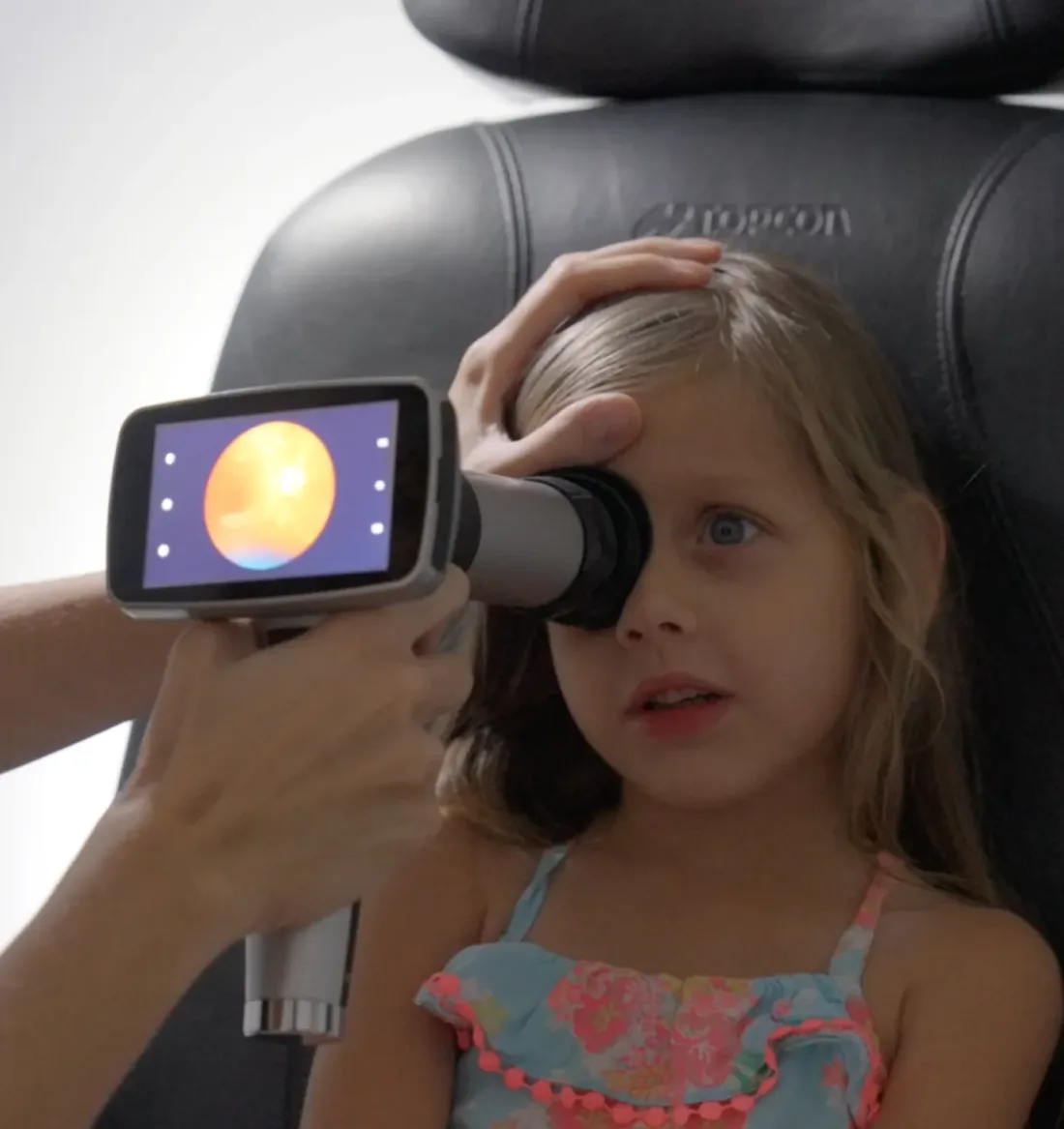
Through vision therapy and a treatment plan built for the individual, our patients gain the skills they need to strengthen the visual system and improve its efficiency. Following the initial evaluation, our doctor determines whether the patient needs corrective lenses, prism glasses, and the therapy activities that will most improve their activities of daily living — reading, screen work, driving, moving through a crowded room.
Therapy is active and progressive: each week builds on what the visual system can already do, and the plan is adjusted as symptoms settle. It runs the same way as our office-based vision therapy program, with the pacing and demands set for a recovering brain.
Care That Coordinates With Your Team
We work as part of your broader recovery team. With your permission, we coordinate with neurologists, physical and occupational therapists and primary care so everyone is working from the same plan. Providers can send referrals through our referral page, and patients are seen at our Coconut Creek, Boynton Beach, Boca Raton and West Palm Beach offices.
Related Conditions
Concussion & Vision
Why lingering post-concussion symptoms are so often visual at their root.
Convergence Insufficiency
An eye-teaming problem behind double vision and near-work discomfort.
Ocular Motor Dysfunction
Inefficient tracking that makes reading slow, effortful and error-prone.
Accommodative Disorders
Trouble shifting or holding focus, which turns near work blurry and tiring.
Vision, ADD & ADHD
When attention drifts because focusing the eyes is exhausting.
Prism Lenses
How prism supports alignment and relieves binocular-vision symptoms.
Further Reading
Can Vision Therapy Help in TBI Recovery?
How traumatic brain injury affects the visual system, and what rehabilitation can address.
Migraines and Binocular Vision Disorder
The connection between headaches, light sensitivity and eyes that are not working together.
Why Reading Causes Headaches & Eye Fatigue
What it means when visual effort turns reading into headaches, fatigue or a battle.
Still Not Feeling Right After an Injury?
A neuro-optometric evaluation can tell you whether vision is part of the picture — and what can be retrained.