Do We Take Insurance?
It is the question families ask us first. Here is the straight answer — how insurance works for comprehensive eye exams, how it works for vision therapy, and how FSA and HSA funds fit in at our Coconut Creek, Boynton Beach, Boca Raton and West Palm Beach offices.
Payment Is Due at the Time of Service
At Vision & Learning Center, our goal is to provide the best in vision evaluations and vision therapy. We work with all types of insurance on an open-access basis, which means we are not an in-network provider and do not bill your plan directly. Payment is due at the time of service, and we give you the paperwork you need to submit to your insurer yourself.
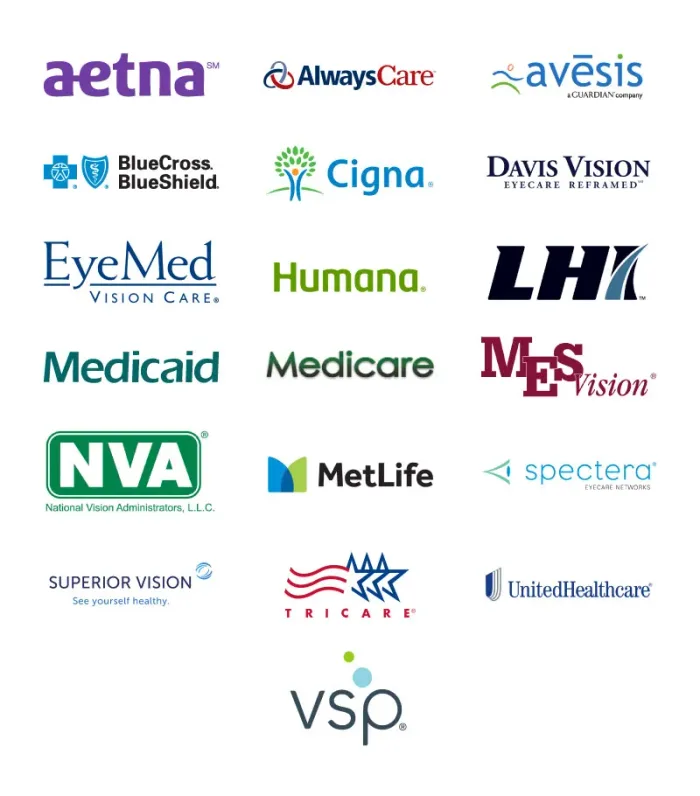
What We Accept
Evaluation fees, payment plans, Step Up for Students and the CareCredit details live on our cost & price page. If you do not carry a vision plan at all, you are welcome as a cash-pay patient at those published fees.
Materials have their own rules, separate from anything your plan does or does not reimburse: the deposit taken when glasses or contact lenses are ordered, adjustments and remakes, cancellation and restocking fees, and the one-year contact lens exchange after a prescription change are all set out in our warranty, returns & exchanges policy.
Insurance for Eye Exam Services
At Vision & Learning Center we work with all types of insurance on an open-access basis. While we are not an in-network provider, we are still able to deliver high-quality services and materials that may be eligible for reimbursement. After your visit, we are happy to provide a detailed superbill that you can submit directly to your medical insurance or vision plan for potential reimbursement.
As an open-network practice, we are not limited by the restrictions of any one insurance policy. That gives us the flexibility to choose the best labs and treatment options, ensuring your child receives the highest quality care and products — without compromising on durability or effectiveness. We take great pride in the personalized, comprehensive care we provide to every patient and their family.
For a side-by-side look at what an exam, frames and lenses actually cost here compared with using a vision plan somewhere else, see cost & insurance on our examinations page.
Insurance for Vision Therapy Services
Therapy is handled differently from an eye exam, and we would rather you knew that before you start.
You pay at the time of service
We are not a participating provider on any plan, so therapy is paid for as you go rather than billed to an insurer.
We give you a detailed receipt
It contains the information you need to file a claim with your medical insurance company.
We write a letter of medical necessity
The letter sets out the clinical reasoning along with all procedure and diagnosis codes — the documentation insurers ask for.
You submit it to your plan
Your plan decides what, if anything, it reimburses. Because coverage varies so much, we cannot promise an amount in advance.
Be prepared for a "no". Not many insurance companies cover the cost of vision therapy. To reduce their costs, most exclude the service as "educationally related" — even when the diagnosis is a medical one. Families who are reimbursed are the exception rather than the rule, so we would rather you plan around the fee than around a reimbursement that may not come.
Our programs are custom. Each patient — and the duration of treatment — depends on individual goals. We continue until your visual abilities are second nature enough to hold when we are finished, not until a benefit limit runs out. If you want a sense of what changes the length and price of a program, read how much vision therapy costs and what changes the price and what a developmental vision evaluation covers.
Why We Are Not a Participating Provider
To continue changing lives, we insist on the excellence of our care. We therefore do not act as a participating provider for any insurance plan. Dr. Murray is unwilling for an insurance company's arbitrary policies to prevent the excellence we expect.
None of us can afford to waste time and expense on mediocre care whose results may not hold over time. At Vision & Learning Center we insist on providing life-changing results for every patient enrolled in our therapy programs — and staying out of network is what protects that.
Flexible Spending & Health Savings Accounts
Many employers now offer a Flexible Spending Account (FSA) to their employees. Vision therapy generally qualifies as a medically necessary service for an FSA or a Health Savings Account (HSA).
These plans are designed to let you set money aside in an account, pre-tax, to pay for additional medical expenses such as vision therapy — so an FSA or HSA can typically be used to offset your out-of-pocket costs. Check with the benefits administrator at your work to see whether you are eligible for the program, and what documentation they require.
The detailed receipt and letter of medical necessity we provide for therapy set out the procedure and diagnosis codes. If you are unsure what to ask for, call (561) 462-1245 or send us a message.
Insurance Questions We Hear Most
Do you take insurance?
We work with all types of insurance on an open-access basis, but we are not an in-network provider and we do not act as a participating provider for any insurance plan. Payment is due at the time of service, and we give you the documentation you need to submit to your plan.
What forms of payment do you accept?
Cash, checks, debit cards, Mastercard, Visa, Discover, American Express and CareCredit.
What do you give me to submit for a comprehensive eye exam?
After your visit we are happy to provide a detailed superbill that you can submit directly to your medical insurance or vision plan for potential reimbursement. See how that compares with using a vision plan elsewhere →
Does insurance cover vision therapy?
Unfortunately, not many insurance companies cover the cost of vision therapy — to reduce their costs, most exclude the service as "educationally related". We still provide a receipt and a letter of medical necessity with all procedure and diagnosis codes so you can file a claim.
Can I use a Flexible Spending or Health Savings Account?
Vision therapy generally qualifies as a medically necessary service for an FSA or HSA, and these pre-tax accounts can typically be used to offset out-of-pocket costs. Check with the benefits administrator at your work to see whether you are eligible.
Why are you not in network with any plan?
Because an insurer's rules would decide the care. Staying open-network lets us choose the best labs, treatment options and materials for each patient rather than the ones a policy allows. Read the full reasoning →
More questions about evaluations, therapy and getting started? See our frequently asked questions, or start with the symptom checklist if you are still deciding whether an evaluation is the right next step.
More on What It Costs and How Long It Takes
Price, programme length, and what changes both — the two answers that decide whether a family can start.
- Start hereHow Much Does Vision Therapy Cost, and Why It VariesVision therapy at our offices runs $110-$200 a session, usually over 18 to 24 weeks. What changes the price,…
- Does Insurance Cover Vision Therapy? An Honest AnswerSometimes. Coverage depends on the diagnosis and your medical plan. What to ask your insurer, how…
- How Much Does a Developmental Vision Evaluation Cost?A developmental vision evaluation at Vision & Learning Center is $550 for a 100-minute visit. Here is what it…
- How Long Does Vision Therapy Take? An Honest TimelineMost vision therapy programs run 18 to 24 weeks. Here is what the CITT trials, amblyopia research and real…
It Starts With an Evaluation
Insurance should not be the thing that decides whether your child gets looked at properly. Book an evaluation, and we will tell you exactly what we find, what it costs, and what paperwork you can submit.