Down Syndrome & Vision
Higher rates of eye and vision problems make thorough, patient eye care especially important.
What to Know About Down Syndrome & Vision
Children and adults with Down syndrome have higher rates of refractive error, focusing problems and eye-teaming problems, along with several specific eye conditions. The ones detected most often are strabismus (an eye turn), tear-duct abnormalities, keratoconus (a misshapen cornea) and congenital cataracts.
A specialized eye exam can change daily life. We use age- and ability-appropriate testing so we can measure vision accurately without depending on a standard eye chart or on the patient describing what they see — then build the prescription and the therapy plan around that individual.
Eyewear matters as much as the prescription. Frames chosen for Down syndrome use designs that accommodate distinct facial features — a low nasal bridge, and modified temples that keep the glasses snug and comfortable over the ears — because glasses that slide down the nose are glasses that stop being worn. If glasses are a daily battle at your house, our post on why a child will not wear their glasses may help.
Uncorrected refractive error — nearsightedness, farsightedness and astigmatism — is common as well, and getting that measurement right is the foundation everything else is built on.
Keratoconus
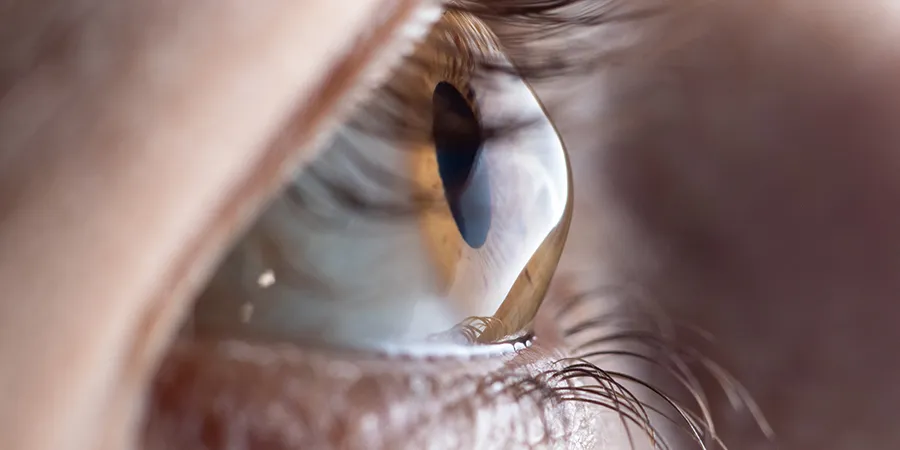
Approximately 30 percent of individuals with Down syndrome have a thinning of the cornea — the front layer of the eye — and blurred vision. Keratoconus is typically diagnosed around puberty, so regular monitoring through the pre-teen and teenage years is essential.
Blepharitis
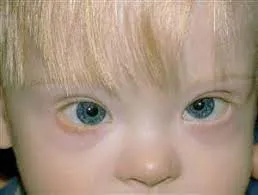
Blepharitis is inflammation of the eyelids. Symptoms include redness at the edge of the lids and crusting around the lashes, and it may cause a feeling of dryness or burning. Treatment usually consists of eyelid hygiene and topical antibiotics.
Amblyopia & Strabismus
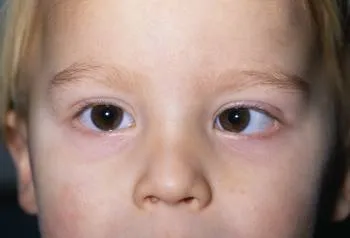
Between 20 and 60 percent of individuals with Down syndrome have amblyopia (lazy eye) or strabismus (crossed eyes). Esotropia — an inward eye turn — is the most common eye turn in Down syndrome, while exotropia, an outward turn, occurs less frequently. See how we treat both on our amblyopia & strabismus page, or read Amblyopia Therapy: A Vision Therapist’s Perspective.
Signs & Symptoms
- An eye that turns in toward the nose or out toward the ear
- Watering or tearing eyes from early infancy (tear-duct abnormality)
- Redness at the edge of the eyelids or crusting around the lashes
- Blurred or distorted vision, often first noticed around puberty
- Involuntary side-to-side, up-and-down, or circular eye movement
- Squinting, closing one eye, or holding books and screens very close
Nystagmus
Nystagmus is an involuntary side-to-side, up-and-down, or circular movement of the eyes. It typically involves both eyes, and it makes holding a steady fixation — on a face, a ball, a line of text — harder work.
Nystagmus may go away on its own with time, be managed with eyeglasses or contact lenses, or, in severe cases, require surgery. Where it is affecting function, we look at what helps this particular patient see and track most comfortably. More on nystagmus and how we evaluate it.
When to See the Doctor
The American Academy of Pediatrics recommends that children with Down syndrome be examined by an eye doctor who specializes in working with children with disabilities. The initial exam should be done by six months of age, with follow-up exams once per year, or more often if needed.
That schedule exists because these conditions rarely announce themselves. A child who has never seen clearly has no reason to report blurry vision, and an eye turn or a thinning cornea can progress quietly between visits. We see patients at our Coconut Creek, Boynton Beach and West Palm Beach offices.
Not sure where to start? The symptom checklist takes a few minutes and gives you something concrete to bring to the appointment. You can also read more about special-needs eye care, the signs of a vision problem, what our evaluations include, and the difference between a comprehensive eye exam and a developmental eye exam.
How We Help
Care starts with a comprehensive developmental and binocular vision evaluation that pinpoints exactly what's happening. From there, Dr. Murray builds an individualized plan — which may include lenses or prism, in-office vision therapy, and coordination with your other providers — at our Boynton Beach and Boca Raton offices.
Related Topics
Concerned About This?
An evaluation will tell you clearly whether this is what's going on — and what to do next.