When Vision Therapy Is Not Recommended (At Least Not Yet)
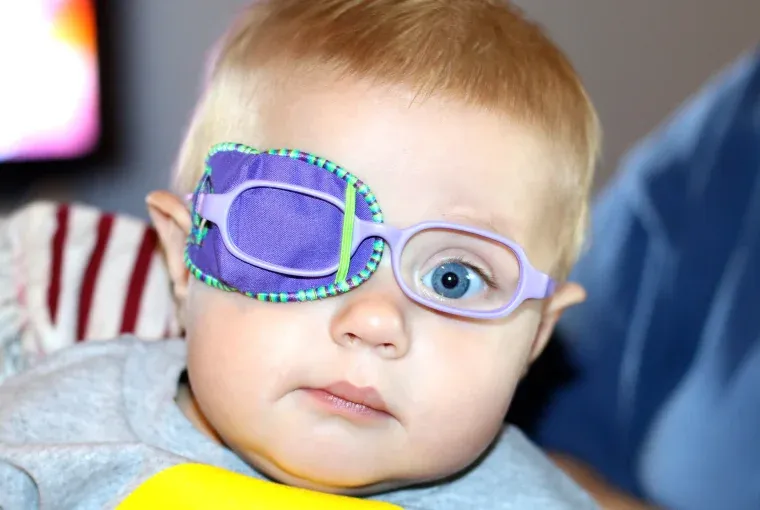
Vision therapy is not the right next step for everyone.
A child struggling with reading, attention or headaches does not automatically need vision therapy. Nor does an adult with eye strain or trouble with near work.
Sometimes therapy is clearly the right fit. Sometimes another path needs to come first. And sometimes the most helpful answer is not “yes” or “no,” but “not yet.”
Families deserve clarity, not pressure. The goal of an evaluation is not to put everyone into therapy. It is to work out what should happen next.
Key takeaways
- Vision therapy treats measurable eye teaming, focusing and tracking problems. It is not a treatment for dyslexia, ADHD or an academic skill gap.
- The strongest evidence is in symptomatic convergence insufficiency in children (CITT, 2008; Cochrane review, 2020). The largest trial that measured reading found no reading advantage over placebo (CITT-ART, 2019).
- For amblyopia (lazy eye), glasses come first for children 0 through 17. Patching or atropine is added when glasses alone are not enough, and eye exercises are not a substitute (AAO Amblyopia Preferred Practice Pattern, 2023).
- After a concussion, most children recover on their own within about four weeks (AAP/AAO clinical report, 2022), so we usually watch before starting therapy.
- Readiness, stamina, logistics and other providers all affect timing. “Not yet” is a real answer.
Why we do not recommend therapy for everyone
Vision therapy is a treatment tool, and like any treatment it only makes sense when it matches the problem.
If the main issue is not visual, therapy is not the right answer. If the patient cannot take part meaningfully, it may not be the right answer right now. If another provider needs to be involved, that comes first.
A thorough evaluation separates who is likely to benefit, who needs a different kind of support, and who needs more time. Not recommending therapy can matter as much as recommending it. For the other side of this conversation, see who is a good fit for vision therapy.
Situations where therapy may not be the right next step
Wrong problem: dyslexia and language-based reading difficulty
This is the most common mismatch we see, and we say it plainly: vision therapy is not a treatment for dyslexia.
Dyslexia is a language-based disorder rooted in how the brain processes speech sounds. A joint statement from the American Academy of Pediatrics, the American Academy of Ophthalmology, AAPOS and AACO holds that vision problems can interfere with learning but do not cause dyslexia. It also holds that the evidence does not support eye exercises, behavioral vision therapy or tinted lenses as treatments for learning disabilities (AAP/AAO/AAPOS/AACO, 2009; reaffirmed 2014). The companion technical report adds that the effective treatment is structured, evidence-based reading instruction — decoding, fluency, vocabulary and comprehension (Handler & Fierson, 2011).
Optometry’s professional bodies frame it differently: vision problems can and often do interfere with learning, and optometric care belongs inside a multidisciplinary plan (American Academy of Optometry/AOA, 1997).
Population data helps explain how both positions can hold. Among 5,822 British children, four out of five with severe reading impairment had entirely normal ophthalmic function, and reading impairment was not associated with convergence or accommodation (Creavin et al., 2015). In a smaller clinic-based comparison, 79% of children with dyslexia had some visual deficit, versus 33% of typical readers. The authors themselves note that the clinical relevance is uncertain (Raghuram et al., 2018).
Our clinical perspective at Vision & Learning Center: a child with dyslexia may also have a genuine, treatable eye teaming or focusing problem that makes reading physically uncomfortable. Finding and treating that is our job. Teaching the child to read is not, and we will not present therapy as a substitute for reading intervention. That is the whole subject of vision therapy versus tutoring.
Wrong expectation: therapy is not a reading-score intervention
Even when the visual diagnosis is right, the hoped-for outcome can be wrong.
CITT-ART randomized 310 children aged 9 to 14 with symptomatic convergence insufficiency to 16 weeks of office-based vergence and accommodative therapy, or to placebo therapy. Reading comprehension improved 3.7 points with real therapy and 3.8 points with placebo — no advantage (CITT-ART, 2019). In the companion paper, the clinical signs improved substantially more with real therapy, but symptom scores improved similarly in both groups (CITT-ART, 2019). A separate study of children with learning disorders found that therapy improved binocular vision measures; reading scores were not the outcome tested (Hussaindeen et al., 2018).
If a family’s only goal is a higher reading score, we will say honestly that therapy is not the tool built for that job.
Wrong tool: amblyopia and “eye exercises”
Amblyopia is another place where enthusiasm can outrun the evidence.
The American Academy of Ophthalmology’s Amblyopia Preferred Practice Pattern is direct: “Treatment of refractive error alone is the initial step in care of children 0 through 17 years of age with amblyopia.” Patching is “an appropriate choice for amblyopia treatment for children who do not improve with refractive correction alone or who have incomplete resolution of their VA deficit.” Atropine drops in the fellow eye are described as effective for mild to moderate amblyopia in children 3 to 15. And for “antisuppression and vergence activities, accommodation, and eye-hand coordination exercises and perceptual learning,” the same document says there is “no convincing evidence for treatment success” (Cruz et al., 2023).
Binocular video games are not a replacement either. In a 385-child trial, a binocular iPad game improved acuity 1.05 lines, versus 1.35 lines for two hours of daily patching. The trial’s primary noninferiority analysis was indeterminate, and a post hoc analysis suggested the game was not as good as patching (Holmes et al., 2016). Separately, the AAO’s review of 20 studies found no level I evidence to support binocular treatment as a substitute for patching or optical correction (Pineles et al., 2020).
So when a child arrives with amblyopia, the honest first answer is usually the right glasses plus patching or atropine — not a therapy program.
Our clinical perspective at Vision & Learning Center: once acuity is being treated with glasses and patching or atropine, we sometimes add binocular work for eye teaming and comfort (see our amblyopia and strabismus page). We are careful about how we describe it. The level I and II studies in the AAO review “failed to show a significant improvement over baseline in sensory status, including depth of suppression and stereopsis” (Pineles et al., 2020). So we offer it as an adjunct, not a substitute, and never as a promise of better depth perception.
Wrong timing: recent concussion
After a concussion, visual symptoms are common — but so is spontaneous recovery. The AAP/AAO/AAPOS/AACO clinical report states that most children recover on their own by about four weeks. It recommends a vision-specific history and examination for the children who do not (Master et al., 2022).
One review of 275 concussed children found 67 with an abnormal near point of convergence. Of those 67 children (Storey et al., 2017):
- 46% recovered with standard care alone, at a median of 4.5 weeks
- 41% recovered a median of 11 weeks after injury, but only after formal vestibular therapy that itself included convergence work such as Brock string and pencil push-ups
- 13% went on to office-based vision therapy
So most did not need vision therapy — but roughly half needed some kind of formal intervention. That is why we watch rather than dismiss.
That is why “not yet” is often the right call in the first month. When symptoms do persist, the case for a careful look is strong. Among adolescents still symptomatic 4 to 12 weeks after injury, 70% had an oculomotor diagnosis, and brief in-office screening missed many of them (Scheiman et al., 2021).
Other “wrong problem” situations
Sometimes the biggest issue is not one vision therapy is designed to solve. A child may be struggling mostly because of:
- academic skill gaps
- broader learning issues
- emotional or behavioral concerns
- sensory regulation needs that are bigger than the visual piece
- medical or neurologic issues outside the scope of therapy
An adult may be dealing with:
- a medical eye condition that needs treatment first
- neurologic concerns that require a different type of evaluation
- symptoms that are not actually being driven by a functional vision problem
How strong the research support is also varies from one diagnosis to the next, and from children to adults. We would rather say so than imply a certainty we do not have. Our companion article on who is a good fit for vision therapy walks through where the evidence is solid and where it is thin.
Readiness and participation concerns
Sometimes the visual findings support therapy, but the patient is not a good fit yet, because the readiness is not there. That can happen when:
- a child cannot participate consistently enough for therapy to be productive
- behavior or regulation makes structured treatment unrealistic right now
- stamina is so low that therapy would be frustrating rather than helpful
- the patient is not willing or able to engage in the process
- family logistics make consistent follow-through impossible
Adherence is not a small detail. In the PEDIG binocular game trial, only 22.2% of the children assigned to the game completed more than 75% of the prescribed play, and median adherence was 46% (Holmes et al., 2016). A program nobody can actually do does not work, no matter how good the plan looks on paper.
“Not yet” does not mean “never.” Often it means therapy will go better later, once other supports are in place or the child is more developmentally ready.
Need for another provider first
Sometimes the best next step is another provider, such as:
- a pediatrician, neurologist, psychologist or psychiatrist
- an occupational therapist or physical therapist
- a reading specialist or developmental specialist
- another type of eye care provider, depending on the case
A child may need help with regulation, sensory integration, academics or behavior before therapy can work. A medical or neurologic concern may need attention first. Sometimes co-management is the answer; sometimes referral has to come before treatment. If you are weighing two of these at once, our comparison of vision therapy and occupational therapy explains which problem each one is built to solve.
The important point is this: therapy is not the first move just because symptoms exist.

Why the evaluation still matters
Even when therapy is not the right next step, the evaluation is worth doing, because families still need answers:
- Is a visual problem present, and is it significant?
- Do the findings match the symptoms?
- Does therapy make sense now, later, or not at all?
- Should another referral or support come first?
The most helpful answer is often not “start therapy.” It may be “this is not primarily a vision therapy case,” or “there are findings, but readiness needs to improve first,” or “we should monitor for now.” Our developmental vision evaluation is built to answer those questions, not to funnel everyone into the same plan.
And if therapy is not the answer, there is still a next step. It might be a referral for further evaluation, occupational or physical therapy, structured reading intervention, classroom accommodations, monitoring over time, or a return visit when readiness is stronger. Sometimes that plan is sequential. Sometimes it is collaborative, with several providers each working on a different part of the picture.
How honesty helps families make better decisions
Families can tell when they are being pushed toward a service, and when they are being guided honestly. Being willing to say “this is not the right next step” saves families time, money and frustration. It also makes the recommendation stronger when therapy is appropriate, because people know it was not automatic. That is why we are specific about what vision therapy is designed to change, and what it is not.
The bottom line
Vision therapy can be genuinely life-changing for the right patient. In children with symptomatic convergence insufficiency, 73% were successful or improved with office-based therapy, compared with 35% on placebo (CITT, 2008). That is a strong result — for a specific diagnosis, in a specific age group, on symptom and clinical measures.
It is not the right next step for everyone, and saying so clearly is part of good care. Sometimes the problem is not what it first appears. Sometimes the most valuable thing we can offer is not treatment, but clarity.
If you are trying to work out whether vision is part of your child’s picture — or your own — we would rather help you find out than guess. Schedule an evaluation at one of our Coconut Creek, Boynton Beach or West Palm Beach offices, or read more about our developmental vision evaluations first.
Common Questions About This Topic
Can a child become a good fit later?
Absolutely. Sometimes the answer is not “no,” but “not yet.” A child may need greater maturity, better regulation, greater stamina, or another type of support first.
What if another provider needs to come first?
That is sometimes the most appropriate plan. Getting the right provider involved first can make the overall treatment path much more effective.
Why do the evaluation if therapy may not be recommended?
Because the evaluation gives clarity. It helps determine what is actually going on and what the next step should be, even if that next step is not therapy.
Should we start vision therapy right after a concussion?
Usually not immediately. The AAP and AAO clinical report notes that most children recover on their own by about four weeks, and recommends a vision-specific examination for those who do not. We generally watch first and evaluate carefully if symptoms persist.
Will vision therapy raise my child’s reading scores?
We do not promise that. The largest randomized trial of vision therapy for convergence insufficiency found no reading-comprehension advantage over placebo therapy. Therapy targets eye teaming, focusing and tracking, not reading instruction.
Where This Information Comes From
- American Academy of Pediatrics Section on Ophthalmology; American Academy of Ophthalmology; AAPOS; AACO (2009). Joint statement — Learning disabilities, dyslexia, and vision. Pediatrics; 124(2):837-844. : Holds that dyslexia is language-based, that vision problems can interfere with learning but do not cause dyslexia, and that evidence does not support eye exercises or behavioral vision therapy for learning disabilities.
- Handler SM, Fierson WM; AAP, AAO, AAPOS, AACO (2011). Learning disabilities, dyslexia, and vision. Pediatrics; 127(3):e818-e856. : Technical report: dyslexia stems from phonologic processing deficits and effective treatment is evidence-based reading instruction, not visual training.
- American Academy of Ophthalmology, AAP, AAPOS, AACO (2014). Joint Statement: Learning Disabilities, Dyslexia, and Vision — Reaffirmed 2014. : Reaffirms that vision problems are not the cause of primary dyslexia and that vision therapy or tinted lenses should not be recommended to improve educational performance.
- American Academy of Optometry; American Optometric Association (1997). Vision, learning and dyslexia. Journal of the American Optometric Association; 68(5):284-286. : Optometric position: vision problems can and often do interfere with learning, and optometric care is one part of a multidisciplinary approach.
- Creavin AL, Lingam R, Steer C, Williams C (2015). Ophthalmic abnormalities and reading impairment. Pediatrics; 135(6):1057-1065. : In 5,822 children, four of every five with severe reading impairment had normal ophthalmic function and no association was found with convergence or accommodation.
- Raghuram A, Gowrisankaran S, Swanson E, Zurakowski D, Hunter DG, Waber DP (2018). Frequency of Visual Deficits in Children With Developmental Dyslexia. JAMA Ophthalmology; 136(10):1089-1095. : Visual deficits were found in 79% of children with dyslexia versus 33% of typical readers, though the authors state the clinical relevance is uncertain.
- CITT-ART Investigator Group (2019). Effect of Vergence/Accommodative Therapy on Reading in Children with Convergence Insufficiency. Optometry and Vision Science; 96(11):836-849. : Reading comprehension improved 3.7 points with office-based therapy versus 3.8 with placebo therapy — no reading advantage.
- CITT-ART Investigator Group (2019). Treatment of Symptomatic Convergence Insufficiency in Children Enrolled in CITT-ART. Optometry and Vision Science; 96(11):825-835. : Convergence and fusional vergence improved more with therapy than placebo, but symptom scores improved similarly in both groups.
- Convergence Insufficiency Treatment Trial Study Group (2008). Randomized clinical trial of treatments for symptomatic convergence insufficiency in children. Archives of Ophthalmology; 126(10):1336-1349. : 73% of children were successful or improved with office-based vergence/accommodative therapy versus 35% with office placebo.
- Scheiman M, Kulp MT, Cotter SA, Lawrenson JG, Wang L, Li T (2020). Interventions for convergence insufficiency: a network meta-analysis. Cochrane Database of Systematic Reviews; 12:CD006768. : Across 12 trials and 1,289 participants, office-based therapy beat placebo in children (RR 3.04); the evidence in adults was less clear.
- Cruz OA, Repka MX, Hercinovic A, et al.; AAO Preferred Practice Pattern Pediatric Ophthalmology/Strabismus Panel (2023). Amblyopia Preferred Practice Pattern. Ophthalmology; 130(3):P136-P178. : Treating refractive error alone is the initial step for children 0 through 17, with patching or atropine when correction alone is not enough; no convincing evidence of treatment success for antisuppression, vergence, accommodative or perceptual-learning activities.
- Pineles SL, Aakalu VK, Hutchinson AK, et al. (2020). Binocular Treatment of Amblyopia: A Report by the American Academy of Ophthalmology. Ophthalmology; 127(2):261-272. : Found no level I evidence supporting binocular/dichoptic treatment as a substitute for patching or optical correction.
- Holmes JM, Manh VM, Lazar EL, et al.; Pediatric Eye Disease Investigator Group (2016). Effect of a Binocular iPad Game vs Part-time Patching in Children Aged 5 to 12 Years With Amblyopia. JAMA Ophthalmology; 134(12):1391-1400. : The binocular game improved acuity 1.05 lines versus 1.35 lines with 2 hours of daily patching; the primary noninferiority analysis was indeterminate and a post hoc analysis favored patching. Game adherence was poor.
- Master CL, Bacal D, Grady MF, et al.; AAP Section on Ophthalmology, AAO, AAPOS, AACO (2022). Vision and Concussion: Symptoms, Signs, Evaluation, and Treatment. Pediatrics; 150(2):e2021056047. : Visual symptoms are common after concussion, most children recover on their own by 4 weeks, and those who do not warrant a vision-specific history and examination.
- Storey EP, Master SR, Lockyer JE, Podolak OE, Grady MF, Master CL (2017). Near Point of Convergence after Concussion in Children. Optometry and Vision Science; 94(1):96-100. : Of 67 children with abnormal near point of convergence after concussion, 46% recovered with standard care, 41% recovered after formal vestibular therapy that included convergence work, and 13% went on to office-based vision therapy.
- Scheiman M, Grady MF, Jenewein E, et al. (2021). Frequency of oculomotor disorders in adolescents 11 to 17 years of age with concussion, 4 to 12 weeks post injury. Vision Research; 183:73-80. : 70% of adolescents still symptomatic 4-12 weeks after concussion had an oculomotor diagnosis, and brief physician screening missed many of them.
- Hussaindeen JR, Shah P, Ramani KK, Ramanujan L (2018). Efficacy of vision therapy in children with learning disability and associated binocular vision anomalies. Journal of Optometry; 11(1):40-48. : Vision therapy improved binocular vision measures in children with learning disorders; reading and academic scores were not the outcome measured.
Care We Provide
More From the Blog
Wondering If This Sounds Like Your Family?
A developmental vision evaluation measures the skills a routine eye exam does not. Our team sees children and adults in Coconut Creek, Boynton Beach, Boca Raton and West Palm Beach.