Who Is a Good Fit for Vision Therapy?
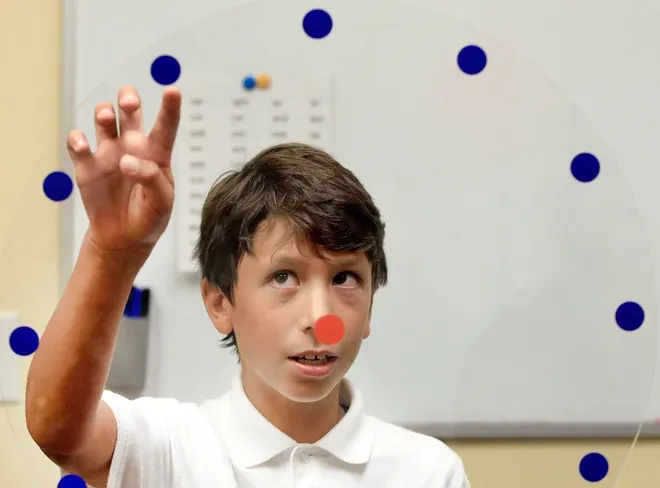
Not everyone who struggles with reading, attention, headaches, or visual discomfort is automatically a good fit for vision therapy. That is important to say clearly.
We do not recommend therapy just because a child is having a hard time in school or an adult is frustrated by symptoms. We recommend it when the evaluation shows a visual problem that can reasonably be improved through treatment, and when the patient is in a position to participate meaningfully in the process.
Key takeaways
- A good fit means three things at once: measurable visual findings, real-life symptoms that match those findings, and the readiness and support to follow through.
- The evidence is strongest for symptomatic convergence insufficiency in children, where office-based therapy clearly beat placebo (CITT, 2008; Scheiman et al., 2020 Cochrane review).
- The evidence is weaker for adults, for reading and learning outcomes, and for amblyopia, where the American Academy of Ophthalmology’s guideline puts glasses, patching and atropine first (AAO Amblyopia PPP, 2023).
- A diagnosis by itself is not a green light. Timing, motivation, and family logistics are part of the decision.
- Only an evaluation can answer the question for a specific person. Symptoms alone cannot.
What makes someone a good fit for therapy
A good fit usually checks three boxes.
First, there needs to be an actual visual issue to treat: eye teaming, focusing, tracking, visual stamina, suppression, binocular instability, or another functional vision problem.
Second, those findings should matter in real life. The problem is not just showing up on paper — it is affecting reading, school, work, comfort, attention to near tasks, coordination, or daily function.
Third, the patient needs to be able to participate. Therapy works best when there is enough readiness, consistency, and support to make treatment meaningful.
The right fit depends on both the clinical findings and the person in front of us.
Symptoms that commonly lead families to consider therapy
Many patients who end up being a good fit for vision therapy start with symptoms like:
- headaches with reading or near work
- eye strain
- blurred vision
- double vision
- losing place while reading
- skipping lines
- rereading often
- poor reading stamina
- avoiding homework or close work
- fatigue with screens or paperwork
- trouble copying from the board
- difficulty shifting between near and far
- strong verbal ability but weaker performance during visually demanding tasks
- visual discomfort after school or work
- reduced attention during reading, even when attention seems better in other settings
For children, families often notice that homework takes too long, reading feels unusually frustrating, or schoolwork causes far more fatigue than expected. For teens, college students, and adults, it looks more like headaches, screen fatigue, reduced endurance, or persistent binocular discomfort.
These symptoms do not automatically mean someone needs vision therapy. They mean it may be worth looking deeper. Researchers score them with a standardized questionnaire, the Convergence Insufficiency Symptom Survey, which separated children with convergence insufficiency from children with normal binocular vision reasonably well at a cut-off of 16 — 96% sensitivity and 88% specificity (Borsting et al., 2003) — but it is a research measure, not a diagnosis on its own.
Where the research support is strongest
Being honest about the evidence is part of recommending treatment responsibly. Three groups stand out.
Children with symptomatic convergence insufficiency
This is the best-studied candidate group in all of vision therapy, and the condition is common: about 13% of fifth- and sixth-graders in a US school-based study met a high-suspect or definite classification (Rouse et al., 1999).
In the 221-child Convergence Insufficiency Treatment Trial, 73% of children given office-based vergence and accommodative therapy with home reinforcement were classed successful or improved after 12 weeks, versus 35% on an office-based placebo (CITT, 2008). A Cochrane network meta-analysis of 12 trials and 1,289 participants reached the same conclusion in children (Scheiman et al., 2020).
The follow-up trial complicates that picture, and you should hear it. In CITT-ART, convergence and fusional vergence improved substantially more with therapy than placebo, but symptom scores improved about the same in both groups (CITT-ART, 2019). We read that as: the physical findings respond reliably, while symptom relief is harder to attribute to therapy alone.
Children with accommodative (focusing) dysfunction
Focusing problems travel with convergence problems. Of the 221 CITT children, 74% also had accommodative dysfunction, and after 12 weeks the amplitude of accommodation improved 9.9 diopters with office-based therapy versus 2.2 with placebo (Scheiman et al., 2011).
Isolated focusing problems are less settled: a 2020 review found prevalence estimates from under 1% to 61.6% depending on criteria, and no high-quality evidence establishing a standard treatment protocol (Hussaindeen & Murali, 2020).
Some people with persistent oculomotor problems after concussion
Among people who stay symptomatic after concussion, vision problems are common: 70% of 113 adolescents examined 4 to 12 weeks after injury had at least one oculomotor diagnosis, and routine physician screening missed many (Scheiman et al., 2021). The AAP/AAO/AAPOS/AACO clinical report recommends a vision-specific history and examination for children who have not recovered by four weeks (Master et al., 2022).
Two cautions belong with that. Most children and adolescents with visual symptoms after concussion recover on their own by about four weeks (Master et al., 2022), and even among those whose near point of convergence stays abnormal, office-based vision therapy is the exception: of 67 such children in one series, 46% recovered with standard clinical care, another 41% recovered after referral for formal vestibular therapy, and 13% were referred for office-based vision therapy (Storey et al., 2017). And the treatment evidence is thin: the encouraging post-concussion results come from uncontrolled case series (Gallaway et al., 2017), not randomized trials. No controlled trial has shown that vision therapy speeds overall concussion recovery.
Where the evidence is weaker
Adults
Adults can be strong candidates clinically, and we treat them regularly — but the published base is smaller. In a randomized trial of 46 adults aged 19 to 30, only the office-based therapy group changed on the clinical measures, and 42% met symptom-elimination criteria versus 31% on placebo, with more than half of treated patients still symptomatic (Scheiman et al., 2005). The Cochrane review reached the same verdict: less clear in adults (Scheiman et al., 2020).
Amblyopia and strabismus
These patients may still be good candidates, but the cases are more involved and take longer — and the guideline position matters. The AAO’s Amblyopia Preferred Practice Pattern puts optical correction first, then patching or atropine, notes that success rates decline with age while treatment may still be offered to older children and teenagers, and states there is no convincing evidence of treatment success for eye exercises in amblyopia (Cruz et al., 2023). The AAO also found no level I evidence that binocular or dichoptic digital treatment can substitute for patching or glasses (Pineles et al., 2020).
Our clinical perspective at Vision & Learning Center is that therapy here targets something different from acuity — eye teaming, suppression, depth perception and comfort — and works alongside glasses, patching or surgery, not instead of them. After strabismus surgery the need can still be very real, because surgery can improve eye position without fully restoring how the eyes and brain work together.
Reading, learning and attention
Positions differ here, and we will state both. The 2009 joint statement from the American Academy of Pediatrics, the AAO, AAPOS and AACO holds that vision problems do not cause dyslexia and that evidence does not support eye exercises or behavioral vision therapy for learning disabilities (AAP et al., 2009). The optometric position is that vision problems can and often do interfere with learning, and that optometric care is one part of a multidisciplinary approach (AAO/AOA, 1997).
On the specific question of reading, the trial data sit closer to the first position: CITT-ART found reading comprehension improved 3.7 points with therapy and 3.8 with placebo (CITT-ART, 2019), and a study of children with learning disorders found therapy improved binocular measures, with reading scores not the outcome tested (Hussaindeen et al., 2018).
So we say it plainly: we do not treat dyslexia, and vision therapy is not a reading program. Some children who struggle with reading also have a treatable eye-teaming or focusing problem that makes near work uncomfortable. Finding and treating that is our job; reading instruction belongs to teachers and reading specialists.
Sports vision
Sports vision training is mechanistically reasonable and popular. A review of digital sports-vision training techniques lays out the premise — that demanding visual, cognitive or oculomotor tasks can improve the ability to process and respond to what is seen — and offers critical review of the supporting research “where available” (Appelbaum & Erickson, 2018). We read that hedge as a field whose evidence base has not caught up with its products, so we offer sports vision as performance training with realistic expectations, not as a medical claim.
Diagnoses or findings that may support therapy
A patient may be a good fit for vision therapy when the evaluation shows findings such as:
- convergence problems
- focusing (accommodative) dysfunction
- tracking weaknesses
- binocular instability
- poor visual stamina
- suppression
- some amblyopia-related visual deficits
- some strabismus-related functional deficits
- visual inefficiency affecting reading or near work
Some cases are straightforward; others are complex. The point is not that every diagnosis leads to therapy — it is that therapy is most appropriate when there is a clear reason for it.
Why commitment and readiness matter
A patient can have a diagnosis that supports therapy and still not be the right fit right now if the timing, readiness, or follow-through is not there. Vision therapy is an active treatment process. It takes participation, consistency, and enough stamina and cooperation to build change over time.
For children, we ask whether the child can participate well enough for therapy to be productive, whether there is enough family support to get to visits and help with follow-through, and whether expectations are realistic. For teens and adults, we ask whether the patient is motivated, can commit the time and mental energy, and is ready to do the work consistently.
A good fit is not just about having symptoms — it is about being able to engage in the process. Our companion article on who is not a good fit for vision therapy, at least not yet, goes through the other side of that decision, and how long vision therapy takes covers the commitment involved.
What therapy is trying to improve
Vision therapy is not meant to “fix everything.” It is trying to improve how the visual system functions:
- better eye teaming
- more accurate tracking
- stronger focusing ability
- improved visual comfort
- better stamina for reading and near work
- reduced symptoms like blur, double vision, headaches, and strain
- stronger efficiency during school, work, and daily visual tasks
For one patient, success may mean reading without headaches; for another, better binocular control; for another, less fatigue at the computer. The goals of therapy should match the actual problem being treated.
Why the evaluation comes before deciding
This is the most important part of the conversation, because you cannot decide who is a good fit based on symptoms alone.
Two patients may both report headaches and reading difficulty, yet one has a binocular vision problem, one a focusing issue, one a broader learning issue, and one may not need therapy at all. The evaluation tells us whether vision therapy makes sense, what it would treat, and whether the likely benefit matches the commitment involved.
That is also why we do not assume everyone qualifies. Some patients are good candidates. Some need a different type of care, or co-management, or monitoring rather than treatment. And some need to address other barriers first.

A good fit for vision therapy is not simply someone who is struggling. It is someone whose evaluation shows a visual problem that therapy is designed to address, whose symptoms match those findings, and who is in a position to participate.
If you are wondering whether your child, teen, or you might be a good fit, the goal is not to guess. Read more about our vision therapy program or browse our frequently asked questions, then let us find out properly with a developmental vision evaluation. Schedule an evaluation and we will tell you honestly whether therapy is the right tool for the job.
Common Questions About This Topic
Does everyone with reading struggles need vision therapy?
No. Reading struggles can come from many different causes. Vision therapy is appropriate only when there is a visual problem that warrants it. A large randomized trial of vision therapy for convergence insufficiency found no reading-comprehension advantage over placebo therapy, so we do not offer it as a reading treatment.
Can a child be a good fit for vision therapy?
Yes, many children are good candidates when the evaluation shows a functional vision problem and the child is ready enough to participate consistently. The strongest published support is for children aged about 9 to 17 who have symptomatic convergence insufficiency.
Can adults be a good fit for vision therapy?
Yes. Adults may be good candidates too, especially when symptoms involve binocular discomfort, visual fatigue, headaches, double vision, or difficulty with sustained near work. Be aware that the adult research base is smaller and less clear-cut than the children's evidence.
Can someone have the right diagnosis but still not be ready for therapy?
Yes. A diagnosis alone does not guarantee that therapy is the right next step. Sometimes the visual findings are there, but readiness, stamina, motivation, or family logistics make starting right now unrealistic. Commitment and consistency are part of the decision, so timing and treatment planning matter as much as the diagnosis.
How do I know if therapy is the right next step?
The best way to know is through a full evaluation. That is what tells us whether vision therapy is appropriate, what it would target, and whether it makes sense for that patient.
Where This Information Comes From
- Convergence Insufficiency Treatment Trial Study Group (2008). Randomized clinical trial of treatments for symptomatic convergence insufficiency in children. Archives of Ophthalmology. : In 221 children aged 9-17, 73% were successful or improved after 12 weeks of office-based vergence/accommodative therapy versus 35% with office placebo.
- Scheiman M, Kulp MT, Cotter SA, Lawrenson JG, Wang L, Li T (2020). Interventions for convergence insufficiency: a network meta-analysis. Cochrane Database of Systematic Reviews. : Across 12 trials and 1289 participants, office-based therapy beat placebo in children (RR 3.04); the adult evidence was less clear.
- CITT-ART Investigator Group (2019). Treatment of symptomatic convergence insufficiency in children enrolled in CITT-ART: a randomized clinical trial. Optometry and Vision Science. : Convergence and fusional vergence improved more with therapy than placebo, but symptom scores improved similarly in both groups.
- CITT-ART Investigator Group (2019). Effect of vergence/accommodative therapy on reading in children with convergence insufficiency: a randomized clinical trial. Optometry and Vision Science. : Reading comprehension improved 3.7 points with therapy versus 3.8 with placebo - no reading benefit.
- Scheiman M, Mitchell GL, Cotter S, et al. (2005). A randomized clinical trial of vision therapy/orthoptics versus pencil pushups for the treatment of convergence insufficiency in young adults. Optometry and Vision Science. : In 46 adults aged 19-30, only office-based therapy changed the clinical signs; 42% met symptom-elimination criteria versus 31% with placebo.
- Scheiman M, Cotter S, Kulp MT, et al.; CITT Study Group (2011). Treatment of accommodative dysfunction in children: results from a randomized clinical trial. Optometry and Vision Science. : 74% of CITT children also had accommodative dysfunction; amplitude of accommodation rose 9.9 D with office-based therapy versus 2.2 D with placebo.
- Hussaindeen JR, Murali A (2020). Accommodative insufficiency: prevalence, impact and treatment options. Clinical Optometry. : Prevalence estimates range from under 1% to 61.6% depending on criteria, and no high-quality evidence establishes a standard treatment protocol.
- Rouse MW, Borsting E, Hyman L, et al.; CIRS Group (1999). Frequency of convergence insufficiency among fifth and sixth graders. Optometry and Vision Science. : About 13% of 453 fifth- and sixth-graders met a high-suspect or definite CI classification; 78.9% of three-sign CI children also had accommodative insufficiency.
- Borsting EJ, Rouse MW, Mitchell GL, et al.; CITT Group (2003). Validity and reliability of the revised convergence insufficiency symptom survey in children aged 9 to 18 years. Optometry and Vision Science. : A CISS cut-off of 16 or more gave 96% sensitivity and 88% specificity for symptomatic CI in children.
- Cruz OA, Repka MX, Hercinovic A, et al.; AAO Preferred Practice Pattern Pediatric Ophthalmology/Strabismus Panel (2023). Amblyopia Preferred Practice Pattern. Ophthalmology. : Optical correction first, then patching or atropine; success rates decline with age but treatment may still be offered to older children, and there is no convincing evidence of success for eye exercises in amblyopia.
- Pineles SL, Aakalu VK, Hutchinson AK, et al. (2020). Binocular treatment of amblyopia: a report by the American Academy of Ophthalmology. Ophthalmology. : No level I evidence supports binocular/dichoptic treatment as a substitute for patching or optical correction.
- Scheiman M, Grady MF, Jenewein E, et al. (2021). Frequency of oculomotor disorders in adolescents 11 to 17 years of age with concussion, 4 to 12 weeks post injury. Vision Research. : 70% of 113 adolescents still symptomatic 4-12 weeks after concussion had an oculomotor diagnosis, and physician screening missed many.
- Master CL, Bacal D, Grady MF, et al.; AAP Section on Ophthalmology, AAO, AAPOS, AACO (2022). Vision and concussion: symptoms, signs, evaluation, and treatment. Pediatrics. : Most children recover by 4 weeks; those who do not warrant a vision-specific history and examination including convergence and accommodation.
- Storey EP, Master SR, Lockyer JE, et al. (2017). Near point of convergence after concussion in children. Optometry and Vision Science. : Of 67 children with abnormal near point of convergence after concussion, 46% recovered with standard care, 41% after formal vestibular therapy and 13% were referred for office-based vision therapy.
- Gallaway M, Scheiman M, Mitchell GL (2017). Vision therapy for post-concussion vision disorders. Optometry and Vision Science. : Uncontrolled case series of 218 records: of the 54% who completed therapy, 85% of CI patients were classed successful - promising but not a controlled trial.
- American Academy of Pediatrics, American Academy of Ophthalmology, AAPOS, AACO (2009). Joint statement - learning disabilities, dyslexia, and vision. Pediatrics. : Holds that vision problems do not cause dyslexia and that evidence does not support eye exercises or behavioral vision therapy for learning disabilities.
- American Academy of Optometry; American Optometric Association (1997). Vision, learning and dyslexia: a joint organizational policy statement. Journal of the American Optometric Association. : The optometric position: vision problems can interfere with learning, and optometric care is one part of a multidisciplinary approach.
- Hussaindeen JR, Shah P, Ramani KK, Ramanujan L (2018). Efficacy of vision therapy in children with learning disability and associated binocular vision anomalies. Journal of Optometry. : Vision therapy improved binocular vision measures in children with learning disorders; reading and academic scores were not the outcome measured.
- Appelbaum LG, Erickson G (2018). Sports vision training: a review of the state-of-the-art in digital training techniques. International Review of Sport and Exercise Psychology. : Narrative review of digital sports-vision training techniques; surveys the approaches and offers critical review of the supporting research 'where available'.
Care We Provide
More From the Blog
Wondering If This Sounds Like Your Family?
A developmental vision evaluation measures the skills a routine eye exam does not. Our team sees children and adults in Coconut Creek, Boynton Beach, Boca Raton and West Palm Beach.