Learn More About

Binocular Vision Dysfunction

Binocular vision dysfunction (BVD) is what happens when the two eyes fail to work together in harmony. The misalignment can be small enough to pass a routine eye exam and still produce double vision, eye strain, headaches and dizziness — in children and adults alike.

Children & adults Often missed at 20/20 4 South Florida offices
Start Here

What Binocular Vision Dysfunction Is

Comfortable, effortless vision depends on the two eyes pointing at exactly the same place at exactly the same moment, so the brain receives one matched pair of images to fuse into a single, stable, three-dimensional picture. In binocular vision dysfunction the two eyes fail to work together in harmony. The images no longer match, the brain has to work continuously to reconcile them, and that constant effort surfaces as a range of symptoms — double vision, eye strain, headaches, dizziness.

BVD is mainly under-diagnosed, and has been estimated to affect about 20% of the population. Part of the reason is that the misalignment is often tiny: each eye can be healthy, each eye can see 20/20 on the chart, and the problem still sits in how the two of them work as a team. Acuity and binocular function are different measurements, and a routine eye exam mostly checks the first. A developmental and binocular vision evaluation checks the second.

Vision Acquisition Skills — how the visual skills behind comfortable binocular vision are built.
Do You Notice?

Symptoms of Binocular Vision Dysfunction

Any one of these has other possible explanations. It is the pattern — several of them together, worse with reading, screens or driving — that points toward the eyes.

  • Blurry vision
  • Double vision
  • A sense of imbalance
  • Painful headaches or migraines
  • Dizziness spells
  • Dizziness while driving
  • Difficulty focusing
  • Light sensitivity
Take Our Interactive Symptom Checklist

A five-minute screening tool with an instant score — a starting point, not a diagnosis.

Who It Affects

How BVD Looks at Different Ages

The same underlying problem, described in two very different ways.

In Children

Children rarely say "my eyes hurt" or "I see double" — the way they have always seen is simply normal to them. BVD usually shows up as behaviour around near work instead.

  • Avoiding reading and homework; fatigue or meltdowns after school
  • Losing place, skipping or re-reading lines, using a finger to track
  • Headaches or eye rubbing after reading or screen time
  • Covering or closing one eye, or tilting the head, to steady the page
  • Passing a school screening at 20/20 and still struggling
In Adults

Adults can describe their symptoms, but they are usually attributed to something else — stress, screens, migraine, an inner-ear problem — for years before binocular vision is measured.

  • Headaches and eye strain that build through a day at the computer
  • Trouble judging distance when parking, merging or driving at night
  • Dizziness or disorientation in visually busy places like grocery stores
  • Reading fatigue, re-reading, and a slow, effortful reading speed
Why It Happens

Causes of Binocular Vision Dysfunction

BVD can be present from birth or develop later in life. These are the most common underlying reasons.

Muscle Imbalance

One of the primary reasons is an imbalance in the eye muscles. One eye may turn slightly inward, outward, upward or downward compared with the other, causing misalignment. A small vertical misalignment has its own name — vertical heterophoria.

Nerve Damage

Trauma or conditions that damage the nerves controlling the eye muscles can result in BVD — a cranial nerve palsy is one example. Sudden or new double vision should be evaluated promptly.

Traumatic Brain Injury (TBI)

Head injuries, even minor ones, can cause problems with binocular vision. It is not uncommon for post-concussion patients to experience symptoms of BVD.

Congenital Issues

Some people are born with eye alignment issues, which can manifest as BVD. Conditions like strabismus — where the eyes do not align correctly — can be present from birth.

Refractive Errors

Different refractive errors between the two eyes (anisometropia) can contribute to BVD. If one eye is more nearsighted or farsighted than the other, it can cause problems with binocular vision.

Systemic Diseases

Conditions like diabetes or multiple sclerosis, which can affect nerve function, can also be associated with BVD.

Eye Surgery or Trauma

Surgeries — particularly those affecting the eye muscles or resulting in scar tissue — can cause or exacerbate BVD. Direct trauma to the eye or surrounding structures can likewise lead to binocular vision problems.

Accommodative or Focusing Issues

Problems with the eye’s ability to change focus, or accommodate, can affect binocular vision.

Developmental Issues

In some cases, especially in children, the visual system does not develop correctly, leading to BVD.

Treatment

How Binocular Vision Dysfunction Is Treated

Prism Glasses

Special lenses that help realign the images seen by each eye, making it easier for the brain to merge them into a single image.

Vision Therapy

A series of supervised exercises and activities aimed at improving eye coordination, eye movements and visual processing skills.

Surgery

In severe cases, or when conservative treatments do not provide relief, surgical intervention might be recommended to correct muscle imbalances or alignment issues. Surgery is an ophthalmologic procedure, not something performed in an optometry office.

Which of these belongs in your plan is a question the evaluation answers, not a decision made in advance. Many plans combine tools — lenses or prism to make seeing comfortable now, therapy to build the skills that hold the gain — and we coordinate with your other providers when a head injury or medical condition is part of the picture. Compare vision therapy with the alternatives.

The Next Step

What a Binocular Vision Evaluation Looks At

A comprehensive developmental and binocular vision evaluation goes well beyond the eye chart. It measures how the eyes align and team at distance and near, how smoothly they track across a line of text, how quickly and comfortably they change focus, how the two eyes combine to judge depth, and how the whole system holds up under sustained work like reading, screen time or driving — alongside eye health and prescription.

You leave understanding the findings and the recommended next steps, including whether binocular vision is contributing to your symptoms at all. Children and adults are seen at our Coconut Creek, Boynton Beach, Boca Raton and West Palm Beach offices.

Sudden, new or worsening double vision, dizziness or headaches should be checked by your physician promptly. This page is educational and is not a diagnosis.

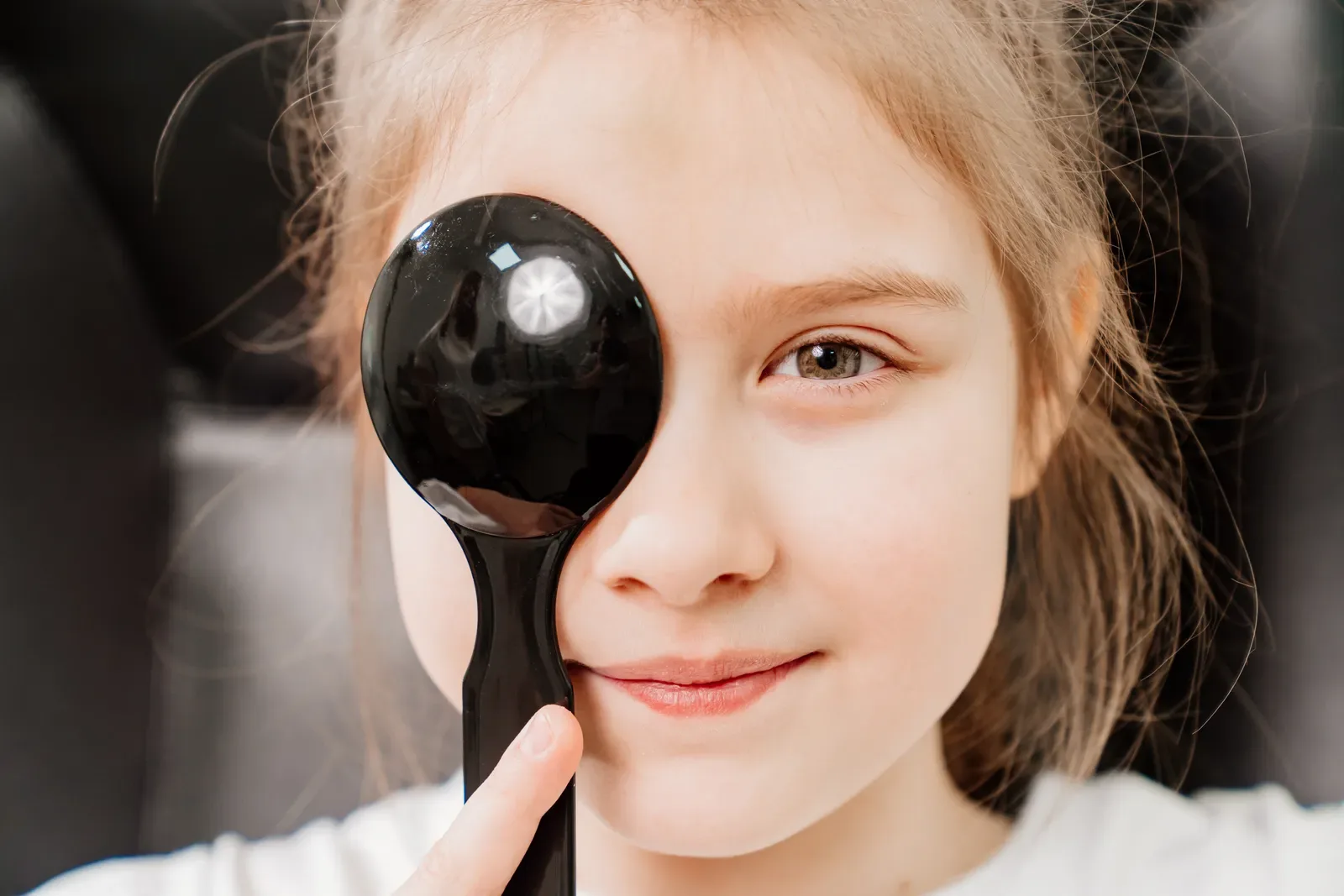
A child covering one eye with an occluder during a vision test
Questions

Frequently Asked Questions

Can you have 20/20 vision and still have binocular vision dysfunction?

Yes — and it is the usual story. Acuity (how sharply each eye sees on its own, measured by the eye chart) and binocular function (how well the two eyes align, team, focus and track together) are different things, and a routine exam mostly measures the first. A developmental and binocular vision evaluation measures the second.

How is binocular vision dysfunction diagnosed?

With a comprehensive developmental and binocular vision evaluation. Beyond eye health and prescription, it measures how the eyes align and team at distance and near, how they track across a line of text, how quickly and comfortably they change focus, and how depth perception holds up — then puts the findings in writing with recommended next steps. See what an evaluation involves.

Is BVD the same thing as convergence insufficiency?

Not quite. "Binocular vision dysfunction" is the umbrella term for the two eyes failing to work together well. Convergence insufficiency — the eyes drifting outward at near — is one of its most common specific forms, and vertical heterophoria is another. The evaluation is what identifies which pattern is present.

Can children have BVD?

Yes. In children it more often looks like avoiding reading, losing place on the page, headaches after school or homework battles than like a complaint about vision — because a child has no other version of seeing to compare with. Learning-related vision care and the symptom checklist are good places to start.

Do prism glasses cure it?

Prism bends light so the eyes align more comfortably, which can relieve symptoms — it compensates for the misalignment rather than building new skill. Vision therapy builds the teaming, focusing and tracking skills themselves. Prism may be used on its own or alongside therapy, depending on the diagnosis and goals.

Is surgery ever needed?

Rarely, and it is not the first step. Surgery is considered in severe cases, or when conservative treatment does not provide relief, to correct muscle imbalances or alignment issues. Most binocular vision problems are managed with lenses, prism, vision therapy or a combination — compare the options.

Go Deeper

More on Binocular Vision Dysfunction

How a small misalignment between the eyes produces headaches, dizziness and reading difficulty, and what can be done about it.

Next Steps

Ready for the Next Steps?

If several of these symptoms sound familiar, an evaluation is the way to get a clear answer about whether the two eyes are working together — and what to do if they are not.