Common Eye Problems in Teens (13-18 Years)
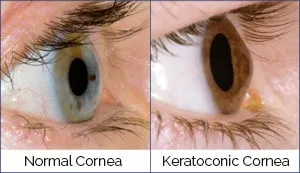
The teenage years change what the eyes are asked to do. Homework loads climb, phones and laptops take over the evening, contact lenses replace glasses, and sports get faster. Most teen eye problems are ordinary and fixable, but a few start quietly in this age range and are far easier to manage when caught early. Here is what we watch for in our Coconut Creek, Boynton Beach and West Palm Beach offices, and what the research actually says.
For younger children, see our guide to eye problems in children 6 to 12; for screen limits by age, our complete screen-time guide.
Key takeaways
- Time outdoors lowers a teen’s risk of becoming nearsighted, and some treatments slow myopia once it has started (Xiong et al., 2017; Walline et al., 2020).
- Digital eye strain affects at least half of screen users, but the fix depends on whether the cause is dryness or focusing (Sheppard & Wolffsohn, 2018).
- 85% of US teen contact lens wearers report at least one behavior that raises their infection risk (Cope et al., 2017).
- Habitual eye rubbing is the most consistently reported modifiable risk factor for keratoconus, which is usually diagnosed between the teens and the late twenties and steepens fastest in the youngest patients (Sahebjada et al., 2021; Godefrooij et al., 2017; Ferdi et al., 2019).
- Properly fitted sports eye protection cuts the risk of a significant eye injury by at least 90% (AAP/AAO, 2013).
1. Myopia (nearsightedness)
Distance blurs while near stays clear: squinting at the whiteboard, sitting closer to the screen, a prescription that shifts with each growth spurt. The research on screens and myopia is genuinely mixed (Lanca & Saw, 2020; Foreman et al., 2021), while daylight is the better-supported lever: outdoor time lowers the risk of becoming nearsighted, though it does not slow myopia already underway (Xiong et al., 2017). We set that evidence out study by study in our guide to eye problems in children 6 to 12, and it applies just as much at 15.
What changes in the teenage years is what a teen does with a myopic prescription. Glasses often give way to contact lenses, which carry their own care routine (section 3). Some treatments slow progression while the eye is still growing: in a Cochrane review of 41 trials, atropine drops slowed progression by about 1.00 D over a year versus placebo and overnight orthokeratology lenses slowed eye growth by 0.28 mm, with no serious adverse events reported, though atropine caused more focusing difficulty than placebo (Walline et al., 2020). Those are exam-room decisions, not online purchases. A prescription that changes often and never quite sharpens deserves a look at the cornea rather than another lens swap — see keratoconus in section 7. And once a teen starts driving, clear distance vision at night matters in a way it never did in a classroom.
2. Digital eye strain
Sore, dry, tired eyes after a long screen session, often with headaches and neck ache. Reviews put this at half or more of screen users (Sheppard & Wolffsohn, 2018), and a teenage day stacks the exposure: screens at school, homework on a laptop, then a phone held close in a dark room at night.
Symptoms come from two places: focusing and eye-teaming effort, and a dried-out eye surface from blinking less often and less completely at a screen (Rosenfield, 2011). The distinction matters, because artificial tears will not fix a focusing problem and new glasses will not fix a dry eye — and a teen in contact lenses can arrive with both at once. Blue-light glasses are a popular purchase, but a 2023 Cochrane review of randomized trials found they may not reduce eye strain at all (Singh et al., 2023). Better bets: an accurate prescription, a screen about arm’s length away and slightly below eye level, glare control, deliberate blinking and real breaks. More on our computer vision syndrome page and in our digital eye strain guide.
3. Contact lens problems
Contacts are a milestone, and they carry real responsibility. In 2016 an estimated 3.6 million US adolescents aged 12 to 17 wore contact lenses, and 85% reported at least one behavior that raised their risk of a lens-related eye infection. The three most common in that age group: not seeing an eye doctor at least yearly, sleeping or napping in lenses, and swimming in lenses (Cope et al., 2017).
Redness, pain, light sensitivity, discharge or blur in a lens wearer is not a “wait and see” situation. Take the lenses out, keep them for the doctor, and be seen the same day. Corneal infections can scar and permanently reduce vision.
4. Astigmatism, farsightedness and amblyopia
Not every blurry teenager is nearsighted. Astigmatism (an unevenly curved cornea) and hyperopia (farsightedness) often show up as headaches, tired eyes and avoidance of reading rather than obvious blur. Refractive error is common in and just past this age band: 45% of randomly sampled Spanish university students aged 18 to 35 had one (Garcia-Munoz et al., 2016), which is a nearby population rather than a US teen rate. A dilated refraction finds the hidden farsighted prescription a quick screening misses.
Amblyopia (“lazy eye”) is usually treated in childhood, but 15 is not automatically too late: among 13- to 17-year-olds who had never been treated, 47% responded to patching plus glasses versus 20% with glasses alone, though most kept some residual deficit (Scheiman et al., 2005).
5. Eye allergies, and the rubbing habit
Itchy, red, watery eyes with swollen lids and stringy clear discharge point to allergic conjunctivitis. Allergen avoidance, cool compresses and over-the-counter antihistamine drops are the first steps we usually suggest; persistent or severe symptoms need an exam and a prescription.
Treating allergy properly matters for a second reason: it breaks the rubbing habit. Allergy is itself an independent risk factor for keratoconus (odds ratio 1.42), as are asthma and eczema (Hashemi et al., 2020).
6. Sports and recreational eye injuries
More than 42,000 sports and recreation-related eye injuries were reported in the US in 2000, 43% of them in people under 15; baseball and basketball account for the most injuries in athletes aged 5 to 24. The AAP and AAO jointly recommend protective eyewear for every participant in a sport with eye-injury risk, and note that appropriately fitted protectors reduce the risk of a significant eye injury by at least 90% (AAP/AAO, 2013).
What counts: eyewear meeting ASTM F803, with polycarbonate lenses, for racket sports, basketball, baseball fielders, women’s lacrosse and field hockey. Everyday glasses and standard safety glasses do not qualify. Protection is mandatory, not optional, for a functionally one-eyed athlete, meaning best-corrected acuity worse than 20/40 in the weaker eye. For any serious injury, chemical splash, embedded object or sudden vision change, cover the eye without pressure and get emergency care.
Protecting the eyes is one half of sports vision; the other is performance — tracking a moving ball, reaction time, depth judgement. Our sports vision page explains what we measure and train for athletes once the eyes are safe.
7. Keratoconus
Keratoconus thins the cornea and lets it bulge into a cone, distorting vision in a way glasses stop correcting well. It is usually picked up between the teens and the late twenties — in a Dutch nationwide insurance database of 4.4 million people, the mean age at diagnosis among patients aged 10 to 40 was 28.3 years (Godefrooij et al., 2017) — and the tell-tale pattern is a prescription that changes often and never quite works, plus glare, halos and poor night vision. Pooled prevalence is about 1.38 per 1000 people (Hashemi et al., 2020).
Eye rubbing is the risk factor a family can act on: a meta-analysis of six case-control studies found an odds ratio of 6.46, though the studies were heterogeneous (Sahebjada et al., 2021), and a broader review put it at 3.09 alongside family history at 6.42 (Hashemi et al., 2020). There is no home remedy. What changes the outcome is early detection with corneal topography, because age drives how fast the cornea steepens: a meta-analysis of 11,529 untreated eyes found roughly 0.8 D less steepening over a year for every 10 years of age, and its authors advised closer follow-up and a lower threshold for cross-linking in patients under 17 (Ferdi et al., 2019). Cross-linking itself is a corneal-specialist procedure aimed at stopping progression rather than restoring vision: in a randomized trial of 100 eyes, treated corneas flattened slightly over three years while untreated eyes kept steepening (Wittig-Silva et al., 2014).
8. Study strain and eye-teaming problems
Some teens do everything right and still get sore eyes, swimming print and a headache 20 minutes into homework. That pattern often reflects how the two eyes work together. In 920 schoolchildren aged 7 to 17, non-strabismic binocular vision problems were more common at 13 to 17 (36.2%) than at 7 to 12 (25.1%), with convergence insufficiency the most frequent; this was an Indian school population, so read it as a signal rather than a US rate (Hussaindeen et al., 2017).
We want to be precise here. For symptomatic convergence insufficiency, office-based vergence and accommodative therapy is well supported: 73% of children in the Convergence Insufficiency Treatment Trial were successful or improved after 12 weeks versus 35% with placebo therapy (CITT Study Group, 2008). But the largest trial designed to test whether that therapy improves reading found it did not, 3.7 points versus 3.8 with placebo (CITT-ART, 2019). Our clinical perspective at Vision & Learning Center: treating a convergence or focusing problem is about making near work comfortable and sustainable, not about raising a reading score.
When a teen should be seen
The AOA recommends a comprehensive eye examination every year through age 17 for teens with no symptoms and no added risk (AOA). A school or sports-physical screening is a useful net, but a coarse one — we put numbers on how much a letter chart alone leaves behind in our guide for 6- to 12-year-olds and in what school vision screenings miss.
Come in sooner for pain, sudden or fluctuating blur, double vision, light sensitivity, a red eye in contact lenses, a prescription that keeps changing, or headaches tied to reading and screens.
Vision does a lot of quiet work through high school, and most of what goes wrong in these years responds well to timely care. If anything here sounds familiar, a comprehensive vision evaluation is the right next step. Schedule an evaluation at our Boynton Beach or Boca Raton office.
Common Questions About This Topic
How often should a teenager have an eye exam?
The American Optometric Association recommends a comprehensive eye examination every year from first grade through age 17 for children with no symptoms and no added risk, and more often if a doctor advises it. Teens who wear contact lenses, play impact sports or have a family history of keratoconus have particular reason to keep that yearly appointment.
Is my teen's screen time causing nearsightedness?
The evidence is mixed rather than settled: systematic reviews disagree with each other, and the association found in the larger meta-analysis was small and varied widely between studies. Time spent outdoors is the better-supported protective factor, and it lowers the risk of becoming nearsighted rather than slowing myopia that has already started. Our guide to eye problems in children 6 to 12 walks through those studies in full.
Are blue-light glasses worth buying for a teenager?
Probably not for eye strain. A 2023 Cochrane review of randomized trials found blue-light-filtering lenses may not reduce eye-strain symptoms compared with standard lenses. An accurate prescription, a well-placed screen and real breaks do more.
Why does eye rubbing matter so much in teenagers?
Keratoconus, a progressive thinning and bulging of the cornea, is usually diagnosed between the teens and the late twenties, and it steepens fastest in the youngest patients. Eye rubbing is the most consistently reported modifiable risk factor, with meta-analyses putting the odds ratio between about 3 and 6.5. Treating an itchy eye allergy properly is one practical way to break the rubbing habit.
Is it too late to treat a lazy eye at 15?
Not necessarily. In a randomized trial of 507 patients aged 7 to 17, teenagers aged 13 to 17 who had never been treated before responded to patching plus optical correction 47% of the time, versus 20% with glasses alone. Earlier is better, but an untreated teen is still worth evaluating.
Where This Information Comes From
- Lanca C, Saw SM (2020). The association between digital screen time and myopia: A systematic review. Ophthalmic and Physiological Optics. : Across 15 studies of 49,789 children aged 3-19, results were mixed and a meta-analysis of five studies gave a pooled odds ratio of 1.02 (95% CI 0.96-1.08).
- Foreman J, Salim AT, Praveen A, et al. (2021). Association between digital smart device use and myopia: a systematic review and meta-analysis. Lancet Digital Health. : Smart device screen time alone was associated with myopia at OR 1.26 (95% CI 1.00-1.60) and with computer use at OR 1.77, with high heterogeneity; the authors say device use 'might be associated' with myopia risk.
- Xiong S, Sankaridurg P, Naduvilath T, et al. (2017). Time spent in outdoor activities in relation to myopia prevention and control: a meta-analysis and systematic review. Acta Ophthalmologica. : Across 25 articles, outdoor time protected against becoming myopic (risk ratio 0.536 in clinical trials) but did not slow progression in eyes that were already myopic.
- Walline JJ, Lindsley KB, Vedula SS, et al. (2020). Interventions to slow progression of myopia in children. Cochrane Database of Systematic Reviews. : In 41 trials of 6,772 children, atropine eye drops slowed progression by about 1.00 D at one year versus placebo and orthokeratology lenses slowed axial elongation (mean difference -0.28 mm); no serious adverse events were reported, though atropine caused more focusing difficulty than placebo.
- Sheppard AL, Wolffsohn JS (2018). Digital eye strain: prevalence, measurement and amelioration. BMJ Open Ophthalmology. : Estimates digital eye strain may affect 50% or more of screen users, with symptoms in two groups: accommodative/binocular stress and dry-eye irritation.
- Rosenfield M (2011). Computer vision syndrome: a review of ocular causes and potential treatments. Ophthalmic and Physiological Optics. : Between 64% and 90% of computer users report visual symptoms; the principal causes are focusing and eye-teaming anomalies plus dry eye from reduced blinking.
- Singh S, Keller PR, Busija L, et al. (2023). Blue-light filtering spectacle lenses for visual performance, sleep, and macular health in adults. Cochrane Database of Systematic Reviews. : Across 17 randomized trials, blue-light-filtering lenses may not reduce eye-strain symptoms versus standard lenses and probably have little or no effect on visual acuity.
- Cope JR, Collier SA, Nethercut H, Jones JM, Yates K, Yoder JS (2017). Risk Behaviors for Contact Lens-Related Eye Infections Among Adults and Adolescents - United States, 2016. MMWR Morbidity and Mortality Weekly Report. : An estimated 3.6 million US adolescents aged 12-17 (14.5%) wore contact lenses in 2016 and 85% reported at least one behavior that raised their risk of a contact lens-related eye infection.
- Garcia-Munoz A, Carbonell-Bonete S, Canto-Cerdan M, Cacho-Martinez P (2016). Accommodative and binocular dysfunctions: prevalence in a randomised sample of university students. Clinical and Experimental Optometry. : In 175 randomly sampled students aged 18-35, refractive dysfunction was present in 45.14% and symptomatic accommodative or binocular dysfunction in 13.15%, with convergence insufficiency the most common single diagnosis.
- Hashemi H, Heydarian S, Hooshmand E, et al. (2020). The Prevalence and Risk Factors for Keratoconus: A Systematic Review and Meta-Analysis. Cornea. : Across 29 studies of 7,158,241 people, pooled keratoconus prevalence was 1.38 per 1000; eye rubbing (OR 3.09), family history (OR 6.42) and allergy (OR 1.42) were among the most important risk factors.
- Sahebjada S, Al-Mahrouqi HH, Moshegov S, et al. (2021). Eye rubbing in the aetiology of keratoconus: a systematic review and meta-analysis. Graefe's Archive for Clinical and Experimental Ophthalmology. : Pooling six case-control studies gave an odds ratio of 6.46 (95% CI 4.12-10.1) for eye rubbing and keratoconus, with substantial heterogeneity between studies.
- Godefrooij DA, de Wit GA, Uiterwaal CS, Imhof SM, Wisse RP (2017). Age-specific Incidence and Prevalence of Keratoconus: A Nationwide Registration Study. American Journal of Ophthalmology. : Among patients aged 10-40 in a Dutch health-insurance database of 4.4 million people, the mean age at keratoconus diagnosis was 28.3 years, annual incidence 1:7,500 and prevalence 1:375; this is age at diagnosis, and the cohort was capped at 40.
- Ferdi AC, Nguyen V, Gore DM, Allan BD, Rozema JJ, Watson SL (2019). Keratoconus Natural Progression: A Systematic Review and Meta-analysis of 11 529 Eyes. Ophthalmology. : Untreated corneas steepened by 0.7 D over 12 months on average, with about 0.8 D less steepening for every 10 years of age; the authors advise closer follow-up and a lower threshold for cross-linking under age 17.
- Wittig-Silva C, Chan E, Islam FM, Wu T, Whiting M, Snibson GR (2014). A randomized, controlled trial of corneal collagen cross-linking in progressive keratoconus: three-year results. Ophthalmology. : In 100 eyes with progressive keratoconus, treated corneas flattened by 1.03 D at three years while untreated control eyes continued to steepen, with minimal complications.
- American Academy of Pediatrics and American Academy of Ophthalmology (2013). Protective Eyewear for Young Athletes (joint policy statement). : More than 42,000 sports and recreation-related eye injuries were reported in 2000, 43% in people under 15; appropriately fitted eye protectors reduce the risk of significant eye injury by at least 90%, and ASTM F803 polycarbonate eyewear is recommended for racket sports, basketball, baseball fielders, women's lacrosse and field hockey.
- Hussaindeen JR, Rakshit A, Singh NK, et al. (2017). Prevalence of non-strabismic anomalies of binocular vision in Tamil Nadu: report 2 of BAND study. Clinical and Experimental Optometry. : In 920 schoolchildren aged 7-17, non-strabismic binocular vision anomalies affected about 30%, were more common at ages 13-17 (36.2%) than 7-12 (25.1%), and convergence insufficiency was the most frequent.
- Convergence Insufficiency Treatment Trial Study Group (2008). Randomized clinical trial of treatments for symptomatic convergence insufficiency in children. Archives of Ophthalmology. : In 221 children aged 9-17, 73% were successful or improved after 12 weeks of office-based vergence/accommodative therapy versus 35% with office placebo therapy.
- CITT-ART Investigator Group (2019). Effect of Vergence/Accommodative Therapy on Reading in Children with Convergence Insufficiency: A Randomized Clinical Trial. Optometry and Vision Science. : In 310 children aged 9-14, reading comprehension improved 3.7 points with 16 weeks of office-based therapy versus 3.8 points with placebo; therapy was no better than placebo for reading performance.
- Scheiman MM, Hertle RW, Beck RW, et al.; Pediatric Eye Disease Investigator Group (2005). Randomized trial of treatment of amblyopia in children aged 7 to 17 years. Archives of Ophthalmology. : Among 13-17-year-olds who had never been treated for amblyopia, 47% responded to patching plus optical correction versus 20% with optical correction alone; most were left with some residual deficit.
- American Optometric Association. Comprehensive Eye Exams: recommended eye examination frequency for pediatric and adult patients. : The AOA recommends a comprehensive eye exam before first grade and annually thereafter through age 17 for asymptomatic, low-risk children, and annually or as advised for at-risk patients.
Care We Provide
More From the Blog
Wondering If This Sounds Like Your Family?
A developmental vision evaluation measures the skills a routine eye exam does not. Our team sees children and adults in Coconut Creek, Boynton Beach, Boca Raton and West Palm Beach.