How Sports Vision Training Can Help Athletes
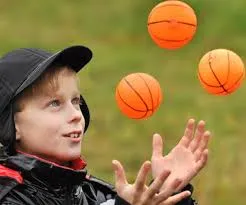
Athletes train their legs, their lungs and their reaction to a whistle. Far fewer train the system that starts almost every play: the eyes. A pitch has to be picked out of a background of faces. A pass has to be judged for distance while a defender closes.
Sports vision training is a structured program built around those demands. It is also an area where the marketing has run ahead of the research, so here is a straight account of what these programs work on, what studies do and do not show, and how this differs from vision therapy for a diagnosed problem.
Key takeaways
- Sports vision training works on specific visual skills — hand-eye coordination, depth perception, tracking, peripheral awareness, reaction time and visual concentration — rather than on eyesight itself.
- The premise is reasonable, and reviews of the field describe it that way while noting the supporting research is uneven (Appelbaum & Erickson, 2018; Buscemi et al., 2024).
- A meta-analysis of 33 randomized trials found real gains in visual attention, reaction time, decision-making and eye-hand coordination — but on the outcomes where the comparison could be made, the gains were far smaller when the test did not resemble the training drill (Guo et al., 2025).
- The best-known on-field result — a team batting average rising from .251 to .285 — came from one university squad with no randomization and no control team (Clark et al., 2012).
- Performance training is not the same as vision therapy for a diagnosed condition, which has much stronger evidence behind it (CITT, 2008).
The visual skills a sports vision program targets
Hand-eye coordination is the ability of the hands and eyes to work as one unit — catching, throwing, hitting, blocking. It depends on the eyes delivering accurate information fast enough for the body to act on it.
Depth perception is the ability to see in three dimensions and judge how far away something is. It is not a fixed trait: normal stereoacuity sharpens through childhood, from roughly 100 arcseconds at age 3 to 40 arcseconds by age 7 (Birch et al., 2008), and better stereoacuity goes along with better fine-motor performance on tasks like pegboards and bead threading (O’Connor et al., 2010). When depth perception is reduced, as it commonly is in amblyopia, coordination and sport can be affected (Levi et al., 2015). We wrote more about this in our guide to how depth perception develops.
Tracking is keeping the eyes locked on a moving target smoothly, without losing it or jerking back to find it. The Marsden ball is one of the oldest tools for this, and still one we reach for.
Localization and peripheral awareness cover finding an object in space and staying aware of what is happening outside the point of focus — the teammate breaking free at the edge of vision, the defender arriving from the blind side.
Reaction time and visual processing speed describe how quickly an athlete recognizes what they are seeing and acts on it. Visual concentration is the ability to hold attention on the relevant target and let the crowd, the scoreboard and the shifting background fall away.
What the research actually shows
The honest summary: plausible mechanism, promising signals, thin proof at the level that matters most — game statistics.
On the encouraging side, a 2025 meta-analysis pooling 33 randomized trials and 1,048 participants found that visual training significantly improved visual attention, reaction time, decision-making and eye-hand coordination (Guo et al., 2025). A systematic review covering studies from 1950 to 2023 concluded that developing visual skills can support both performance and injury prevention (Buscemi et al., 2024). And visual and sensorimotor ability does appear to matter in real competition: among 252 professional baseball players, scores on a sensorimotor test battery predicted on-base percentage, walk rate and strikeout rate (Burris et al., 2018).
The cautions are just as important.
- Much of the improvement may be practice at the test. In that same 2025 meta-analysis, studies whose outcome measure resembled the training task reported far bigger effects than studies that used a different measure — reaction time improved with a standardized effect of 2.66 versus 0.50, and visual attention 1.65 versus 0.07 (Guo et al., 2025). The same pattern showed up in decision-making accuracy (1.46 versus 0.62); there were too few eye-hand coordination trials for the authors to test it there at all. Getting better at the drill is not the same as getting better at the sport.
- The on-field studies are small and not randomized. The University of Cincinnati baseball study reported batting average climbing from .251 to .285 after a six-week program, but it compared one team against conference rivals with no randomization and, in the authors’ own words, no controls — and the NCAA’s 2011 aluminum-bat change landed in the same season, a confound the authors say cannot be dismissed (Clark et al., 2012). A second baseball report found fewer strikeouts and more runs created after perceptual learning, again in a single team, not randomized: 18 untrained pitchers were the control for the vision measures, and the batting statistics were benchmarked against 78 other Big West players who played both seasons (Deveau et al., 2014).
- Correlation is not training. The professional-baseball study measured abilities athletes already had; it did not test whether training those abilities changes anything (Burris et al., 2018).
Our clinical view at Vision & Learning Center is that sports vision training is worth doing for athletes who enjoy the work and want to build visual skill deliberately — and that anyone promising a measurable jump in your statistics is going past what the evidence supports.
How this differs from therapy for a diagnosed problem
This distinction matters more than any drill.
Vision therapy treats a diagnosed condition. For symptomatic convergence insufficiency in children, office-based vergence and accommodative therapy produced a successful or improved outcome in 73% of participants versus 35% on placebo therapy (CITT, 2008), and a Cochrane network meta-analysis of 12 trials confirmed its advantage over placebo in children (Scheiman et al., 2020). That is a treatment with a diagnosis, a defined endpoint, and randomized evidence.
Sports vision training is performance work for an athlete whose visual system is already healthy. The equipment can look identical; the purpose, the plan and the strength of the evidence are not. If an athlete turns out to have a focusing or eye-teaming problem, that gets treated first — and in our experience the “performance” complaint often eases once it is treated. Our summary of what the evidence says about vision therapy covers the wider picture.
Who it suits
Sports vision training is for athletes of any age and any sport — football, hockey, tennis, snowboarding, sailing, esports — who want to work on how quickly and accurately they take in the world around them. It suits athletes who will actually do the work, since these skills respond to consistency rather than intensity.
One group should be evaluated before anything else: athletes coming back from a head injury or concussion. About 42% of athletes tested roughly six days after a sport-related concussion had convergence insufficiency, and those athletes performed worse on reaction time and visual motor speed (Pearce et al., 2015). The joint clinical report from the American Academy of Pediatrics, the American Academy of Ophthalmology, AAPOS and AACO notes that most children recover on their own within about four weeks and recommends a vision-specific examination for those who do not (Master et al., 2022). Assessment comes first; performance training comes later.
Start with a clear picture of how the eyes are working
Before any drill is worth doing, it helps to know whether an athlete’s focusing, eye teaming, tracking and depth perception are where they should be. That is what a comprehensive developmental vision evaluation is for. If something needs correcting, we would rather find it now than after a season of frustration. Schedule an evaluation at our Boynton Beach or Boca Raton office.
Common Questions About This Topic
Does sports vision training actually improve athletic performance?
It reliably improves performance on the drills themselves, and a meta-analysis of 33 randomized trials found gains in visual attention, reaction time, decision-making and eye-hand coordination. The honest limitation is that for the outcomes where the comparison could be made, those gains were much smaller when the test was not similar to the training task, and very few studies have linked training to real game statistics under controlled conditions. We present it as skill training with promising but incomplete evidence, not a guaranteed edge.
Is sports vision training the same as vision therapy?
No. Vision therapy treats a diagnosed condition, such as symptomatic convergence insufficiency, and has randomized-trial support. Sports vision training is performance work for an athlete whose visual system is already healthy. The drills can look similar; the purpose, the plan and the evidence behind them are different.
What age should an athlete start?
There is no fixed age. Depth perception is still maturing through childhood, with normal stereoacuity sharpening from about 100 arcseconds at age 3 to 40 arcseconds by age 7, so young athletes are still developing the raw material. What matters more than age is whether the athlete can attend to a drill, work consistently and give honest feedback.
Do I need an eye exam before starting sports vision training?
Yes, and it is the most useful step. Uncorrected focusing errors, an eye-teaming problem or reduced depth perception will limit any training program, and they are treatable. A comprehensive evaluation tells us whether an athlete needs correction, therapy, performance training, or simply a clean bill of visual health.
My athlete had a concussion. Is sports vision training the right next step?
Not first. Vision problems are common after concussion, and the joint AAP, AAO, AAPOS and AACO clinical report recommends a vision-specific examination for children whose symptoms do not resolve on their own by about four weeks. Assessment and, if needed, treatment come before performance training.
Where This Information Comes From
- Appelbaum LG, Erickson G (2018). Sports vision training: A review of the state-of-the-art in digital training techniques. International Review of Sport and Exercise Psychology; 11(1):160-189. : Review describing the premise of sports vision training and surveying digital, perceptual-learning and VR approaches; notes that supporting research is available only unevenly.
- Buscemi A, Mondelli F, Biagini I, Gueli S, D'Agostino A, Coco M (2024). Role of Sport Vision in Performance: Systematic Review. Journal of Functional Morphology and Kinesiology; 9(2):92. : Systematic review of 25 studies (1950-2023): visual-skill development may benefit performance and injury prevention, but the authors flag small samples and no standardized performance measures.
- Guo Y, Yuan T, Yang M, Qiu J (2025). Does the 'learning effect' caused by digital devices exaggerate sports visual training outcomes? A systematic review and meta-analysis. Frontiers in Physiology; 16:1664572. : 33 randomized trials, 1,048 participants: visual training improved attention, reaction time, decision-making and eye-hand coordination; where the subgroup could be tested, effects were far larger when the test resembled the training task (reaction time SMD 2.66 vs 0.50; visual attention 1.65 vs 0.07).
- Clark JF, Ellis JK, Bench J, Khoury J, Graman P (2012). High-performance vision training improves batting statistics for University of Cincinnati baseball players. PLoS ONE; 7(1):e29109. : After a six-week preseason vision-training program, team batting average rose from 0.251 to 0.285 and slugging rose 0.033 while conference rivals' slugging fell (p=0.02). Single team, no randomization and, in the authors' words, no controls; they also flag a concurrent NCAA aluminum-bat change as a confound that cannot be dismissed.
- Deveau J, Ozer DJ, Seitz AR (2014). Improved vision and on-field performance in baseball through perceptual learning. Current Biology; 24(4):R146-R147. : University baseball players completing a perceptual-learning program showed improved chart acuity, fewer strikeouts and more runs created. Short report, single team, not randomized. 18 untrained pitchers controlled the acuity measures; batting outcomes were benchmarked against 78 non-UCR Big West players who played both seasons.
- Burris K, Vittetoe K, Ramger B, Suresh S, Tokdar ST, Reiter JP, Appelbaum LG (2018). Sensorimotor abilities predict on-field performance in professional baseball. Scientific Reports; 8:116. : In 252 professional players, sensorimotor test scores predicted on-base percentage, walk rate and strikeout rate. Correlational: it measures abilities, not the effect of training them.
- Birch E, Williams C, Drover J, et al. (2008). Randot Preschool Stereoacuity Test: normative data and validity. Journal of AAPOS; 12(1):23-26. : In 4,355 children aged 3-18, mean stereoacuity sharpened from 100 arcsec at age 3 to 60 by age 5 and 40 by age 7.
- O'Connor AR, Birch EE, Anderson S, Draper H; FSOS Research Group (2010). The functional significance of stereopsis. Investigative Ophthalmology & Visual Science; 51(4):2019-2023. : In 143 people aged 10-30, pegboard and bead-threading performance related to stereoacuity; those with normal stereoacuity performed best on all tasks.
- Levi DM, Knill DC, Bavelier D (2015). Stereopsis and amblyopia: A mini-review. Vision Research; 114:17-30. : Reduced stereoscopic depth perception is the most common deficit in amblyopia and can affect motor coordination, sport and mobility.
- Convergence Insufficiency Treatment Trial Study Group (2008). Randomized clinical trial of treatments for symptomatic convergence insufficiency in children. Archives of Ophthalmology; 126(10):1336-1349. : In 221 children aged 9-17, office-based vergence/accommodative therapy produced a successful or improved outcome in 73% versus 35% for office placebo at 12 weeks.
- Scheiman M, Kulp MT, Cotter SA, Lawrenson JG, Wang L, Li T (2020). Interventions for convergence insufficiency: a network meta-analysis. Cochrane Database of Systematic Reviews; 12:CD006768. : Across 12 trials and 1,289 participants, office-based vergence/accommodative therapy beat placebo in children (RR 3.04, 95% CI 2.32-3.98); adult evidence is less clear.
- Pearce KL, Sufrinko A, Lau BC, Henry L, Collins MW, Kontos AP (2015). Near Point of Convergence After a Sport-Related Concussion. American Journal of Sports Medicine; 43(12):3055-3061. : Of 78 athletes tested about 6 days after a sport-related concussion, roughly 42% had convergence insufficiency, and those athletes scored worse on reaction time and visual motor speed.
- Master CL, Bacal D, Grady MF, et al.; AAP Section on Ophthalmology, AAO, AAPOS, AACO (2022). Vision and Concussion: Symptoms, Signs, Evaluation, and Treatment. Pediatrics; 150(2):e2021056047. : Joint clinical report: most children recover from concussion on their own by 4 weeks; those who do not warrant a vision-specific examination of convergence, accommodation, pursuits and saccades.
Care We Provide
More From the Blog
Wondering If This Sounds Like Your Family?
A developmental vision evaluation measures the skills a routine eye exam does not. Our team sees children and adults in Coconut Creek, Boynton Beach, Boca Raton and West Palm Beach.