Why Did a Speech or ABA Therapist Refer Your Child?
Your child’s therapist sees them work up close, session after session, and noticed something about how they use their eyes. A vision evaluation rules that in or out. Here is what they may have seen, and what happens next.
A Strong Listener Who Struggles to Read?
Some children understand everything they hear but struggle once the words are on a page. Sometimes the reason is how the eyes move across the line and hold focus. A vision evaluation rules that in or out. Your child’s speech, reading or tutoring specialist may have noticed some of these:
- Reads single words well but stumbles in sentences
- Understands far more when you read it aloud
- Skips lines or rereads the same line
- Reading gets worse the longer it goes
- Needs a finger or marker to keep their place
- Slow, choppy reading aloud
- Says words blur, move or double
- Headaches or eye rubbing while reading
- Avoids reading aloud
- Guesses long words from the first few letters
Two or more is a reason to ask about a functional vision evaluation. Vision therapy doesn’t treat dyslexia or language problems. It takes the visual strain away so the help your child already gets works better. Print this check-list (PDF).
Some Behaviors Around Looking Have a Visual Cause
Children who find it hard to tell us what they see sometimes show it through behavior. A developmental vision exam checks how the eyes aim, focus and work together, with no reading or talking needed. Your child’s ABA or developmental team may have noticed some of these:
- Avoids tabletop or close-up tasks
- Looks at things from the side of the eyes
- Covers or closes one eye
- Bothered by bright light or busy spaces
- Flicks fingers or objects near the eyes
- Toe walking, or unsure on stairs and curbs
- Hard to keep eyes on a task or a person
- Turns or tilts the head to look at things
- Bumps into things or misjudges distance
- Hasn’t had a full developmental vision exam
Two or more is a reason to ask about a developmental vision evaluation. We go at your child’s pace, and with your permission we share findings your therapy team can use. Print this check-list (PDF).
See a doctor today for sudden double vision, a new eye turn, or eye pain. Are you the referring therapist? Send us a referral.
What They May Have Seen
Most referrals from speech and ABA therapists fall into one of these three groups. Choose the one that sounds like your child.
-

Reading
A Strong Listener Who Struggles on the Page
Some children understand everything they hear but struggle once the words are on a page. Sometimes the reason is how the eyes move across the line and hold focus: skipped lines, a finger to keep the place, reading that gets worse the longer it goes.
View More → -
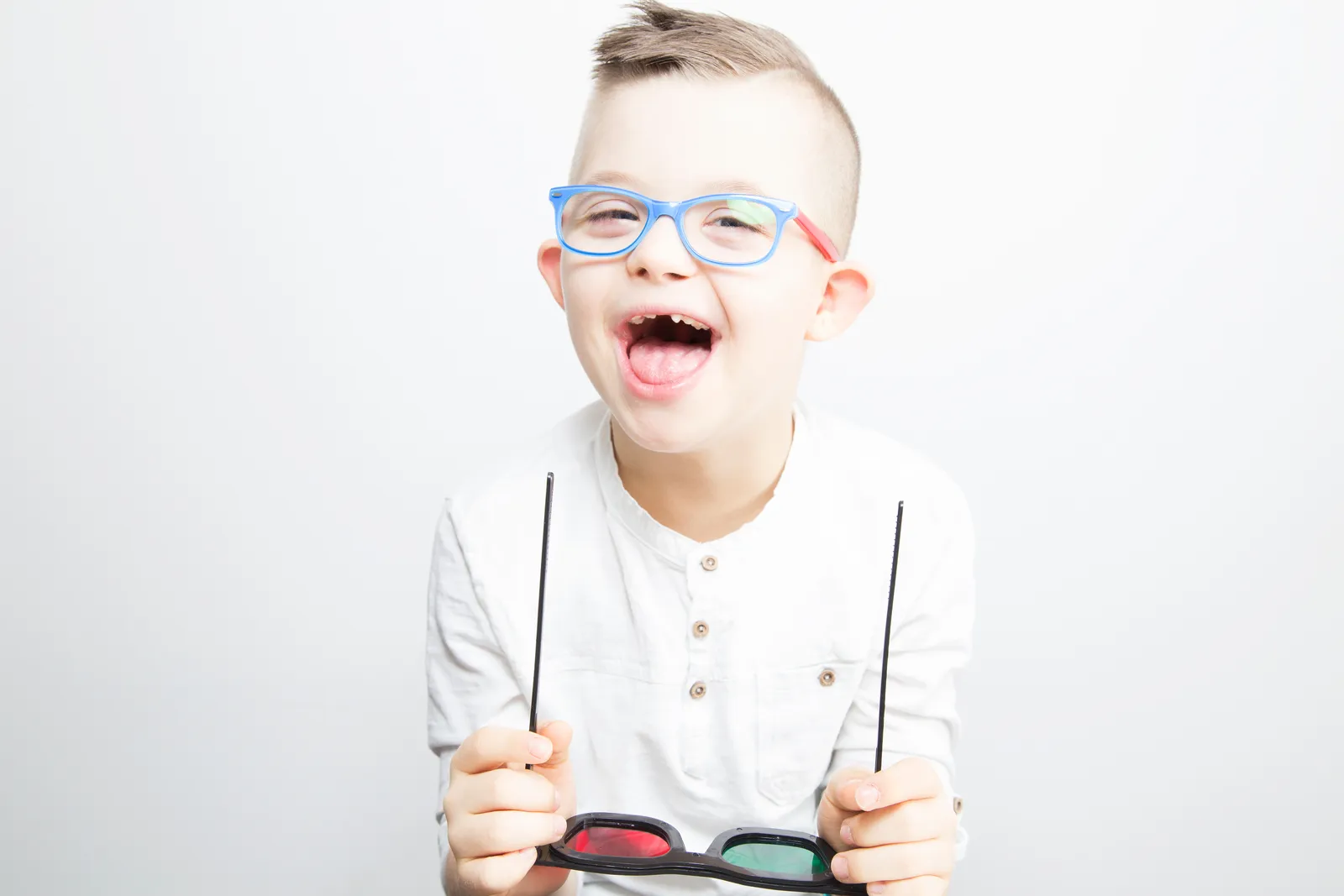
Visual Behaviors
Autism and Developmental Differences
Children who find it hard to tell us what they see sometimes show it through behavior: looking from the side of the eyes, flicking fingers or objects near the eyes, avoiding tabletop tasks, or being bothered by bright light and busy spaces.
View More → -

Lazy Eye
An Eye Turn or One-Eye Use
A child who covers or closes one eye, or turns or tilts the head to look at things, may be working around two eyes that do not team. One eye may see less clearly than the other, or turn in, out, up or down.
View More →
Not sure which one fits? Start with the symptom survey or browse every problem we work with — the evaluation sorts it out either way. Related: autism and vision and developmental delays.
From Referral to Report
Schedule a developmental vision evaluation
Bring the handout or note your therapist gave you, and tell us who referred you when you book so results go to the right team. Offices in Coconut Creek, Boynton Beach, Boca Raton and West Palm Beach.
We test what a 20/20 screening doesn’t
A developmental vision exam checks how the eyes aim, focus and work together, with no reading or talking needed. We go at your child’s pace. See what an evaluation looks at.
Your therapy team gets the findings
With your permission we share findings your speech therapist, BCBA or developmental team can use, so nothing has to be repeated and both plans are built on the same information.
If therapy is indicated, we work alongside them
When a vision problem is part of the picture, Dr. Murray builds an individualized plan, which may include lenses or prism and in-office vision therapy. Vision therapy doesn’t treat dyslexia or language problems. It takes the visual strain away so the help your child already gets works better.
Worth Reading First
- Autism spectrum and vision How a developmental eye exam, lenses, yoked prism and vision therapy may help.
- Comprehensive eye exam vs. developmental eye exam Why a child can pass one and still need the other.
- Reading and vision, explained How eye tracking and eye teaming problems show up as skipped lines and lost places.
- Eye care adapted for special needs Exams and vision therapy for children and adults with autism, Down syndrome, cerebral palsy and developmental delays.
- What to expect at your evaluation (PDF) A one-page walk through the visit: booking and forms, the evaluation, results the same day, and what to bring.
Bring the Referral In
The next step is the evaluation: we measure exactly which visual skills are working and which aren’t, then share the results with your therapy team either way. Offices in Coconut Creek, Boynton Beach, Boca Raton and West Palm Beach.