Vision Problems After Concussion: What Research Shows
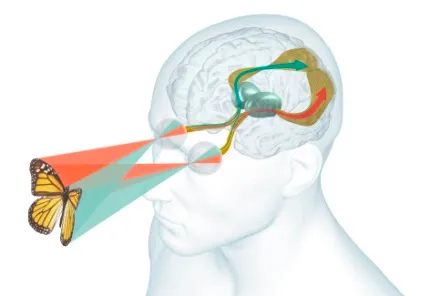
A concussion is an injury to the brain, and a large share of the brain’s wiring is devoted to vision. So it makes sense that after a hit to the head — on a soccer field, in a car, off a bike, down a flight of stairs — reading becomes exhausting, screens feel unbearable, and crowded places bring on dizziness.
What surprises most families is how often these problems go unnoticed. A distance eye chart was never designed to find them, and neither were most sideline concussion screens.
Here is what the published research actually shows: how common post-concussion vision problems are, which ones turn up, how long they usually last, and what treatment does and does not have evidence behind it.
Key takeaways
- In specialty concussion clinics, most patients who are referred have at least one measurable vision problem — but these are referral samples, not a picture of everyone who hits their head.
- The usual findings are focusing (accommodative) problems, convergence insufficiency and inaccurate eye movements, frequently more than one at once.
- Most children recover on their own within about four weeks, according to the 2022 American Academy of Pediatrics clinical report.
- Vision and vestibular findings at the first visit help predict who will take longer to recover.
- The treatment evidence is still limited, but no longer empty: mostly uncontrolled case series, a Cochrane review that called the trial evidence insufficient, one small home-exercise trial in 50 people, and one completed office-based therapy trial in 104 people whose comparison group was delayed treatment rather than a sham.
How common are vision problems after a concussion?
The numbers from specialty clinics are striking. Among 100 adolescents aged 11 to 17 seen in a comprehensive concussion program, 69% had at least one vision diagnosis — accommodative disorders in 51%, convergence insufficiency in 49% and saccadic dysfunction in 29% — and 46% had more than one (Master et al., 2016). In a review of 218 post-concussion records from two optometric practices, 82% carried an oculomotor diagnosis (Gallaway et al., 2017). And in a subspecialty pediatric concussion program, 378 of 432 children (88%) presented with a vision or vestibular problem (Master et al., 2018).
Even months out, the findings persist. Of 113 adolescents examined four to twelve weeks after injury, 70% still had an oculomotor diagnosis, most often a vergence disorder (60%) or an accommodative disorder (57%) (Scheiman et al., 2021). Among 220 outpatients seen at a vision rehabilitation clinic after acquired brain injury, 90% of the traumatic brain injury group had an oculomotor dysfunction (Ciuffreda et al., 2007).
One honest caveat runs through all of these figures: they come from people whose symptoms were bad enough to get them referred to a specialty clinic. They tell you what is likely in that population. They do not tell you that 88% of everyone who gets a concussion will have a vision problem.
Which parts of the visual system get disrupted
Focusing, or accommodation
The eye’s focusing system holds print clear at reading distance and shifts between the board and the desk. After a concussion it often loses stamina, so a page is clear for five minutes and blurry after twenty. This was the single most common finding in the adolescent concussion sample above.
Eye teaming, or convergence
Convergence insufficiency means the eyes struggle to turn inward and hold a single image at near. It showed up in about 42% of athletes evaluated within a month of a sport-related concussion, on average about six days after the injury, and those athletes also scored worse on verbal memory, visual motor speed and reaction time than other concussed athletes whose near point of convergence was normal (Pearce et al., 2015). You can read more on our convergence insufficiency page.
Eye movements
Saccades are the quick jumps the eyes make from word to word; pursuits are the smooth tracking of a moving object. Inaccurate saccades make readers lose their place and reread lines. See our page on ocular motor dysfunction.
The vestibulo-ocular reflex
This reflex keeps vision steady while the head moves. When it is disrupted, walking down a grocery aisle or turning to look at someone can trigger dizziness and nausea. Provoked symptoms on vestibulo-ocular reflex and smooth pursuit testing were among the findings that predicted a longer recovery (Master et al., 2018). We cover this pattern in can vision therapy help with motion sickness or dizziness.
Light sensitivity
Photophobia is common early and usually improves. A meta-analysis of 75 publications put its prevalence at 30.46% one week after brain injury, 19.34% between one week and one month, and 13.51% between one and three months, remaining higher than in uninjured controls through twelve months (Merezhinskaya et al., 2021).
Most people recover on their own
This is the part that gets lost in a lot of marketing, so we want to state it plainly. The 2022 joint clinical report from the American Academy of Pediatrics, the American Academy of Ophthalmology, AAPOS and AACO concludes that most children and adolescents with visual symptoms after concussion recover on their own by about four weeks, and recommends a vision-specific history and examination for those who do not (Master et al., 2022).
The recovery data back that up. Among 275 children with concussion, 67 had an abnormal near point of convergence. Of those, 46% recovered with standard care at a median of 4.5 weeks, 41% recovered after vestibular therapy that included convergence exercises at a median of 11 weeks, and only 13% were referred for office-based vision therapy, recovering at a median of 23 weeks (Storey et al., 2017). Formal vision therapy is for the persistent minority, not for everyone with a headache after a fall.
Vision findings can flag a longer recovery
The same findings that describe the problem also help predict its course. In the 432-child cohort, provoked symptoms on vestibulo-ocular reflex and smooth pursuit testing, abnormal balance and reduced accommodative amplitude each predicted prolonged recovery time (Master et al., 2018). That is useful for planning school load and return to sport — not a verdict.
What screening catches, and what it misses
The Vestibular/Ocular Motor Screening (VOMS) is the tool most often used at the point of care. In its original study, 61% of concussed patients reported symptom provocation on at least one VOMS item, with vestibulo-ocular reflex and visual motion sensitivity the strongest discriminators (Mucha et al., 2014).
VOMS is a screen, not an examination. When physicians screened adolescents four to twelve weeks after concussion, they detected only 63% of abnormal near points of convergence, 43% of reduced accommodative amplitudes and 48% of positive symptom surveys compared with a full optometric exam (Scheiman et al., 2021). A normal screen and 20/20 distance acuity do not rule out a treatable near-vision problem.
What the treatment evidence actually shows
We want to be careful here, because this is where claims get inflated.
Case series are encouraging but uncontrolled. In the two-practice series, vision therapy was recommended for 80% of patients, and 54% of that group finished it (95 of 175); among the ones with convergence insufficiency, 85% were classified successful and 15% improved (Gallaway et al., 2017). In a brain-injury series, 90% of 33 TBI completers showed marked or total improvement in at least one symptom and one sign (Ciuffreda et al., 2008). Neither study had a control group, and both report only on people who finished.
One small randomized trial supports a specific exercise. In 50 people aged 11 to 30 tested within ten days of concussion, home Brock string exercises improved near point of convergence by 8.9 cm versus 3.8 cm with usual care (Trbovich et al., 2025). The outcome measured was the clinical sign, not symptoms, school performance or return to play. Our post who is Brock and why does he string explains the tool itself.
A Cochrane review found the overall evidence insufficient. Reviewing five randomized trials with 116 participants, the authors concluded the studies provide insufficient evidence to inform decisions about treating eye-movement disorders after acquired brain injury (Rowe et al., 2018). That review closed before both of the concussion-specific randomized trials discussed here, so it describes the field as it stood in 2018.
The one concussion-specific trial of office-based therapy has now reported. CONCUSS randomized 104 people aged 11 to 25 who still had symptoms and convergence insufficiency four to twenty-four weeks after a concussion, either to immediate office-based vergence and accommodative therapy or to the same therapy delayed by six weeks. At six weeks, 46 of 52 (88%) in the immediate group were successful or improved on the primary measure — a composite of near point of convergence and positive fusional vergence — against 4 of 52 (8%) in the delayed group, and symptoms improved in 79% versus 13% (Alvarez et al., 2026). A secondary analysis of the same trial found larger gains in focusing amplitude as well, roughly 4.7 to 5.1 diopters versus about 1.0 with waiting (Scheiman et al., 2026). Two things keep this from being the last word. The comparison group waited rather than receiving a sham therapy, so expectation effects are not ruled out, and the primary endpoint was eye-teaming measurements, not overall concussion recovery or return to play. Once the delayed group had completed the same 16 sessions, the two groups’ outcomes were equivalent — which is what the authors mean when they say immediate therapy shortens the period of symptoms rather than changing the destination.
Borrowed evidence has limits. The strongest trial of this therapy, CITT, found a successful or improved outcome in 73% of children versus 35% on placebo — but those children were uninjured (CITT Study Group, 2008). It is a reasonable starting point, not proof of the same result after a brain injury.
Prism for post-concussion symptoms is promising, not proven. Retrospective series from one practice report a 71.8% drop in symptom burden with individualized prism in 43 TBI patients (Doble et al., 2010) and 19.1% to 60.8% reductions on headache, dizziness and anxiety measures in 38 patients (Rosner et al., 2016). These are uncontrolled and unreplicated. We discuss this in prism glasses versus vision therapy and on our vertical heterophoria page.
Bottom line: randomized evidence now shows that office-based therapy improves eye teaming, focusing and visual symptoms in people whose convergence insufficiency is still there weeks after a concussion. What no trial has tested is whether it shortens the concussion itself — none has used overall recovery or return to play as its primary endpoint, and none has used a sham comparison in concussed patients. So we talk about the visual functions we can measure and change, not about curing the injury.
Getting back to the classroom and the office
The AAP report recommends learning accommodations such as larger font, preprinted notes and temporary use of audio books (Master et al., 2022). Practical versions we suggest to schools include reduced reading volume, printed copies instead of screens, extra time on tests, permission to wear a hat or sit away from windows, and scheduled breaks from near work. These reduce visual load while the system settles.
Our clinical perspective
At Vision & Learning Center we treat the visual problems we can measure, and we say so in those terms. Most people recover without us. For those who do not — the student still losing their place four months later, the adult who cannot tolerate a monitor — a developmental vision evaluation can identify whether a specific focusing, teaming or eye-movement deficit is still present and whether it responds to treatment. We work alongside the neurologist, sports-medicine physician, physical therapist and occupational therapist, not instead of them.
If vision symptoms have not settled about four weeks after a concussion, or if there is double vision or a change in side vision at any point, that is the moment to be examined. Learn more about our vision rehabilitation program, review our symptom checklist, or read can vision therapy help after a brain injury for more on the rehabilitation side. To have your vision evaluated, schedule an evaluation or see what a comprehensive examination includes.
Common Questions About This Topic
How common are vision problems after a concussion?
In specialty clinics they are found in most patients who are referred. Among 100 adolescents in a comprehensive concussion program, 69% had a vision diagnosis, and among 432 children at a subspecialty program, 88% had a vision or vestibular finding. Those are referral samples of people whose symptoms brought them in, so the figures do not describe everyone who sustains a concussion.
How long do post-concussion vision symptoms usually last?
The 2022 AAP clinical report states that most children and adolescents with visual symptoms after concussion recover on their own by about four weeks. Light sensitivity follows a similar curve: in a meta-analysis that pooled brain injuries across ages and severities, it fell from roughly 30% of patients at one week to about 14% by one to three months. A minority have symptoms that persist longer, and those are the people a vision-specific examination is meant to find.
Does vision therapy speed up concussion recovery?
Not in the broad sense people usually mean, but a narrower claim now has randomized support. In the CONCUSS trial of people aged 11 to 25 with concussion-related convergence insufficiency, 88% of those given immediate office-based vergence and accommodative therapy were successful or improved on eye-teaming measures at six weeks, versus 8% of those whose therapy was delayed, and 79% versus 13% improved on symptoms; once the delayed group had the same number of sessions, the two groups came out equivalent. The investigators conclude that starting sooner shortens the time spent with symptoms. No trial has yet used overall concussion recovery or return to play as its primary endpoint, and none has compared this therapy with a sham in concussed patients.
When should someone see an optometrist after a head injury?
The AAP report recommends a vision-specific history and examination for children whose visual symptoms do not resolve by about four weeks. We suggest coming in sooner if there is double vision, a new blind spot, a loss of side vision, or a sudden change in eye alignment, because those findings need prompt attention.
Can a normal eye exam miss these problems?
Yes. Reading 20/20 on a distance chart says nothing about focusing stamina, eye teaming at near, or eye-movement accuracy. In one study of adolescents examined four to twelve weeks after concussion, physician screening detected only 63% of abnormal near points of convergence and 43% of reduced accommodative amplitudes.
Where This Information Comes From
- Master CL, Scheiman M, Gallaway M, Goodman A, Robinson RL, Master SR, Grady MF (2016). Vision Diagnoses Are Common After Concussion in Adolescents. Clinical Pediatrics; 55(3):260-267. : Among 100 adolescents aged 11-17 in a comprehensive concussion program, 69% had a vision diagnosis - accommodative disorders 51%, convergence insufficiency 49%, saccadic dysfunction 29% - and 46% had more than one. Referral sample, no control group.
- Gallaway M, Scheiman M, Mitchell GL (2017). Vision Therapy for Post-Concussion Vision Disorders. Optometry and Vision Science; 94(1):68-73. : In 218 post-concussion records from two optometric practices, 82% had an oculomotor diagnosis and therapy was recommended for 80%; of the 54% (95 of 175) who completed it, 85% of convergence-insufficiency patients were successful and 15% improved. Uncontrolled case series.
- Master CL, Master SR, Wiebe DJ, Storey EP, Lockyer JE, Podolak OE, Grady MF (2018). Vision and Vestibular System Dysfunction Predicts Prolonged Concussion Recovery in Children. Clinical Journal of Sport Medicine; 28(2):139-145. : Of 432 children aged 5-18 in a subspecialty concussion program, 378 (88%) presented with a vision or vestibular problem; provoked symptoms on vestibulo-ocular reflex and smooth pursuit testing, abnormal balance and abnormal accommodative amplitude predicted prolonged recovery. Retrospective cohort.
- Scheiman M, Grady MF, Jenewein E, Shoge R, Podolak OE, Howell DH, Master CL (2021). Frequency of oculomotor disorders in adolescents 11 to 17 years of age with concussion, 4 to 12 weeks post injury. Vision Research; 183:73-80. : 70% of 113 adolescents examined 4-12 weeks after concussion had an oculomotor diagnosis; physician screening detected only 63% of abnormal near points of convergence and 43% of reduced accommodative amplitudes.
- Ciuffreda KJ, Kapoor N, Rutner D, Suchoff IB, Han ME, Craig S (2007). Occurrence of oculomotor dysfunctions in acquired brain injury: a retrospective analysis. Optometry; 78(4):155-161. : In 220 vision-rehabilitation outpatients, 90% of 160 traumatic brain injury patients and 86.7% of 60 stroke patients had an oculomotor dysfunction. Specialty clinic sample, so referral bias inflates the figures.
- Pearce KL, Sufrinko A, Lau BC, Henry L, Collins MW, Kontos AP (2015). Near Point of Convergence After a Sport-Related Concussion. American Journal of Sports Medicine; 43(12):3055-3061. : In 78 athletes a mean 5.8 days after sport-related concussion, roughly 42% had a receded near point of convergence; they performed worse on verbal memory, visual motor speed and reaction time and reported more symptoms than the 45 concussed athletes with a normal near point of convergence. There was no uninjured control group.
- Merezhinskaya N, Mallia RK, Park D, Millian-Morell L, Barker FM 2nd (2021). Photophobia Associated with Traumatic Brain Injury: A Systematic Review and Meta-analysis. Optometry and Vision Science; 98(8):891-900. : Across 75 publications, photophobia prevalence was 30.46% (95% CI 20.05-40.88) at one week after injury, 19.34% between one week and one month, and 13.51% (95% CI 5.77-21.24) between one and three months, remaining significantly higher than in controls through 12 months.
- Mucha A, Collins MW, Elbin RJ, Furman JM, Troutman-Enseki C, DeWolf RM, Marchetti G, Kontos AP (2014). A Brief Vestibular/Ocular Motor Screening (VOMS) assessment to evaluate concussions: preliminary findings. American Journal of Sports Medicine; 42(10):2479-2486. : In 64 concussed patients (mean age 13.9, about 5.5 days post-injury) and 78 controls, 61% reported symptom provocation on at least one VOMS item; vestibulo-ocular reflex (OR 3.89) and visual motion sensitivity (OR 3.37) were the strongest discriminators. Preliminary cross-sectional study.
- Master CL, Bacal D, Grady MF, et al.; AAP Section on Ophthalmology, American Academy of Ophthalmology, AAPOS, AACO (2022). Vision and Concussion: Symptoms, Signs, Evaluation, and Treatment. Pediatrics; 150(2):e2021056047. : Joint clinical report: visual symptoms are common after concussion, most children recover on their own by four weeks, those who do not warrant a vision-specific examination, and learning accommodations such as larger font, preprinted notes and audio books are recommended.
- Storey EP, Master SR, Lockyer JE, Podolak OE, Grady MF, Master CL (2017). Near Point of Convergence after Concussion in Children. Optometry and Vision Science; 94(1):96-100. : Of 275 children with concussion, 67 had an abnormal near point of convergence; 46% recovered with standard care (median 4.5 weeks), 41% after vestibular therapy including convergence exercises (median 11 weeks) and 13% were referred for office-based vision therapy (median 23 weeks). Retrospective.
- Trbovich AM, Zynda AJ, Togashi T, Burley C, Mucha A, Collins MW, Kontos AP (2025). Randomized Controlled Trial of Brock String Vision Therapy for Receded Near Point of Convergence Following Concussion. Journal of Neurotrauma; 42(19-20):1708-1718. : In 50 participants aged 11-30 within 10 days of concussion, home Brock string exercises improved near point of convergence by 8.9 cm versus 3.8 cm with usual care over 7-14 days. Small, single-blind, short follow-up; the outcome was the clinical sign, not symptoms or return to school.
- Ciuffreda KJ, Rutner D, Kapoor N, Suchoff IB, Craig S, Han ME (2008). Vision therapy for oculomotor dysfunctions in acquired brain injury: a retrospective analysis. Optometry; 79(1):18-22. : Among 40 completers drawn from 220 records (33 mild TBI, 7 stroke), 90% of the TBI group had marked or total improvement in at least one primary symptom and one primary sign. Uncontrolled, completers only.
- Rowe FJ, Hanna K, Evans JR, et al. (2018). Interventions for eye movement disorders due to acquired brain injury. Cochrane Database of Systematic Reviews; 3(3):CD011290. : Five randomized trials with 116 participants; the reviewers concluded the included studies provide insufficient evidence to inform decisions about treatments specifically for eye-movement disorders after acquired brain injury.
- Alvarez TL, Scheiman M, Hajebrahimi F, Noble M, Gohel S, Baro R, Bachman JA, Master CL, Goodman A; CONCUSS Investigator Group (2026). CONCUSS randomised clinical trial of vergence/accommodative therapy for concussion-related symptomatic convergence insufficiency. British Journal of Sports Medicine; 60(5):340-354. : In 104 participants aged 11-25 with concussion-related convergence insufficiency 4-24 weeks post-injury, 46/52 (88%) were successful or improved at six weeks on the composite near point of convergence and positive fusional vergence outcome with immediate office-based therapy, versus 4/52 (8%) with delayed therapy; symptoms improved in 79% versus 13%. The comparator was delayed therapy rather than a sham, the endpoint was clinical signs rather than overall concussion recovery, and outcomes were equivalent once both groups had completed 16 sessions.
- Scheiman M, Alvarez TL, Hajebrahimi F, Noble M, Gohel S, Baro R, Bachman JA, Master CL, Goodman A; CONCUSS Investigator Group (2026). Effectiveness of office-based vergence/accommodative therapy with movement for accommodative dysfunction in concussion-related convergence insufficiency: a secondary analysis of the CONCUSS randomised clinical trial. British Journal of Sports Medicine; published online 8 July 2026. : Secondary analysis of CONCUSS: 79% of the 106 participants had an accommodative disorder, and accommodative amplitude improved by about 4.7 D (right eye) and 5.1 D (left eye) with immediate therapy versus about 1.0 D with six weeks of watchful waiting. Secondary outcome of the same trial, same non-sham comparator.
- Convergence Insufficiency Treatment Trial Study Group (2008). Randomized clinical trial of treatments for symptomatic convergence insufficiency in children. Archives of Ophthalmology; 126(10):1336-1349. : In 221 children aged 9-17 with symptomatic convergence insufficiency, office-based vergence/accommodative therapy produced a successful or improved outcome in 73% versus 35% with office placebo. The participants were uninjured, so the result does not transfer automatically to concussion.
- Doble JE, Feinberg DL, Rosner MS, Rosner AJ (2010). Identification of binocular vision dysfunction (vertical heterophoria) in traumatic brain injury patients and effects of individualized prismatic spectacle lenses in the treatment of postconcussive symptoms: a retrospective analysis. PM&R; 2(4):244-253. : In 43 traumatic brain injury patients treated with individualized prism, subjective symptom burden fell 71.8%. Retrospective, uncontrolled, single-practice series with no placebo comparison.
- Rosner MS, Feinberg DL, Doble JE, Rosner AJ (2016). Treatment of vertical heterophoria ameliorates persistent post-concussive symptoms. Brain Injury; 30(3):311-317. : In 38 post-concussion patients diagnosed with vertical heterophoria, prism treatment was followed by 19.1-60.8% reductions on headache, dizziness and anxiety measures. Same practice group as Doble 2010; retrospective and unmasked.
Care We Provide
More From the Blog
Wondering If This Sounds Like Your Family?
A developmental vision evaluation measures the skills a routine eye exam does not. Our team sees children and adults in Coconut Creek, Boynton Beach, Boca Raton and West Palm Beach.