Childhood Myopia: What Parents Should Know
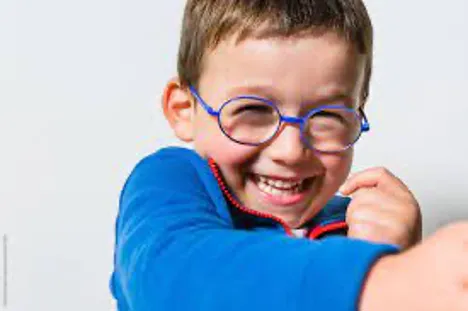
Myopia, or nearsightedness, is the reason a child squints at the whiteboard, drifts closer to the television, or holds a book almost against their nose. It is easy to correct with glasses, which is exactly why it is easy to shrug off.
Two things have changed. Far more children are becoming nearsighted than a generation ago, and we now know that the final strength of that prescription matters for eye health decades later. Here is what the research shows, in plain English, and what we tell families at our Coconut Creek, Boynton Beach and West Palm Beach offices.
Key takeaways
- Myopia is rising worldwide, from 22.9% of the global population in 2000 to a projected 49.8% by 2050 (Holden et al., 2016).
- Near work carries a small, dose-related association with myopia (Huang et al., 2015). The evidence for screens specifically is weaker and inconsistent (Lanca & Saw, 2020; Foreman et al., 2021).
- Time outdoors is the best-supported prevention. Adding 40 minutes of outdoor time to the school day cut three-year myopia incidence from 39.5% to 30.4% in a randomized trial (He et al., 2015).
- Myopia control slows progression but does not reverse it, and the certainty of the evidence ranges from moderate down to very low (Lawrenson et al., 2025).
- Myopia is not just a prescription. Higher myopia means higher lifetime risk of retinal, macular and glaucoma problems (Haarman et al., 2020).
Myopia is becoming more common
A pooled analysis of 145 studies covering 2.1 million people estimated that 22.9% of the world was myopic in 2000, and projected 49.8% by 2050. High myopia, the severe end of the range, is projected to rise from 2.7% to 9.8% of the world’s population (Holden et al., 2016). Those are projections, not measurements, and they assume current trends continue.
In the United States the change has already been measured. Comparing two national health surveys using matched methods, myopia in Americans aged 12 to 54 rose from 25.0% in 1971-1972 to 41.6% in 1999-2004 (Vitale et al., 2009). The most severe category rose from 0.2% to 1.6%. Genes do not change that fast in 30 years, which is why researchers look hard at how children spend their days.
Myopia usually starts in the school years and keeps progressing while the eye is still growing, typically until around age 20 (American Optometric Association). The younger it starts, the more years it has to progress, and that is the number worth watching.
What actually raises a child’s risk
Near work
Reading, homework, handheld games and drawing all count. A meta-analysis of 27 studies covering 25,025 children aged 6 to 18 found that more near work was associated with higher odds of myopia (odds ratio 1.14), and that the odds rose by about 2% for each additional diopter-hour of near work per week (Huang et al., 2015). That is a real but modest effect, and it is an association rather than proof of cause.
Screens
Screens are near work, so parents reasonably assume they are the culprit. The evidence is thinner than the headlines. A 2020 systematic review reviewed 15 studies covering 49,789 children: seven of them reported a link between screen time and myopia, but the five that could be combined statistically gave a pooled odds ratio of 1.02 (95% CI 0.96-1.08), which is not a statistically significant association. The authors’ own summary is that the results are mixed (Lanca & Saw, 2020).
A later meta-analysis in Lancet Digital Health found a modest association for smart devices (OR 1.26, lower confidence bound touching 1.00) that rose to 1.77 when computer use was included, with high variability between studies (Foreman et al., 2021). The AOA’s patient page puts those same numbers in plain language: heavy smart-device use is “associated with around a 30% higher risk of myopia and, when combined with excessive computer use, that risk rose to around 80%” (AOA). Those percentages track the odds ratios above, so read them as the same evidence in different words, not as a second study confirming it.
Our reading of it: screens matter mostly because of what they add to a child’s total near-work load and what they replace outdoors. If you want the fuller picture, see our complete guide to screen time for parents and our practical tips for protecting kids’ eyes in the digital age.
Less time outdoors, and what the pandemic showed
During COVID-19 home confinement, school-based photoscreening of 123,535 Chinese children aged 6 to 13 found a myopic shift of about -0.3 D in 2020 compared with prior years — but only in the youngest children, at ages 6 (-0.32 D), 7 (-0.28 D) and 8 (-0.29 D). Myopia prevalence at age 6 rose almost fourfold, from 5.7% to 21.5%, and rose at ages 7 and 8 as well, while the changes at ages 9 to 13 were minimal (Wang et al., 2021). This was screening rather than full cycloplegic refraction, in one country, and the authors themselves urge caution. Read as a natural experiment in indoor living, it points the same way the rest of the evidence does, and it suggests the youngest eyes are the most sensitive.
Time outdoors is the strongest prevention we have
The best single piece of evidence is a cluster-randomized trial in Guangzhou. Twelve primary schools and 1,903 first-graders were randomized; six schools added one extra 40-minute outdoor class each school day for three years, and parents at those schools were encouraged to get their children outside after school and at weekends. Cumulative myopia incidence was 30.4% in the intervention group versus 39.5% in the control group (difference -9.1%, 95% CI -14.1 to -4.1). Refraction changed slightly less in the intervention group (-1.42 D versus -1.59 D), while axial eye growth was not significantly different (He et al., 2015).
A meta-analysis of 25 studies reached the same conclusion and drew an important line: outdoor time roughly halved the risk of myopia starting (risk ratio about 0.54), but did not slow progression in eyes that were already myopic (Xiong et al., 2017).
So outdoor time is prevention, not treatment. The trial that showed a benefit added outdoor time in a block a school day can absorb — one extra 40-minute class, every day, for three years — rather than hitting a daily total. For a child who is already nearsighted, more time outside is still good for them; it is simply not the tool that will slow the prescription.
Myopia control: what can slow progression
Once a child is myopic, the goal shifts. Nothing available today reverses nearsightedness — myopia is a refractive error caused by an eye that is slightly too long, and the eye does not grow shorter. Myopia control aims to slow how fast the prescription and the eye’s axial length change during the growing years, so the adult ends up less myopic than they otherwise would have been.
The February 2025 update of Cochrane’s living network meta-analysis is the best overview: 104 randomized trials in 17,509 children aged 4 to 18. At one year, compared with an inactive control, high-dose atropine (0.5% or stronger) slowed refractive change by 0.90 D, moderate-dose (0.1% to under 0.5%) by 0.55 D and low-dose (under 0.1%) by 0.25 D; myopia-control soft contact lenses slowed it by 0.27 D, and orthokeratology reduced axial eye growth by 0.18 mm. Repeated low-intensity red-light therapy ranked highest of all for refraction, but on very low-certainty evidence. Read the whole picture, not just the best number: certainty across the review runs from moderate down to very low, there is much less data beyond two years, and 66.3% of the trials were conducted in China or other Asian countries, so how well the numbers transfer to a South Florida child is a fair question (Lawrenson et al., 2025). An earlier Cochrane review reached the same headline: atropine is effective, and multifocal spectacles or contact lenses may add a small benefit (Walline et al., 2020).
Low-dose atropine drops
The LAMP study in 438 Hong Kong children aged 4 to 12 found a clear concentration-dependent effect over one year: spherical equivalent changed -0.27 D with 0.05% atropine, -0.46 D with 0.025% and -0.59 D with 0.01%, against -0.81 D on placebo. All three concentrations were well tolerated (Yam et al., 2019).
The picture in North America is less tidy, and parents deserve both halves. A PEDIG randomized trial of 187 US children found nightly atropine 0.01% did not slow myopia at all over 24 months compared with placebo (-0.82 D versus -0.80 D) (Repka et al., 2023). The three-year CHAMP trial across North America and Europe found the opposite for the same concentration: in its main efficacy group of 489 children aged 6 to 10, 0.01% significantly slowed both refractive progression and axial elongation, while 0.02% slowed only axial elongation (Zadnik et al., 2023). Two good trials, two different answers. Low-dose atropine is a reasonable option to discuss, not a guarantee.
Myopia-control soft contact lenses
In a three-year randomized trial that enrolled 144 children aged 8 to 12, of whom 109 finished, daily disposable myopia-control lenses reduced refractive progression by 0.73 D (59%) and axial elongation by 0.32 mm (52%) compared with a standard daily lens, with no serious ocular adverse events (Chamberlain et al., 2019).
Orthokeratology
Ortho-k uses rigid lenses worn overnight to reshape the cornea, so the child sees without correction during the day. A meta-analysis of seven studies in 435 children found axial elongation reduced by 0.26 mm over two years (Si et al., 2015). Only two of those studies were randomized. Overnight lens wear also carries a hygiene and infection responsibility that has to be discussed honestly with the family.
The AOA’s position is that children at high risk of progressive myopia — family history, early onset, extended near work — may benefit from bifocal spectacles or contact lenses, orthokeratology, eye drops, or a combination (AOA).
What myopia control is not
It is not vision therapy. Vision therapy at our offices treats eye teaming, focusing and eye movement problems, and we do not offer it as a myopia treatment. Cochrane’s living review of myopia control reports on drops, myopia-control spectacles and contact lenses, orthokeratology and red-light therapy; no eye-exercise treatment appears among the interventions it covers (Lawrenson et al., 2025). Blue-light-filtering lenses are not a myopia treatment either, and a Cochrane review of 17 trials found they may not even help eye strain (Singh et al., 2023) — more on that in our post on blue light glasses, hype and reality.
Why myopia matters beyond a stronger prescription
This is the part that changes how families think about it. A large review and meta-analysis found that the odds of myopic macular degeneration climbed steeply with severity — 13.6 times at low myopia, 72.7 at moderate and 845 at high myopia compared with non-myopic eyes. Retinal detachment odds rose 3.2-, 8.7- and 12.6-fold, with smaller but real increases for cataract and open-angle glaucoma. The authors specifically noted that low and moderate myopia carry considerable risk too (Haarman et al., 2020).
Read those numbers carefully. An odds ratio compares groups; it is a measure of relative risk, not the chance that any one child will develop the condition. What it does explain is why slowing progression by a diopter or two during childhood is worth the effort: a smaller final prescription means a shorter, structurally safer eye for the next 70 years.
What we do, and when to come in
At Vision & Learning Center we measure refraction carefully, track the prescription over time, and talk with families about whether myopia control is worth starting. Our clinical focus is developmental and binocular vision — how the eyes team, focus and move together — so when a child is a candidate for atropine, myopia-control contact lenses or orthokeratology, we coordinate with the colleague best placed to fit and monitor it rather than pretending one office does everything.
Two practical habits we recommend to every family, on the evidence above: get children outdoors daily, and break up long stretches of near work whether the near work is a book or a tablet. If your child is already in glasses, our guides on choosing children’s glasses and common eye problems at ages 6 to 12 cover the day-to-day questions.
On timing: the USPSTF recommends vision screening at least once between ages 3 and 5 to catch amblyopia and its risk factors (USPSTF, 2017), while the AOA recommends a comprehensive eye examination at 6 to 12 months, at least once between 3 and 5 years, and before first grade and annually thereafter (AOA, 2017). A screening checks whether a child can read a chart; an examination measures how the eyes are growing and how they work together. You can read more about what we check in a comprehensive vision evaluation.
If your child is squinting, moving closer to the board or the screen, or already has a prescription that keeps climbing, schedule an evaluation so we can measure what is actually changing and talk through the options together.
Common Questions About This Topic
What causes myopia in children?
Both genes and environment. Myopia runs in families, but it has become far more common in a few decades, which genes alone cannot explain. More time spent on near work is associated with slightly higher odds of myopia, rising about 2% for every additional diopter-hour of near work per week, and less time outdoors is associated with myopia starting earlier. Screens specifically have a weaker and less consistent link than headlines suggest.
Does screen time cause nearsightedness?
The evidence is mixed. A 2020 systematic review reviewed 15 studies of 49,789 children: seven of them reported a link, but the five that could be combined statistically gave a pooled odds ratio of 1.02 (95% CI 0.96-1.08), which is not a statistically significant association. A 2021 Lancet Digital Health meta-analysis found a modest association for smart devices (odds ratio 1.26) that rose when computer use was included (1.77), with high variability between studies. Total near work and, above all, time spent outdoors are better things for a family to act on than screens alone.
How much outdoor time protects a child's eyes?
In a cluster-randomized trial in Guangzhou, adding one 40-minute outdoor class to each school day lowered three-year myopia incidence from 39.5% to 30.4% in first-graders. A meta-analysis found outdoor time reduced the risk of myopia starting by roughly half, but it did not slow progression in eyes that were already nearsighted. Outdoors prevents onset; it is not a treatment.
Can myopia be reversed or cured?
No. Nothing available today reverses nearsightedness in a child, and the eye does not grow shorter. Myopia control aims to slow how fast the prescription and the eye's length change during the growing years, so a child ends up less nearsighted as an adult than they otherwise would have.
Is vision therapy a treatment for myopia?
No, and we say so plainly. Vision therapy at our offices addresses eye teaming, focusing and eye movement problems. It is not a myopia treatment. Cochrane's living review of myopia control reports on drops, myopia-control spectacles and contact lenses, orthokeratology and red-light therapy - no eye-exercise treatment appears among the interventions it covers. Myopia control means atropine drops, myopia-control soft contact lenses or orthokeratology, prescribed and monitored by an eye doctor.
Where This Information Comes From
- Holden BA, Fricke TR, Wilson DA, et al. (2016). Global Prevalence of Myopia and High Myopia and Temporal Trends from 2000 through 2050. Ophthalmology; 123(5):1036-1042. : From 145 studies of 2.1 million people, myopia affected 22.9% of the world in 2000 and is projected to reach 49.8% by 2050, with high myopia rising from 2.7% to 9.8%.
- Vitale S, Sperduto RD, Ferris FL 3rd (2009). Increased prevalence of myopia in the United States between 1971-1972 and 1999-2004. Archives of Ophthalmology; 127(12):1632-1639. : Using matched NHANES methods, myopia prevalence in Americans aged 12 to 54 rose from 25.0% in 1971-1972 to 41.6% in 1999-2004; the most severe category rose from 0.2% to 1.6%.
- Huang HM, Chang DS, Wu PC (2015). The Association between Near Work Activities and Myopia in Children: A Systematic Review and Meta-Analysis. PLoS One; 10(10):e0140419. : Pooling 27 studies of 25,025 children aged 6 to 18, more near work was associated with higher odds of myopia (OR 1.14, 95% CI 1.08-1.20), with odds rising 2% per additional diopter-hour of near work per week.
- Lanca C, Saw SM (2020). The association between digital screen time and myopia: A systematic review. Ophthalmic and Physiological Optics; 40(2):216-229. : Of 15 studies covering 49,789 children aged 3-19, seven reported an association between screen time and myopia; the five studies that could be pooled gave an odds ratio of 1.02 (95% CI 0.96-1.08, p=0.48), and the authors describe the results as mixed.
- Foreman J, Salim AT, Praveen A, et al. (2021). Association between digital smart device use and myopia: a systematic review and meta-analysis. Lancet Digital Health; 3(12):e806-e818. : Smart device use was associated with myopia at OR 1.26 (95% CI 1.00-1.60) and 1.77 (1.28-2.45) when combined with computer use, with high heterogeneity; the authors say device use 'might be' associated with higher risk.
- Wang J, Li Y, Musch DC, et al. (2021). Progression of Myopia in School-Aged Children After COVID-19 Home Confinement. JAMA Ophthalmology; 139(3):293-300. : In photoscreenings of 123,535 Chinese children aged 6-13, 2020 showed a myopic shift of about -0.3 D at ages 6, 7 and 8 (-0.32, -0.28 and -0.29 D) with minimal change at ages 9-13; myopia prevalence at age 6 rose from 5.7% to 21.5%. Non-cycloplegic screening, and the authors urge cautious interpretation.
- He M, Xiang F, Zeng Y, et al. (2015). Effect of Time Spent Outdoors at School on the Development of Myopia Among Children in China: A Randomized Clinical Trial. JAMA; 314(11):1142-1148. : Cluster-randomized trial in 12 Guangzhou schools (1,903 first-graders): one extra 40-minute outdoor class per school day cut three-year myopia incidence from 39.5% to 30.4% (difference -9.1%, 95% CI -14.1 to -4.1).
- Xiong S, Sankaridurg P, Naduvilath T, et al. (2017). Time spent in outdoor activities in relation to myopia prevention and control: a meta-analysis and systematic review. Acta Ophthalmologica; 95(6):551-566. : Outdoor time protected against incident myopia (risk ratio 0.536 in clinical trials, 0.574 in cohorts) but did not slow progression in eyes that were already myopic.
- Lawrenson JG, Huntjens B, Virgili G, et al. (2025). Interventions for myopia control in children: a living systematic review and network meta-analysis. Cochrane Database of Systematic Reviews; 2:CD014758 (pub3, February 2025 update). : 104 randomized trials, 17,509 children aged 4-18: at one year, high-dose atropine slowed refractive change by 0.90 D, moderate-dose by 0.55 D, low-dose by 0.25 D and myopia-control soft contact lenses by 0.27 D versus inactive control, with certainty of evidence ranging from moderate to very low; 66.3% of the studies were run in China or other Asian countries.
- Walline JJ, Lindsley KB, Vedula SS, et al. (2020). Interventions to slow progression of myopia in children. Cochrane Database of Systematic Reviews; 1:CD004916. : Concluded that antimuscarinic topical medication (atropine) is effective in slowing myopia progression in children, and that multifocal spectacles or contact lenses may confer a small benefit.
- Yam JC, Jiang Y, Tang SM, et al. (2019). Low-Concentration Atropine for Myopia Progression (LAMP) Study. Ophthalmology; 126(1):113-124. : In 438 Hong Kong children aged 4-12, one-year spherical equivalent change was -0.27 D with atropine 0.05%, -0.46 D with 0.025% and -0.59 D with 0.01%, versus -0.81 D with placebo; 0.05% was most effective and all concentrations were well tolerated.
- Repka MX, Weise KK, Chandler DL, et al. (2023). Low-Dose 0.01% Atropine Eye Drops vs Placebo for Myopia Control: A Randomized Clinical Trial. JAMA Ophthalmology; 141(8):756-765. : In 187 US children aged 5-12, nightly atropine 0.01% did not slow myopia progression or axial elongation over 24 months versus placebo (-0.82 D vs -0.80 D; adjusted difference -0.02 D, 95% CI -0.19 to 0.15).
- Zadnik K, Schulman E, Flitcroft I, et al. (2023). Efficacy and Safety of 0.01% and 0.02% Atropine for the Treatment of Pediatric Myopia Progression Over 3 Years (CHAMP): A Randomized Clinical Trial. JAMA Ophthalmology; 141(10):990-999. : Phase 3 trial across North America and Europe; efficacy was measured in the modified intention-to-treat set of 489 children aged 6-10 at randomization (safety in 573 treated participants aged 3-16). Over 36 months atropine 0.01% increased the responder proportion and slowed refractive progression and axial elongation versus placebo, while 0.02% slowed axial elongation only; no serious ocular adverse events.
- Chamberlain P, Peixoto-de-Matos SC, Logan NS, et al. (2019). A 3-year Randomized Clinical Trial of MiSight Lenses for Myopia Control. Optometry and Vision Science; 96(8):556-567. : Of 144 children aged 8-12 enrolled (109 completed), myopia-control daily disposable lenses reduced refractive progression by 0.73 D (59%) and axial elongation by 0.32 mm (52%) over three years versus a standard daily lens; no serious ocular adverse events.
- Si JK, Tang K, Bi HS, et al. (2015). Orthokeratology for myopia control: a meta-analysis. Optometry and Vision Science; 92(3):252-257. : Across seven studies of 435 children aged 6-16 followed two years, orthokeratology reduced axial elongation by 0.26 mm (95% CI -0.31 to -0.21); only two studies were randomized, and the authors call for larger, longer trials.
- Haarman AEG, Enthoven CA, Tideman JWL, et al. (2020). The Complications of Myopia: A Review and Meta-Analysis. Investigative Ophthalmology & Visual Science; 61(4):49. : Odds of myopic macular degeneration rose with myopia severity (13.57, 72.74 and 845.08 for low, moderate and high myopia), as did retinal detachment (3.15, 8.74, 12.62), cataract and open-angle glaucoma; low and moderate myopia also carry considerable risk.
- American Optometric Association. Myopia (nearsightedness). aoa.org patient page. : States myopia usually begins in school-age children and progresses until about age 20, that heavy smart-device use is associated with around a 30% higher risk of myopia (around 80% when combined with excessive computer use), and that high-risk children may benefit from bifocal spectacles or contact lenses, orthokeratology, eye drops, or a combination.
- American Optometric Association (2017). Evidence-Based Clinical Practice Guideline: Comprehensive Pediatric Eye and Vision Examination. : Recommends a comprehensive eye examination at 6-12 months, at least once between 3 and 5 years, and before first grade and annually thereafter for asymptomatic children.
- US Preventive Services Task Force; Grossman DC, Curry SJ, Owens DK, et al. (2017). Vision Screening in Children Aged 6 Months to 5 Years: USPSTF Recommendation Statement. JAMA; 318(9):836-844. : Recommends vision screening at least once at ages 3 to 5 to detect amblyopia and its risk factors, and finds evidence insufficient for screening children younger than 3.
- Singh S, Keller PR, Busija L, et al. (2023). Blue-light filtering spectacle lenses for visual performance, sleep, and macular health in adults. Cochrane Database of Systematic Reviews; 8:CD013244. : Across 17 randomized trials, blue-light-filtering lenses may not reduce eye-strain symptoms compared with standard lenses and probably have little or no effect on visual acuity.
Care We Provide
More From the Blog
Wondering If This Sounds Like Your Family?
A developmental vision evaluation measures the skills a routine eye exam does not. Our team sees children and adults in Coconut Creek, Boynton Beach, Boca Raton and West Palm Beach.