What the CITT and CITT-ART Trials Actually Found
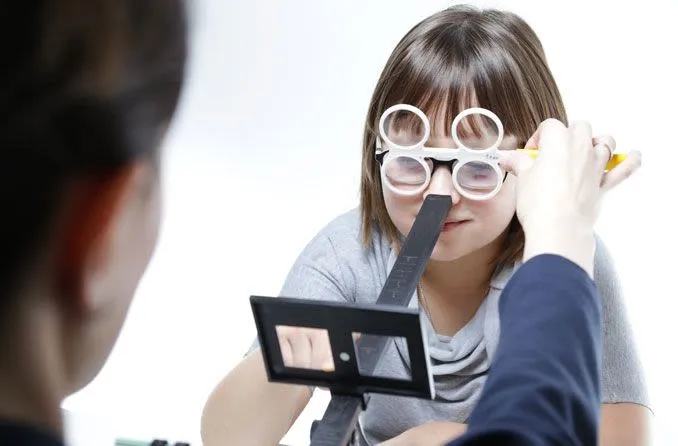
Parents ask a fair question when we recommend vision therapy: is there real evidence for this, or is it something optometrists simply believe in? For one condition — convergence insufficiency — the answer is unusually clear, because the treatment has been put through two large multicentre randomised trials with genuine placebo arms.
Those trials are the Convergence Insufficiency Treatment Trial (CITT, 2008) and the Convergence Insufficiency Treatment Trial – Attention and Reading Trial (CITT-ART, 2019 and 2021). Both are quoted often, usually by people who have read only one of them. Here is what each actually found, including the parts that do not flatter our profession.
Key takeaways
- In CITT, 73% of children were successful or improved after 12 weeks of office-based vergence and accommodative therapy, versus 35% with placebo therapy (CITT Study Group, 2008).
- Among children who became asymptomatic, 84.4% of the office-therapy group were still asymptomatic a year later (CITT Study Group, 2009).
- CITT-ART confirmed that the clinical signs improve with therapy, but symptom scores improved about the same amount in the placebo group (CITT-ART, 2019).
- CITT-ART found no benefit over placebo for reading comprehension (CITT-ART, 2019) or for attention (CITT-ART, 2021).
- A Cochrane network meta-analysis still concludes office-based therapy beats placebo in children (Scheiman et al., 2020).
- The honest summary: the evidence supports treating symptomatic convergence insufficiency. It does not support promising better reading, grades or attention.
Why these two trials matter
Convergence insufficiency is difficulty sustaining the inward eye turn that near work demands. It is common — about 13% of fifth- and sixth-graders in a US school-based study met a high-suspect or definite definition (Rouse et al., 1999) — and its symptoms overlap heavily with other things, which is exactly why good trials were needed. For more on how often it occurs, see how common is convergence insufficiency.
Testing a behavioural treatment fairly is hard, because children improve with time, attention and expectation regardless of what you do. Both trials handled that the same way: a placebo therapy program delivered in the office on the same schedule, with activities designed not to build convergence or focusing. Between them the two trials randomised more than 500 children. For scale, the Cochrane review of this entire field pooled 12 trials and 1289 participants in total (Scheiman et al., 2020).
Symptoms were measured with the Convergence Insufficiency Symptom Survey, a questionnaire validated in children aged 9 to 18, where a score of 16 or higher separated children with convergence insufficiency from those without with 96% sensitivity and 88% specificity (Borsting et al., 2003).
CITT (2008): the trial that changed the conversation
A pilot study in 47 children set the design (Scheiman et al., 2005). The full trial then randomised 221 children aged 9 to 17 with symptomatic convergence insufficiency to one of four 12-week programs: office-based vergence and accommodative therapy with home reinforcement, home pencil push-ups, home computer vergence therapy plus push-ups, or office-based placebo therapy.
After 12 weeks, mean symptom scores were 15.1 for office-based therapy, 24.7 for pencil push-ups, 21.3 for home computer therapy and 21.9 for placebo. Rates of a successful or improved outcome were 73%, 43%, 33% and 35% respectively (CITT Study Group, 2008).
How to read that result honestly
Three things deserve to be said in the same breath.
- The advantage over placebo was real and large — roughly 38 percentage points. This is not a marginal finding.
- About a third of the placebo group also improved. Structured attention, weekly appointments and time do a lot on their own. One child getting better is never proof that therapy caused it.
- The primary outcome was a symptom questionnaire, not a reading test, a grade or a behaviour rating.
That third point matters more than it first appears, because the symptoms children report are not purely ocular. In the CITT sample, performance-related complaints such as losing place and trouble concentrating were actually rated higher at baseline than eye-related complaints like blur or double vision (Barnhardt et al., 2012). A questionnaire that improves is telling you a child is more comfortable at near — not that their academic performance changed.
One year later: did the gains hold?
Seventy-nine children who had become asymptomatic were followed for a year. In the office-based therapy group, 84.4% were still asymptomatic at 12 months and 87.5% were still classified as successful or improved, with no significant drift in symptom scores during follow-up (CITT Study Group, 2009).
The caveat is important: only children who had already responded were followed, and the comparison groups were small. This tells us that gains tend to hold in responders. It does not tell us what proportion of all treated children relapse.
CITT-ART (2019): the harder question
CITT-ART asked whether treating convergence insufficiency changes anything beyond eye comfort. It enrolled 311 children aged 9 to 14 and randomised them to 16 weeks of office-based vergence and accommodative therapy or placebo therapy (CITT-ART, 2019).
The clinical signs improved clearly
Near point of convergence improved by 10.4 cm with therapy versus 6.2 cm with placebo, and positive fusional vergence improved by 23.2 versus 8.8 prism dioptres, both differences highly significant (CITT-ART, 2019). Whatever else the trial showed, therapy measurably changed how well these children’s eyes converged and held convergence.
The symptom scores did not separate from placebo
In the same paper, symptom scores improved by 11.8 points with therapy and 10.4 points with placebo, a difference that was not statistically significant (CITT-ART, 2019). Both groups felt better; the therapy group did not feel meaningfully better than the placebo group.
That is a different result from 2008, and it belongs beside the 2008 numbers every time they are quoted. The two trials also differed in ways that may matter. Both required the same entry symptom score of 16 or higher, but CITT-ART narrowed the age range to 9 to 14 in grades 3 to 8, excluded children scoring below 70 on a nonverbal reasoning measure or below 80 on a word-reading measure, and ran 16 weeks rather than 12 (CITT-ART, 2019; CITT Study Group, 2008). But the plain fact is that the second large trial did not reproduce the symptom advantage of the first.
Reading comprehension: no benefit
In 310 of those children, reading comprehension on a standardised test improved by 3.7 points with therapy and 3.8 points with placebo (CITT-ART, 2019). That was a large randomised trial, with a placebo arm, built to answer exactly the question parents ask — and the answer was no. We will not tell you that vision therapy raises reading scores, because the evidence says it does not.
Attention: no benefit
The attention paper reported no significant difference between groups on parent-rated inattention (effect size 0.036, confidence interval −0.21 to 0.28) or hyperactivity and impulsivity (−0.003), with similar results for teacher reports, a homework problems checklist and a sustained-attention test (CITT-ART, 2021).
The detail worth sitting with is what else that paper found: both groups showed large improvements in inattention, homework completion and sustained attention. Parents in the placebo arm saw their children concentrate better and fight less about homework too. The authors attribute those gains to the nonspecific effects of an intensive therapy regimen rather than to changes in convergence — a conclusion any honest practitioner has to take seriously.

Focusing, prism and adults
Convergence rarely travels alone. Of the 221 CITT children, 164 (74%) also had an accommodative (focusing) problem. Accommodative amplitude increased by 9.9 dioptres with office-based therapy versus 2.2 with placebo, and reduced amplitude had recurred in only 12.5% of children a year later (Scheiman et al., 2011). For focusing problems occurring on their own, the picture is much thinner: a review found prevalence estimates ranging from under 1% to 61.6% depending on criteria and no high-quality evidence for a standard treatment protocol (Hussaindeen & Murali, 2020).
Prism is the other treatment families ask about, and the evidence is age-dependent. Base-in prism reading glasses were no better than placebo glasses in 72 children (Scheiman et al., 2005), while base-in prism progressives did outperform placebo progressives in 29 symptomatic adults aged 45 to 68 (Teitelbaum et al., 2009). We work through that trade-off in prism glasses vs vision therapy.
Adults sit in the least certain part of the evidence. In a trial of 46 adults aged 19 to 30, only office-based therapy significantly changed the clinical signs, but symptom elimination was reached by 42% on therapy versus 31% on placebo, and more than half of treated patients remained symptomatic (Scheiman et al., 2005). The Cochrane review reaches the same conclusion: strong evidence in children, unclear in adults (Scheiman et al., 2020).
What this means if you are deciding about therapy
Statements the evidence supports:
- Office-based vergence and accommodative therapy with home reinforcement is the best-supported treatment for symptomatic convergence insufficiency in children.
- It reliably improves the measurable signs — near point of convergence and fusional vergence — well beyond placebo.
- In children who respond, gains generally hold for at least a year.
- It also improves focusing amplitude in children who have both problems.
Statements the evidence does not support, and that we will not make:
- That treating convergence insufficiency improves reading comprehension or grades.
- That it improves attention or treats ADHD.
- That any given child is certain to succeed.
Our clinical perspective at Vision & Learning Center. We recommend therapy when a child is genuinely symptomatic and the measurements support the diagnosis, and we define success as comfort and endurance at near work — being able to get through a full class period of reading without the words swimming, the head aching or the book closing. When a child also struggles to read, we say plainly that vision therapy is not reading instruction, and we work alongside teachers and reading specialists rather than in place of them. Because the placebo arms in both trials improved, we track objective signs at each progress check, not just how a child says they feel.
If reading, homework or screen work has become uncomfortable for your child or for you, the place to start is a comprehensive developmental vision evaluation that measures alignment, convergence, focusing and eye movements together, and a conversation about what treatment can and cannot be expected to do. Schedule an evaluation, see what our examinations include, or read our full guide to convergence insufficiency: symptoms, diagnosis and treatment.
Common Questions About This Topic
What is the CITT trial?
The Convergence Insufficiency Treatment Trial was a multicentre randomised clinical trial of 221 children aged 9 to 17 with symptomatic convergence insufficiency, published in 2008. It compared 12 weeks of office-based vergence and accommodative therapy with home pencil push-ups, home computer therapy plus push-ups, and an office-based placebo therapy program. Office-based therapy produced the best symptom scores, with 73% successful or improved versus 35% for placebo.
Did CITT-ART contradict CITT?
Partly. CITT-ART agreed that office-based therapy improves the clinical signs of convergence insufficiency - near point of convergence and fusional vergence both improved far more with therapy than with placebo. But unlike the 2008 trial, symptom scores improved by a similar amount in the therapy and placebo groups. Both trials belong in any honest summary of the evidence.
Does vision therapy for convergence insufficiency improve reading?
No - not in the trial built to test it. CITT-ART randomised 310 children to therapy or placebo for 16 weeks, and reading comprehension scores improved 3.7 points with therapy versus 3.8 points with placebo. We treat convergence insufficiency to make near work more comfortable and sustainable, not to raise reading scores, and vision therapy is never a substitute for reading instruction.
Does vision therapy improve attention or help with ADHD?
The CITT-ART attention paper found no advantage over placebo on parent or teacher attention ratings or on a sustained-attention test. Children in both groups improved a great deal, which the authors attributed to the nonspecific effects of an intensive therapy program rather than to better eye teaming. Vision therapy is not a treatment for ADHD.
Do the benefits of vision therapy last?
In the children who became asymptomatic during the original CITT program and were followed for a year, 84.4% of the office-based therapy group were still asymptomatic at 12 months. That is reassuring, but only children who had already responded were followed, so it tells us that gains tend to hold rather than how many children relapse overall.
Where This Information Comes From
- Convergence Insufficiency Treatment Trial Study Group (2008). Randomized clinical trial of treatments for symptomatic convergence insufficiency in children. Archives of Ophthalmology; 126(10):1336-1349. : In 221 children aged 9-17, 73% were successful or improved after 12 weeks of office-based vergence/accommodative therapy versus 43% (pencil push-ups), 33% (home computer therapy) and 35% (office placebo).
- Convergence Insufficiency Treatment Trial Study Group (2009). Long-term effectiveness of treatments for symptomatic convergence insufficiency in children. Optometry and Vision Science; 86(9):1096-1103. : Of 79 children who became asymptomatic, 84.4% of the office-based therapy group remained asymptomatic one year later, with no significant change in symptom scores during follow-up.
- CITT-ART Investigator Group (2019). Treatment of Symptomatic Convergence Insufficiency in Children Enrolled in the Convergence Insufficiency Treatment Trial-Attention & Reading Trial: A Randomized Clinical Trial. Optometry and Vision Science; 96(11):825-835. : In 311 children, near point of convergence improved 10.4 cm with therapy versus 6.2 cm with placebo and fusional vergence 23.2 versus 8.8 prism dioptres, but symptom scores improved similarly in both groups (11.8 vs 10.4 points, p=.21).
- CITT-ART Investigator Group (2019). Effect of Vergence/Accommodative Therapy on Reading in Children with Convergence Insufficiency: A Randomized Clinical Trial. Optometry and Vision Science; 96(11):836-849. : Reading comprehension improved 3.7 points with 16 weeks of office-based therapy versus 3.8 points with placebo therapy in 310 children; therapy was no better than placebo for reading.
- CITT-ART Investigator Group (2021). Effect of Vergence/Accommodative Therapy on Attention in Children with Convergence Insufficiency: A Randomized Clinical Trial. Optometry and Vision Science; 98(3):222-233. : No significant difference between therapy and placebo on the SWAN inattention scale (d=0.036) or hyperactivity/impulsivity scale (d=-0.003); both groups improved substantially, which the authors attribute to nonspecific effects of intensive therapy.
- Scheiman M, Kulp MT, Cotter SA, Lawrenson JG, Wang L, Li T (2020). Interventions for convergence insufficiency: a network meta-analysis. Cochrane Database of Systematic Reviews; 12:CD006768. : Across 12 trials and 1289 participants, office-based vergence/accommodative therapy with home reinforcement was more effective than placebo in children (RR 3.04, 95% CI 2.32 to 3.98); adult evidence is less clear.
- Scheiman M, Cotter S, Kulp MT, Mitchell GL, Cooper J, Gallaway M, Hopkins KB, Bartuccio M, Chung I; CITT Study Group (2011). Treatment of accommodative dysfunction in children: results from a randomized clinical trial. Optometry and Vision Science; 88(11):1343-1352. : 74% of CITT children also had accommodative dysfunction; accommodative amplitude increased 9.9 D with office-based therapy versus 2.2 D with placebo, and reduced amplitude had recurred in only 12.5% one year later.
- Scheiman M, Mitchell GL, Cotter S, Cooper J, Kulp M, Rouse M, Borsting E, London R, Wensveen J; CITT Study Group (2005). A randomized clinical trial of treatments for convergence insufficiency in children. Archives of Ophthalmology; 123(1):14-24. : Pilot trial in 47 children that preceded CITT; only the office-based vision therapy group showed both statistically and clinically significant change in clinical measures.
- Scheiman M, Mitchell GL, Cotter S, Kulp MT, Cooper J, Rouse M, Borsting E, London R, Wensveen J (2005). A randomized clinical trial of vision therapy/orthoptics versus pencil pushups for the treatment of convergence insufficiency in young adults. Optometry and Vision Science; 82(7):583-595. : In 46 adults aged 19-30, only office-based therapy significantly changed the clinical signs, but symptom elimination was reached by 42% of therapy, 31% of placebo and 20% of push-up participants, and more than half of treated patients remained symptomatic.
- Scheiman M, Cotter S, Rouse M, Mitchell GL, Kulp M, Cooper J, Borsting E; CITT Study Group (2005). Randomised clinical trial of the effectiveness of base-in prism reading glasses versus placebo reading glasses for symptomatic convergence insufficiency in children. British Journal of Ophthalmology; 89(10):1318-1323. : In 72 children, symptom scores fell in both groups (prism 31.6 to 16.5; placebo 28.4 to 17.5) with no significant difference on any outcome.
- Teitelbaum B, Pang Y, Krall J (2009). Effectiveness of base in prism for presbyopes with convergence insufficiency. Optometry and Vision Science; 86(2):153-156. : In 29 symptomatic presbyopes aged 45-68, symptom scores fell from 30.21 to 13.38 with base-in prism progressives versus 23.62 with placebo progressives (p=0.001).
- Borsting EJ, Rouse MW, Mitchell GL, Scheiman M, Cotter SA, Cooper J, Kulp MT, London R; CITT Group (2003). Validity and reliability of the revised convergence insufficiency symptom survey in children aged 9 to 18 years. Optometry and Vision Science; 80(12):832-838. : A CISS cut-off of 16 or more gave 96% sensitivity and 88% specificity in children; mean score was 30.8 in children with CI versus 8.4 in those with normal binocular vision.
- Barnhardt C, Cotter SA, Mitchell GL, Scheiman M, Kulp MT; CITT Study Group (2012). Symptoms in children with convergence insufficiency: before and after treatment. Optometry and Vision Science; 89(10):1512-1520. : In the 221 CITT children, performance-related symptoms such as losing place and trouble concentrating were rated higher than eye-related symptoms at baseline (2.3 vs 1.8, p<0.001).
- Rouse MW, Borsting E, Hyman L, Hussein M, Cotter SA, Flynn M, Scheiman M, Gallaway M, De Land PN; CIRS Group (1999). Frequency of convergence insufficiency among fifth and sixth graders. Optometry and Vision Science; 76(9):643-649. : Of 453 fifth- and sixth-graders, 4.2% had definite CI and 8.8% high-suspect CI (about 13% combined); 78.9% of three-sign CI children also had accommodative insufficiency.
- Hussaindeen JR, Murali A (2020). Accommodative Insufficiency: Prevalence, Impact and Treatment Options. Clinical Optometry; 12:135-149. : Reported prevalence of accommodative insufficiency ranges from under 1% to 61.6% depending on criteria, and the review found no high-quality evidence for a standard treatment protocol.
Care We Provide
More From the Blog
Wondering If This Sounds Like Your Family?
A developmental vision evaluation measures the skills a routine eye exam does not. Our team sees children and adults in Coconut Creek, Boynton Beach, Boca Raton and West Palm Beach.