
Can a Child Have 20/20 Vision and Still Struggle With Reading?

Yes — a child can absolutely have 20/20 vision and still struggle with reading.
That surprises many parents, because they naturally assume that if a child can see clearly, vision cannot be part of the problem. But 20/20 vision only tells us about one small part of how the visual system works. It indicates that your child can see a target clearly at a specific distance. It does not tell us how well the eyes work together, how easily they focus, how smoothly they track across a line of text, or how much effort it takes to sustain vision during reading.
That means a child may pass a vision screening and a standard eye chart test, yet still have visual problems that make reading harder, slower, more tiring, or more frustrating than it should be.
What 20/20 vision actually means
20/20 vision refers to visual acuity.
In simple terms, it means your child can see details clearly at a standard testing distance. If they are reading letters on an eye chart correctly, that tells us they can resolve that level of detail. That is important, but it is only one piece of visual function.
Clear sight matters. If a child cannot see the board, see the page clearly, or has an uncorrected prescription, that can absolutely affect school performance. But reading is not just about seeing letters clearly. Reading is a complex visual task that requires multiple skills working together at the same time.
A child can have perfect distance acuity and still struggle to use vision efficiently during sustained near work.

What 20/20 vision does not measure
This is the part many parents are never told.
A child can see 20/20 and still have weaknesses in the visual skills that support comfortable, efficient reading.
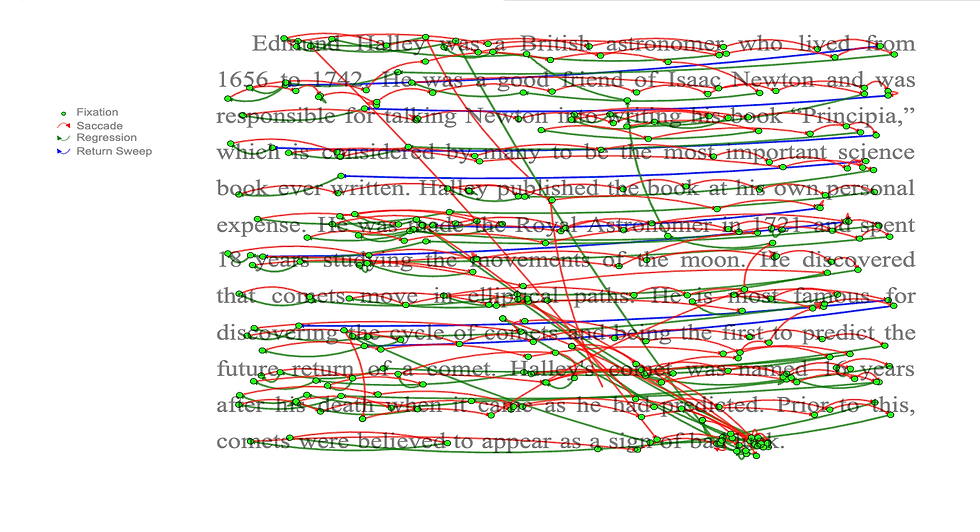
Tracking
Tracking is the ability to move the eyes accurately and smoothly across a line of print.
When tracking is weak, a child may lose their place, skip lines, reread the same line, use a finger to keep their place longer than expected, or read in a choppy, effortful way. The words may be clear, but the eyes are not moving through the text efficiently.
Focusing
Focusing is the ability to quickly and accurately maintain a clear vision at near.
A child who has focusing difficulty may complain that words blur, that reading feels tiring, or that their eyes hurt after a short period of close work. They may avoid reading, not because they cannot see the words, but because it takes too much effort to keep them clear and
stable.

Eye teaming
Eye teaming refers to how well the two eyes work together.
When teaming is weak, reading may feel uncomfortable, the child may have trouble sustaining attention on print, or they may experience double vision, words moving on the page, headaches, or visual fatigue. Sometimes the symptoms are obvious. Other times, the child simply avoids reading, and no one realizes why.

Visual stamina
Visual stamina is how well the visual system holds up over time.
Some children can start a reading task reasonably well, but their performance drops as the task continues. They may get slower, sloppier, more frustrated, or more avoidant. That does not always mean a motivation problem. Sometimes it means their visual system can work, but not efficiently or comfortably, for long enough.
Signs a child may be seeing clearly but using vision inefficiently
This is often where parents start connecting the dots.
A child may have 20/20 vision and still show signs like:
avoiding reading
saying reading is boring, hard, or exhausting
losing place easily
skipping words or lines
using a finger to keep place
rereading often
headaches or eye strain with schoolwork
blurred vision during near work
shorter attention span during reading than during listening activities
trouble copying from the board or between near and far
becoming unusually tired after school or homework
better comprehension when listening than when reading independently
inconsistent performance despite seeming bright and capable
These children are often described as smart but not performing as they should. In many cases, the issue is not intelligence. It is that reading takes much more visual effort than most people realize.
How can this affect reading
Reading is not a simple visual task.
To read comfortably, a child must be able to:
Keep the words clear
Move the eyes accurately across the page
Keep both eyes aligned on the same target
Maintain attention visually
Sustain the effort long enough to complete the task
If one or more of those skills is weak, reading can become slower, harder, and much more fatiguing.
That can show up as:
Reduced reading stamina
Avoidance of homework
Frustration with books
Poor fluency
Reduced comprehension because so much energy is going into simply getting through the text
Inconsistent school performance
Better performance in oral discussion than in written work
This is one reason some children seem fine in conversation, seem bright in class, and yet struggle when it is time to read independently.
Why school screenings and standard exams may miss this
School screenings are helpful for identifying some children who need further evaluation, but they are limited.
Most screenings focus on whether a child can see clearly at a distance. Many standard eye exams focus heavily on eye health, prescription, and basic acuity. Those things are important, but they do not always fully measure how efficiently a child uses vision for reading and near work.
That is why a parent may hear:
“They passed the screening.”
“Their eyes are healthy.”
“They can see 20/20.”
“Everything looks normal.”
And yet the child is still struggling.
That does not necessarily mean anyone did something wrong. It often means the type of testing done was not designed to examine tracking, focusing, eye teaming, and visual stamina as a reading-related or developmental evaluation does.

What kind of evaluation looks at these skills?
If a child is seeing clearly but still struggling with reading, the next step is not another screening. It is a developmental or functional vision evaluation that examines how the visual system functions during real-world visual tasks.
This kind of evaluation looks beyond visual acuity and examines skills such as:
Eye tracking
Focusing
Eye teaming
Visual efficiency
Visual comfort
Visual stamina
How the visual system supports reading and near work
That is how you determine whether the issue is simply seeing clearly or whether the child has to work much harder than they should just to use their vision effectively.
Frequently asked questions
Can a child have 20/20 vision and still need vision therapy?
Yes. 20/20 vision only measures clarity of sight. It does not measure all of the visual skills needed for comfortable, efficient reading and school performance.
If my child passed a school screening, can there still be a vision problem?
Yes. School screenings are limited and may miss issues with tracking, focusing, eye teaming, and visual stamina.
Does 20/20 vision mean there is no problem?
No. It means the child can see clearly at the testing distance. It does not rule out functional vision problems that affect reading and near work.
What are common signs that vision may still be affecting reading?
Common signs include losing place, skipping lines, headaches, blurred vision at near, reading avoidance, fatigue with homework, and inconsistent school performance.
What kind of exam should I look for?
A developmental or functional vision evaluation is designed to examine the visual skills that support reading, learning, and sustained near work.
If your child has 20/20 vision but still struggles with reading, that does not automatically mean the problem is laziness, lack of effort, or something they will simply outgrow.
Sometimes the issue is not whether they can see clearly. It is about whether they can use vision efficiently and comfortably for long enough to handle the demands of reading and school.
That is why so many parents feel confused when everything seems “normal,” but their child is still struggling with homework, avoiding books, or tiring out quickly.
If that sounds familiar, the best next step is to look deeper.


Comments